
 Quality Management



















 IT Service Management



 Project Management



 Agile Management




 Web Development



 Cloud Computing


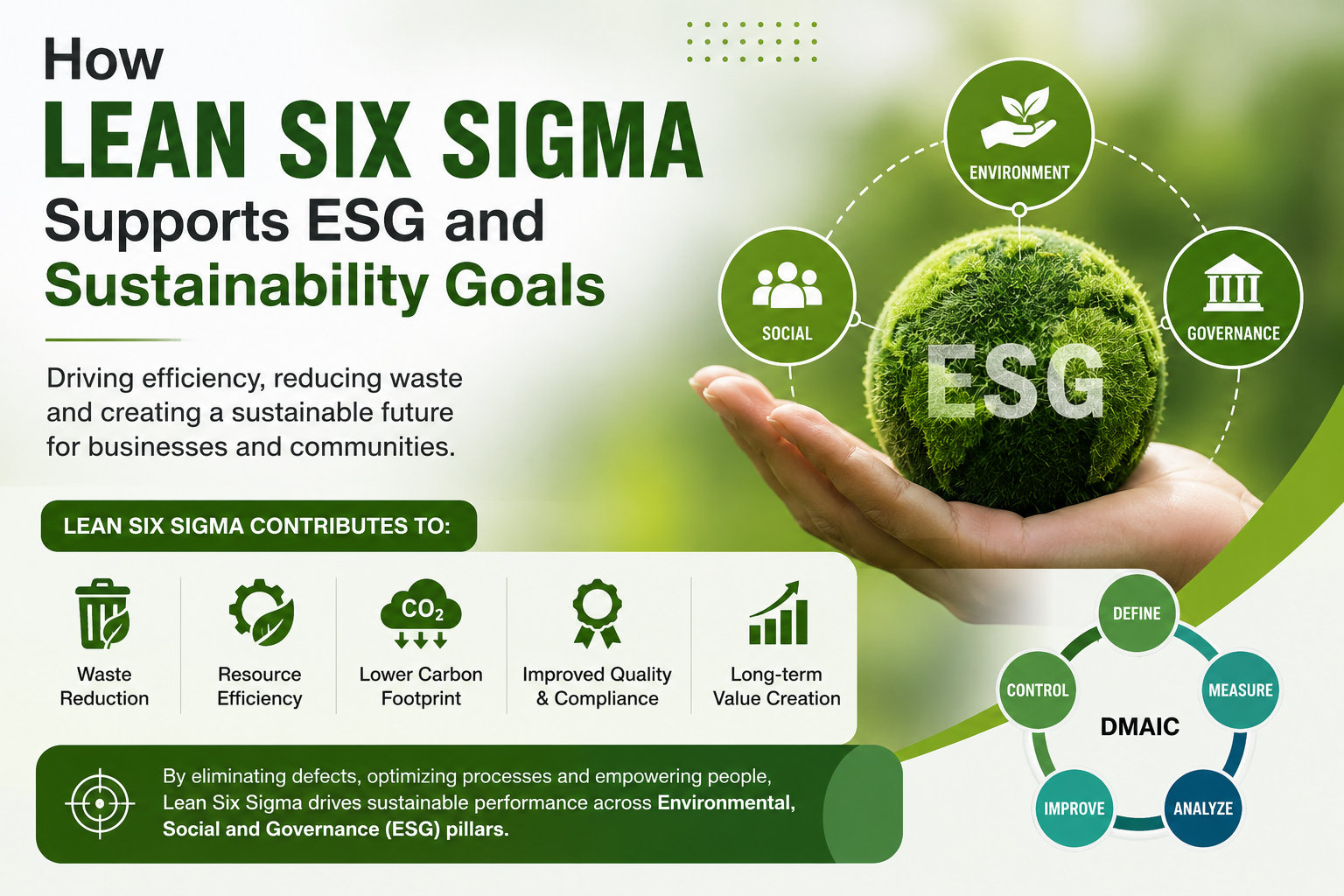
In an era where environmental, social, and governance (ESG) criteria play a crucial role in business strategy, organizations are seeking innovative ways to enhance their sustainability efforts. One such approach that has gained significant attention is the integration of Lean Six Sigma principles. This blog will explore how Lean Six Sigma sustainability practices can support ESG and sustainability goals, ultimately leading to more efficient and responsible operations for businesses in India.
Understanding Lean Six Sigma
Before diving into the synergy between Lean Six Sigma and sustainability, it's essential to grasp the fundamentals of Lean Six Sigma. Lean Six Sigma is a methodology that combines the principles of Lean manufacturing—focusing on waste reduction—with Six Sigma's emphasis on quality improvement. Together, they create a powerful framework for sustainable operations that can streamline processes, reduce costs, and improve overall performance.
The Importance of Sustainability in Business
Sustainability is no longer just a buzzword; it has become a critical component of modern business strategy. Companies across various sectors are increasingly recognizing the importance of integrating sustainable practices into their operations. This shift is driven by several factors, including:
- Regulatory Pressure: Governments worldwide, including India, are implementing strict regulations to promote environmental sustainability.
- Consumer Demand: Today's consumers are more environmentally conscious and prefer brands that demonstrate a commitment to sustainability.
- Financial Performance: Sustainable businesses often enjoy better financial performance due to reduced waste and improved efficiency.
How Lean Six Sigma Drives ESG Process Improvement
Lean Six Sigma can significantly contribute to ESG process improvement by addressing key areas such as waste reduction, resource optimization, and quality enhancement. Here’s how:
1. Waste Reduction and Resource Optimization
One of the core principles of Lean Six Sigma is the elimination of waste. By implementing Lean practices, companies can identify and eliminate non-value-added activities in their processes. This not only enhances efficiency but also reduces resource consumption, aligning with environmental sustainability goals.
For instance, a manufacturing plant in India can use Lean Six Sigma tools, such as Value Stream Mapping, to visualize the flow of materials and identify areas where waste occurs. By streamlining processes, companies can minimize energy usage, reduce emissions, and lower their overall environmental impact.
2. Quality Improvement
Six Sigma focuses on minimizing defects and variability in processes, which directly contributes to better product quality. High-quality products lead to fewer returns and reworks, which not only saves resources but also reduces waste. This aligns with the principles of green manufacturing, where the goal is to produce goods in an environmentally friendly manner.
For example, a textile manufacturer can implement Six Sigma techniques to improve the dyeing process, ensuring that water usage is optimized and chemical runoff is minimized. This not only enhances product quality but also supports sustainability objectives.
3. Employee Engagement and Social Responsibility
Lean Six Sigma emphasizes a culture of continuous improvement, which inherently involves employee engagement. By involving employees in process improvement initiatives, companies foster a sense of ownership and responsibility towards sustainability goals. This aligns with the social aspect of ESG, as engaged employees are more likely to contribute positively to their communities and the environment.
Implementing Lean Six Sigma for Business Sustainability
To effectively integrate Lean Six Sigma into sustainability initiatives, organizations should follow these steps:
1. Assess Current Processes
Start by conducting a thorough assessment of existing processes to identify inefficiencies, waste, and areas of improvement. This assessment will serve as a baseline for future improvements.
2. Set Clear Sustainability Goals
Establish specific, measurable, achievable, relevant, and time-bound (SMART) sustainability goals that align with your overall business objectives. These goals should encompass environmental, social, and governance aspects.
3. Train Employees
Invest in training employees on Lean Six Sigma methodologies and sustainability practices. A well-informed workforce is crucial for the successful implementation of these initiatives.
4. Implement Continuous Monitoring
Regularly monitor and measure the impact of Lean Six Sigma initiatives on sustainability goals. This will help assess progress and identify areas for further improvement.
Case Studies: Lean Six Sigma in Action
Several Indian companies have successfully implemented Lean Six Sigma to enhance their sustainability efforts. Here are a couple of examples:
1. Tata Steel
Tata Steel, a leader in the steel manufacturing sector, has adopted Lean Six Sigma practices to reduce waste and enhance product quality. By optimizing processes, the company has significantly reduced its carbon footprint and improved energy efficiency, aligning with its sustainability goals.
2. Mahindra & Mahindra
Mahindra & Mahindra, a major player in the automotive industry, has integrated Lean Six Sigma principles to streamline its manufacturing processes. This initiative has resulted in reduced resource consumption and better waste management, contributing to the company's commitment to sustainability.
FAQs About Lean Six Sigma and Sustainability
Q1: What is Lean Six Sigma?
A1: Lean Six Sigma is a methodology that combines Lean manufacturing principles, which focus on waste reduction, with Six Sigma's emphasis on quality improvement.
Q2: How does Lean Six Sigma support sustainability goals?
A2: Lean Six Sigma supports sustainability by reducing waste, optimizing resources, improving product quality, and engaging employees in process improvement initiatives.
Q3: Can small businesses benefit from Lean Six Sigma practices?
A3: Yes, small businesses can benefit from Lean Six Sigma by streamlining operations, reducing costs, and enhancing overall efficiency, which contributes to their sustainability efforts.
Q4: What are some tools used in Lean Six Sigma?
A4: Common tools include Value Stream Mapping, DMAIC (Define, Measure, Analyze, Improve, Control), and root cause analysis techniques.
Conclusion
Incorporating Lean Six Sigma principles into sustainability initiatives provides Indian businesses with a robust framework for achieving their ESG goals. By focusing on waste reduction, resource optimization, and quality improvement, organizations can enhance their operational efficiency while contributing to a more sustainable future.
If you're ready to take the first step towards integrating Lean Six Sigma into your sustainability strategy, contact us today to learn more about our training programs and consulting services. Together, we can build a greener, more sustainable business landscape in India.


Leave a Comment