 Quality Management



















 IT Service Management


 Project Management



 Agile Management



 Web Development


 Cloud Computing
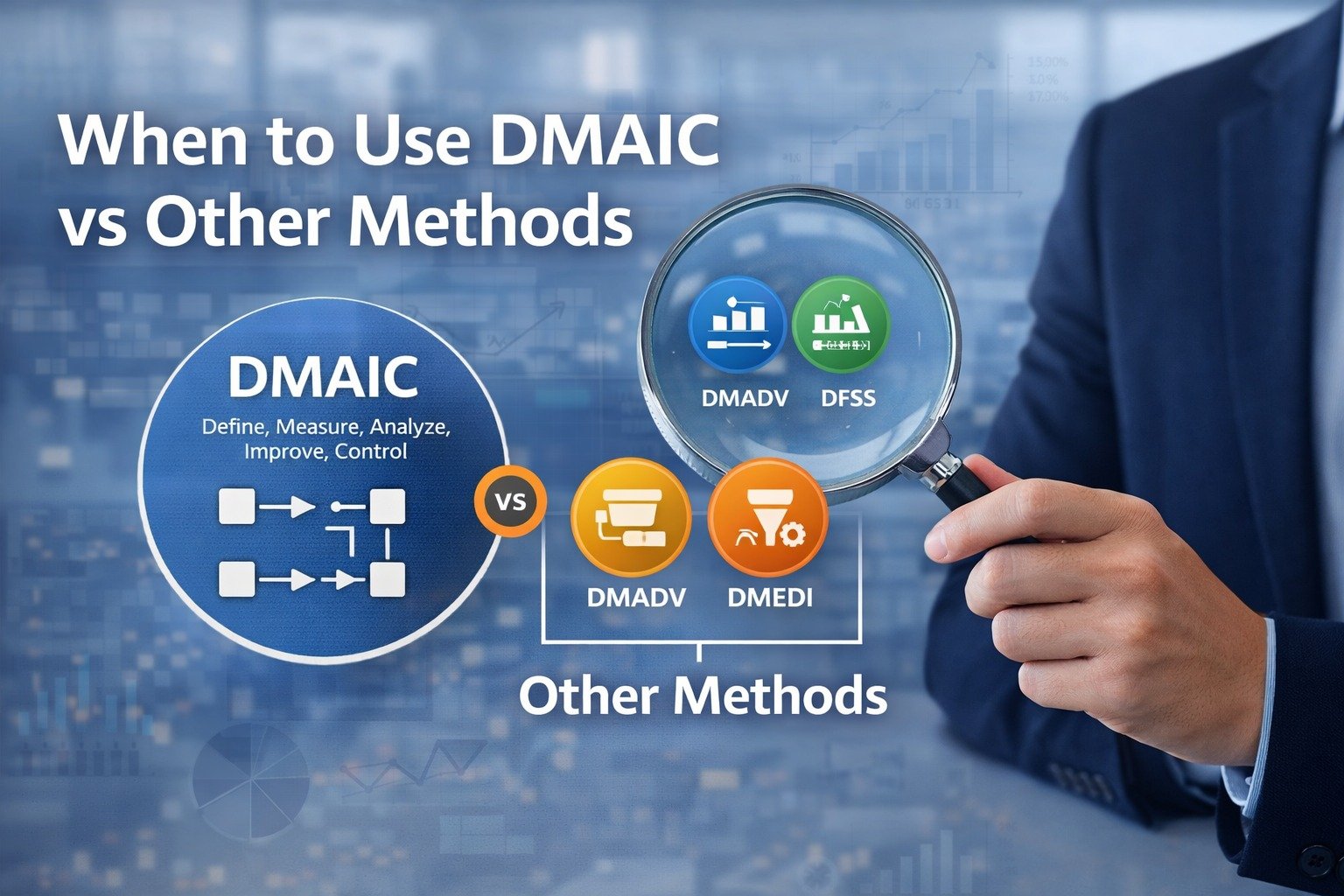
When to Use DMAIC vs Other Methods
11:00 AM – 12:00 PM (IST)
Live Virtual Classroom

What is in When to Use DMAIC vs Other Methods
This course helps learners identify when to use DMAIC and when alternative methods are more suitable for solving business problems and improving processes.
DMAIC is a powerful methodology for structured problem-solving, but it is not always the best approach for every situation. Different business challenges may require different methods such as Lean, Agile, or quick process fixes.
This course provides a clear comparison of when DMAIC should be used versus other approaches. It helps learners understand the context, type of problem, and level of complexity involved in selecting the right methodology for effective and efficient outcomes.
Course Highlights
Understanding when to use DMAIC
Comparison with other improvement methods
Identifying types of business problems
Practical decision-making approach
Focus on efficiency and effectiveness
Who can join When to Use DMAIC vs Other Methods
Students and
fresh graduates
Working professionals across industries
Operations and project management professionals
Individuals learning Six Sigma
Anyone involved
in decision-making and problem-solving
Students and fresh graduates
Working professionals across industries
Operations and project management professionals
Individuals learning Six Sigma
Anyone involved in decision-making and problem-solving
Course Features
Simple and comparative learning approach
Real-world examples for better clarity
Designed for a 45-minute focused session
Beginner-friendly content structure
Industry-relevant insights
Benefits of the Course
Helps choose the right improvement methodology
Improves decision-making skills
Enhances understanding of problem types
Prevents misuse of DMAIC
Supports effective process improvement
Haworth's Advantages
Industry-experienced trainers
Practical and application-focused teaching
Structured and concise curriculum
Real-world scenario-based learning
Continuous learner support
Our Trainers
Abhishek Kumar
Senior Leader – Strategy, Transformation
Experience: 15+ years
Senior strategy and business transformation leader with 15+ years of cross-industry impact

What will you learn in When to Use DMAIC vs Other Methods
Understand scenarios where structured problem-solving is required
Learn situations where simpler or faster methods are better
Understand how Lean focuses on speed and waste reduction
Learn about alternative methods like quick fixes and Agile
Learn how to choose the right method based on problem type
Prerequisites and Eligibility
-
A basic understanding of Six Sigma is helpful but not mandatory
-
No prior technical knowledge required
-
Suitable for beginners and professionals
-
Open to all industries and roles
-
Ideal for those involved in process improvement and decision-making
Curriculum
- Importance of choosing the right approach
- Overview of structured vs unstructured problem-solving
- Introduction to DMAIC and alternative methods
- Why one method does not fit all situations
- Existing process with performance issues
- Problems related to defects, delays, or inefficiencies
- Availability of measurable data
- Need for root cause analysis and long-term improvement
- Examples from operations and service processes
- PDCA (Plan-Do-Check-Act) basics
- Kaizen (continuous small improvements)
- Brainstorming and quick problem-solving
- Standard operating procedures for recurring tasks
- Agile approach for iterative improvements
Structured vs flexible approaches
Data-driven vs quick decision-making
Long-term improvement vs short-term fixes
Complexity and time involved
Choosing the right method based on the situation
- Identify scenarios and select an appropriate method
- Discuss reasoning for selection
- Key takeaways and practical understanding
When to Use DMAIC vs Other Methods FAQs
Recommended by our Participants Globally