
 Quality Management



















 IT Service Management



 Project Management



 Agile Management



 Web Development



 Cloud Computing


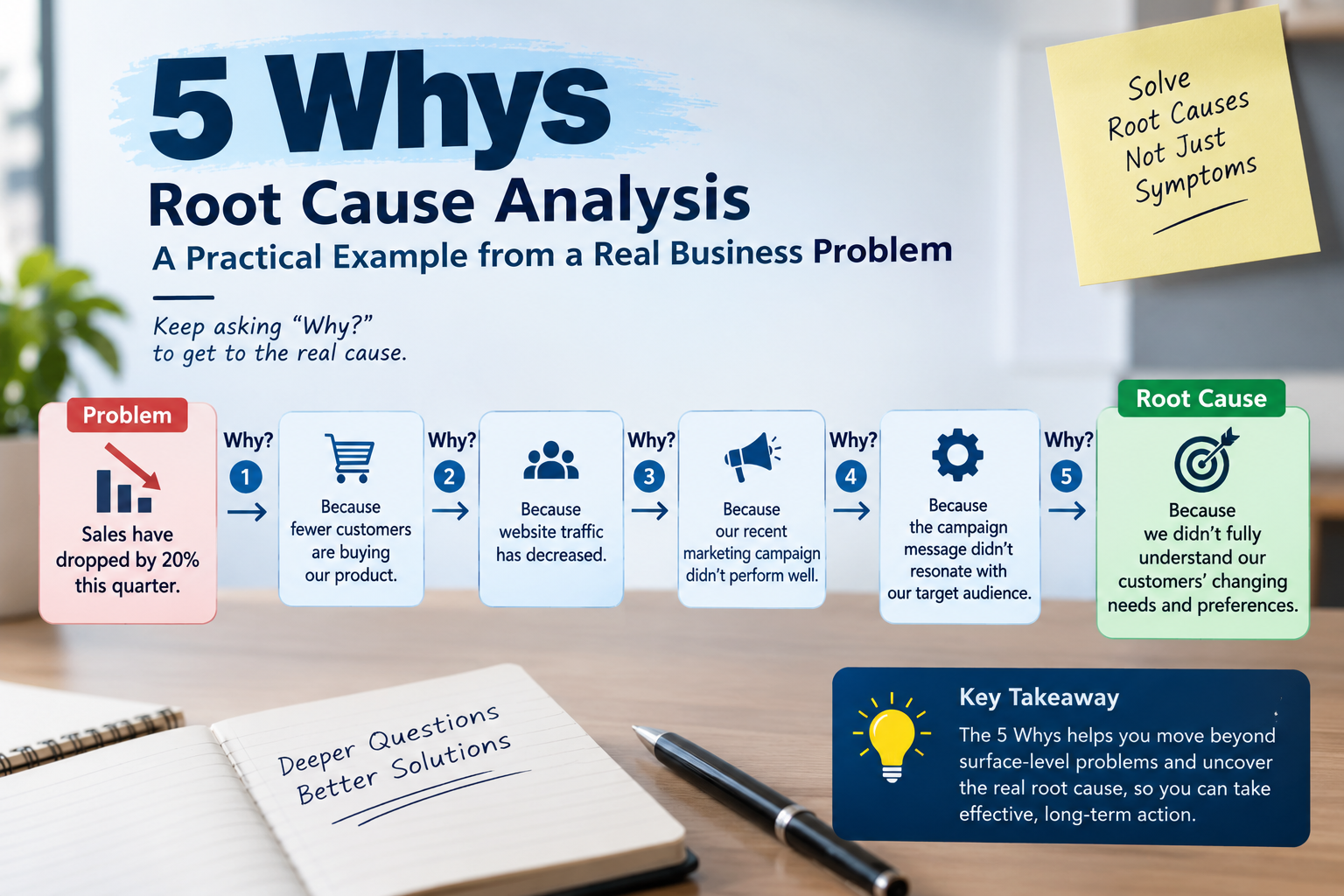
In the dynamic world of business, understanding the root causes of problems is crucial for sustainable growth and improvement. One effective method for identifying these root causes is the 5 Whys root cause analysis. This technique helps businesses dig deep into issues rather than just addressing their symptoms. In this article, we will explore the 5 Whys root cause analysis method in detail, using a practical example from an Indian business to illustrate its effectiveness.
What is 5 Whys Root Cause Analysis?
The 5 Whys root cause analysis is a simple yet powerful tool used to uncover the underlying causes of a problem. Developed by Toyota as part of its production system, this method encourages teams to ask “why” multiple times—usually five—to reach the core of an issue. By doing so, organizations can implement corrective actions that prevent recurrence, ultimately fostering a culture of continuous improvement.
Why Use 5 Whys?
1. Simplicity: The method is easy to understand and can be applied without complex training or tools.
2. Cost-Effective: It requires minimal resources and can be implemented by anyone in an organization.
3. Encourages Team Collaboration: The process often involves team discussions, fostering a collaborative environment.
4. Immediate Results: It can quickly highlight issues and lead to actionable insights.
A Practical Example: Addressing Production Delays in an Indian Manufacturing Firm
Let’s consider a real-life scenario involving a mid-sized manufacturing firm based in Pune, India, that specializes in producing electronic components. The company faced significant production delays, which led to missed deadlines and customer dissatisfaction. To tackle this issue, the management decided to utilize the 5 Whys root cause analysis technique.
Step 1: Define the Problem
The first step in the 5 Whys root cause analysis process is to clearly define the problem. In our case, the problem was identified as: “Production delays are causing missed deadlines.”
Step 2: Ask Why?
Now, the team began asking “why” to dig deeper into the issue.
- Why are there production delays?
Because the assembly line is often halted due to equipment failures. - Why are there equipment failures?
Because the maintenance schedule is not being followed properly. - Why is the maintenance schedule not being followed?
Because the maintenance team is understaffed and overworked. - Why is the maintenance team understaffed?
Because the company has not hired additional personnel despite the increase in production demands. - Why hasn’t the company hired more personnel?
Because the management is hesitant to increase costs due to uncertainty in sales forecasts.
Step 3: Identify the Root Cause
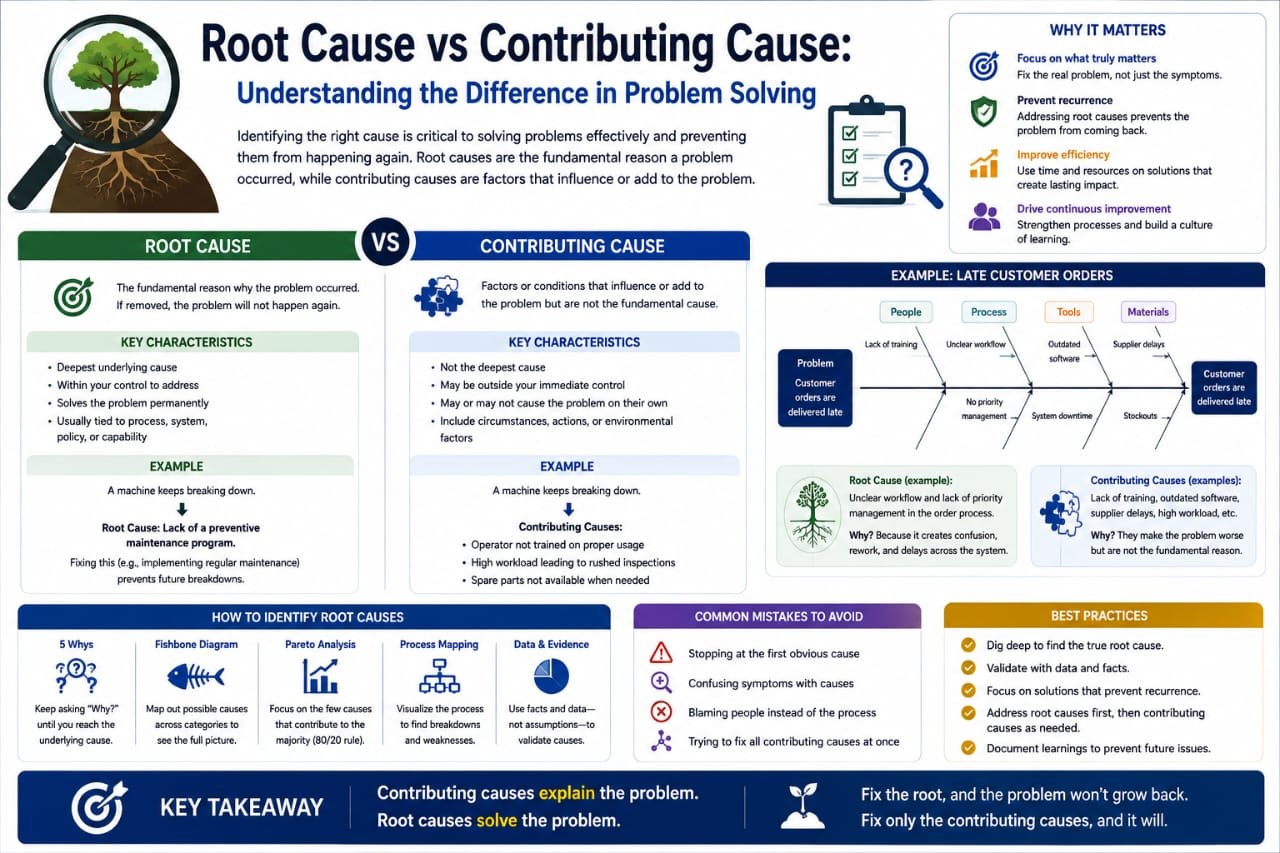
By continuing to ask “why,” the team uncovered that the root cause of the production delays was the management’s reluctance to hire more maintenance staff due to financial concerns. This insight was crucial, as it shifted the focus from merely fixing equipment issues to addressing the staffing and managerial decisions impacting the entire production process.
Step 4: Develop Solutions
With the root cause identified, the management could now implement solutions. Possible actions included:
- Reviewing the budget to allocate funds for hiring additional maintenance personnel.
- Creating a more flexible maintenance schedule to ensure timely equipment servicing.
- Implementing training programs for existing staff to improve equipment handling and reduce failures.
Step 5: Monitor and Adjust
After implementing the solutions, the company monitored the production process closely. The results were promising; production delays decreased significantly, leading to improved customer satisfaction and timely deliveries. Additionally, the management committed to regular reviews of the maintenance department to ensure that the new staffing levels and procedures were effective.
Benefits of Implementing 5 Whys Root Cause Analysis
The 5 Whys root cause analysis method provided the Indian manufacturing firm with several benefits:
- Enhanced Problem-Solving: By identifying the root causes, the company could implement effective solutions.
- Improved Efficiency: Addressing the issues led to smoother production processes and reduced delays.
- Increased Employee Engagement: Employees felt more involved in the problem-solving process, leading to higher morale.
- Better Decision Making: Management gained insights that helped them make informed decisions regarding staffing and resource allocation.
Frequently Asked Questions (FAQs)
What is the main objective of the 5 Whys root cause analysis?
The main objective is to identify the root cause of a problem by repeatedly asking “why,” allowing organizations to implement effective solutions rather than just addressing symptoms.
How many times should you ask “why” in the 5 Whys technique?
While the method is called “5 Whys,” it’s not a strict rule. You may need to ask “why” more or fewer times depending on the complexity of the problem.
Can the 5 Whys root cause analysis be used in any industry?
Yes, the 5 Whys root cause analysis is versatile and can be applied across various industries, including manufacturing, healthcare, education, and service sectors.
What are some common mistakes to avoid when using the 5 Whys?
Common mistakes include jumping to conclusions without adequate analysis, failing to involve the right team members, and not documenting the process and findings.
Conclusion
The 5 Whys root cause analysis is a valuable tool for businesses seeking to improve their processes and solve problems effectively. By digging deeper into issues, organizations can uncover the true causes of problems and implement solutions that foster long-term improvements. The example from the Indian manufacturing firm illustrates how this method can lead to significant operational enhancements and better decision-making.
If you’re facing recurring issues in your business, consider implementing the 5 Whys root cause analysis. It may just be the key to unlocking your organization’s potential for growth and efficiency.
Call to Action
Ready to streamline your business processes? Start using the 5 Whys root cause analysis today! For more tips and insights on effective business strategies, subscribe to our newsletter and follow us on social media for the latest updates.



Leave a Comment