 Quality Management


















 IT Service Management



 Project Management



 Agile Management



 Web Development


 Cloud Computing


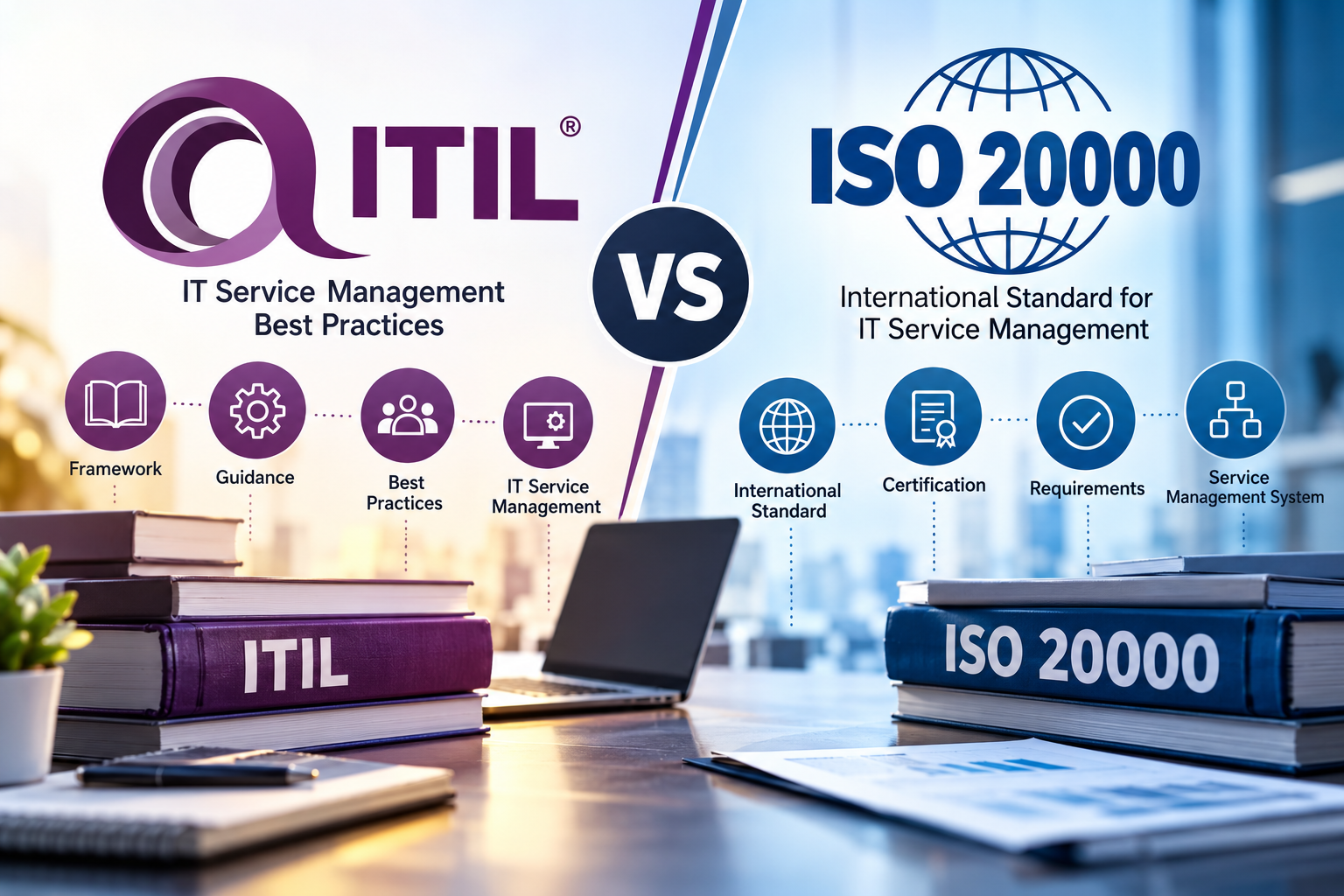
In the ever-evolving landscape of IT service management, two frameworks often come into play: ITIL (Information Technology Infrastructure Library) and ISO 20000. Both focus on delivering high-quality IT services and ensuring compliance, but they approach these objectives differently. For quality and compliance professionals in India, understanding the key differences between ITIL and ISO 20000 is crucial for selecting the right framework for their organization. In this article, we will delve into the core distinctions, benefits, and applications of both frameworks.
Understanding ITIL
ITIL is a set of best practices for IT service management (ITSM) that was developed in the 1980s by the UK Government. It has evolved over the years and is now in its latest version, ITIL 4. The framework emphasizes a lifecycle approach to IT service management, aiming to enhance service quality and align IT services with business needs.
Key Features of ITIL
- Service Lifecycle: ITIL focuses on the entire service lifecycle, including service strategy, design, transition, operation, and continual improvement.
- Best Practices: ITIL provides a comprehensive set of best practices that organizations can adapt to their specific needs.
- Flexibility: ITIL is not a prescriptive framework; instead, it allows organizations to tailor processes based on their unique requirements.
- Focus on Value: ITIL emphasizes delivering value to customers through effective service management.
Understanding ISO 20000
ISO 20000 is an international standard for IT service management that was first published in 2005. It provides a framework for establishing, implementing, maintaining, and continually improving an IT service management system (SMS). Unlike ITIL, ISO 20000 is prescriptive and requires organizations to meet specific criteria to achieve certification.
Key Features of ISO 20000
- Certification: ISO 20000 offers a formal certification process, allowing organizations to demonstrate their commitment to quality and compliance.
- Standardization: As an international standard, ISO 20000 provides a consistent approach to IT service management that can be recognized globally.
- Process-Oriented: ISO 20000 focuses on the establishment and management of processes to ensure effective service delivery.
- Alignment with Business Goals: ISO 20000 aims to align IT services with the needs of the business, ensuring that IT supports organizational objectives.
Key Differences Between ITIL and ISO 20000
1. Framework vs. Standard
The primary distinction between ITIL and ISO 20000 is their nature. ITIL is a framework that provides best practices, while ISO 20000 is an international standard that sets specific requirements for IT service management. This fundamental difference influences how organizations adopt and implement these frameworks.
2. Flexibility vs. Prescriptiveness
ITIL's flexibility allows organizations to adapt processes to meet their unique needs. In contrast, ISO 20000 requires organizations to adhere to specific guidelines and processes. This prescriptive nature can be beneficial for organizations looking for a standardized approach but may limit customization.
3. Certification Process
ISO 20000 offers formal certification, which can enhance an organization's credibility and demonstrate its commitment to quality. ITIL does not provide a certification process; instead, organizations can choose to adopt best practices without formal recognition.
4. Focus Areas
While both frameworks aim to improve service quality, they have different focus areas. ITIL emphasizes value creation and service lifecycle management, whereas ISO 20000 focuses on establishing a robust IT service management system and meeting specific performance criteria.
5. Global Recognition
ISO 20000 is recognized globally as an international standard, making it easier for organizations to market their services worldwide. ITIL, while widely adopted, does not carry the same level of international recognition as a formal standard.
When to Use ITIL or ISO 20000?
Choosing between ITIL and ISO 20000 depends on your organization's needs, goals, and readiness for certification.
Consider ITIL if:
- Your organization values flexibility and wants to adapt best practices to fit its unique processes.
- You are looking to improve service quality without the need for formal certification.
- Your team is experienced in IT service management and can implement best practices effectively.
Consider ISO 20000 if:
- Your organization seeks formal certification to demonstrate its commitment to quality and compliance.
- You want to establish a standardized approach to IT service management recognized globally.
- Your organization is starting from scratch and requires a structured framework to build its IT service management processes.
Benefits of ITIL and ISO 20000
Benefits of ITIL
- Improved service delivery and customer satisfaction.
- Increased efficiency and reduced costs through optimized processes.
- Enhanced team collaboration and communication.
- Continuous improvement through regular assessments and feedback.
Benefits of ISO 20000
- Formal recognition of quality and compliance through certification.
- Increased credibility and trust from customers and stakeholders.
- Structured approach to IT service management with clear guidelines.
- Enhanced performance measurement and management.
Conclusion
Both ITIL and ISO 20000 play vital roles in the realm of IT service management. The choice between the two depends on your organization's specific needs, goals, and readiness for certification. For quality and compliance professionals in India, understanding the key differences between these frameworks is essential for making informed decisions that will ultimately enhance service delivery and align IT with business objectives.
FAQs
1. Can an organization implement both ITIL and ISO 20000?
Yes, organizations can implement both frameworks simultaneously. Many organizations leverage ITIL's best practices while aligning their processes with ISO 20000's requirements for certification.
2. Is ITIL certification available?
While ITIL does not offer a formal certification for organizations, individual professionals can obtain certifications through various training providers, which can enhance their credibility in IT service management.
3. How long does it take to get ISO 20000 certified?
The time required for ISO 20000 certification varies based on the organization's size and readiness. Typically, the process can take anywhere from a few months to over a year.
4. Are there costs associated with implementing ITIL or ISO 20000?
Yes, there are costs associated with training, certification, and resource allocation for both ITIL and ISO 20000. Organizations should budget accordingly based on their specific needs.
5. Which framework is better for small businesses?
For small businesses, ITIL may be more suitable due to its flexibility and adaptability. However, if a small business seeks formal recognition and is willing to meet ISO 20000's requirements, pursuing certification can also be beneficial.
Call to Action
If you're a quality and compliance professional looking to enhance your organization's IT service management practices, consider exploring both ITIL and ISO 20000. Understanding their differences and benefits can help you make informed decisions that will drive your organization towards success. Contact us today for expert consultation and guidance on implementing the right framework for your needs!



Leave a Comment