
 Quality Management



















 IT Service Management



 Project Management



 Agile Management




 Web Development



 Cloud Computing


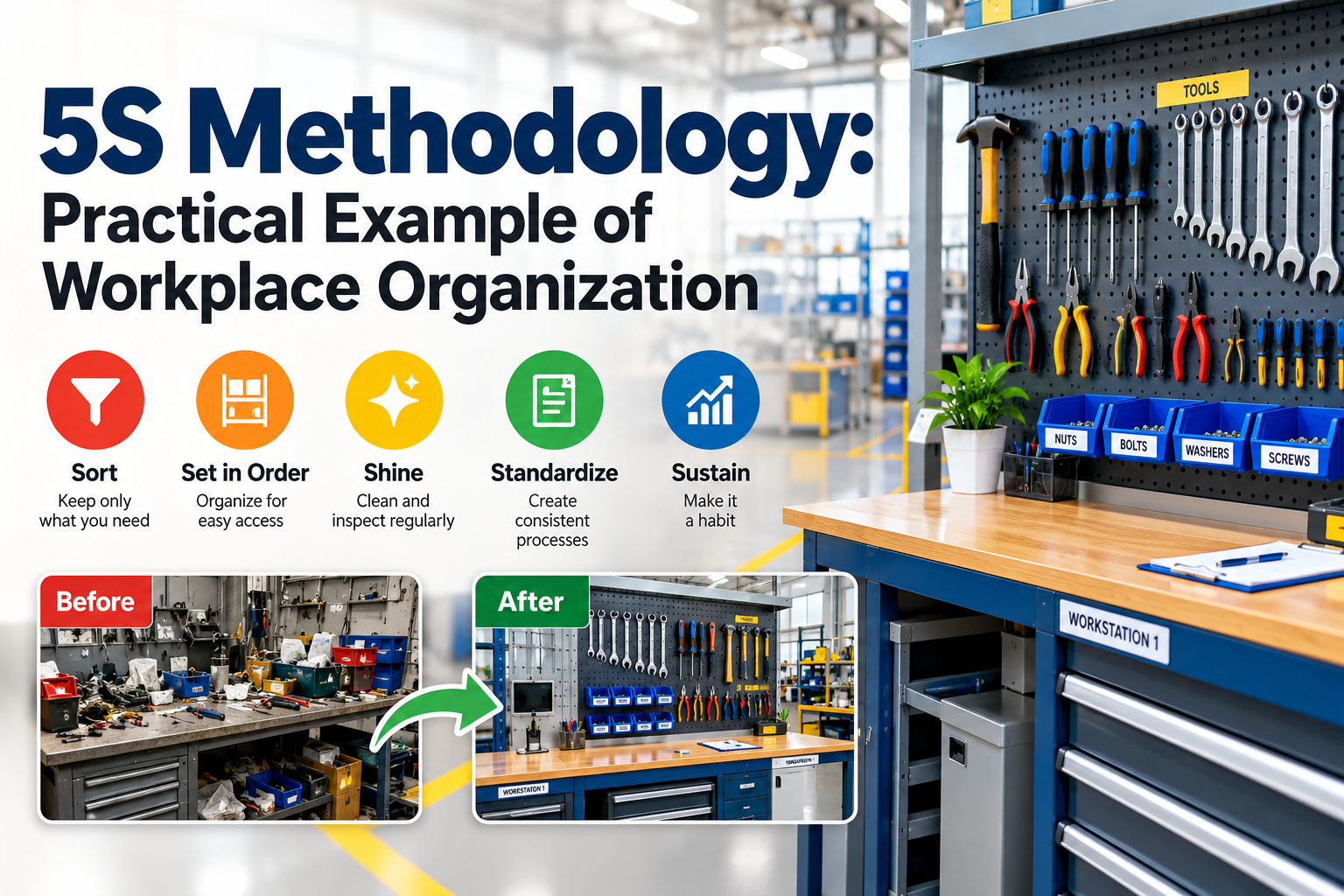
In today's fast-paced business environment, efficiency and productivity are paramount. One of the most effective strategies to achieve this is through the 5S methodology. Originating from Japan, this systematic approach to workplace organization can revolutionize how your team operates. This article will delve into the 5S methodology, providing practical examples that resonate with Indian workplaces.
Understanding the 5S Methodology
The 5S methodology is a lean management tool that focuses on organizing and managing the workspace and work flow efficiently and effectively. The term "5S" refers to five Japanese words that translate to five steps: Sort, Set in Order, Shine, Standardize, and Sustain. Let's break down each step to understand its significance.
1. Sort (Seiri)
The first step in the 5S methodology is to sort through all items in the workspace. This involves removing unnecessary items that do not add value to the work process. In an Indian manufacturing unit, for instance, sorting may involve eliminating outdated tools, excessive raw materials, or broken equipment.
Practical Example: Imagine a small-scale textile factory in Surat. The workers begin by removing all tools and materials from their workstations. They categorize items into three groups: keep, discard, and relocate. This process not only clears the workspace but also helps workers identify essential items quickly.
2. Set in Order (Seiton)
After sorting, the second step is to arrange the remaining items in a systematic way. Every item should have a designated place, making it easy to locate and return after use. This step is crucial for minimizing time spent searching for tools and materials.
Practical Example: In an IT office in Bengaluru, desks are organized with file racks and labeled boxes. Each team member has a specific area for their equipment, and all frequently used items are placed within arm's reach. This organization allows for smooth transitions between tasks and reduces clutter.
3. Shine (Seiso)
The third S stands for Shine, which emphasizes cleanliness and orderliness in the workplace. A clean environment not only enhances productivity but also boosts morale among employees.
Practical Example: Consider a food processing unit in Pune. Regular cleaning schedules are established, where employees are assigned specific areas to maintain cleanliness. This includes cleaning machinery, work surfaces, and even the floor. As a result, workers take pride in their workspace, leading to enhanced efficiency and reduced accidents.
4. Standardize (Seiketsu)
The fourth step is to standardize the processes put in place during the first three S's. This ensures that the best practices are documented and maintained over time. Creating checklists and guidelines can help reinforce these standards.
Practical Example: In a logistics company in Mumbai, standard operating procedures (SOPs) are developed for each department, detailing the organization of materials and cleanliness protocols. Employees receive training on these standards, ensuring everyone is aligned and accountable for maintaining the workspace.
5. Sustain (Shitsuke)
The final step is about sustaining the improvements made over time. It involves instilling discipline in employees, encouraging them to follow the established practices consistently.
Practical Example: A manufacturing plant in Chennai implements weekly review meetings to discuss the adherence to the 5S methodology. Employees are recognized and rewarded for maintaining the standards, fostering a culture of continuous improvement.
Benefits of Implementing the 5S Methodology
Adopting the 5S methodology can lead to numerous benefits for Indian businesses:
- Improved Efficiency: By organizing the workspace, employees can find tools and materials quickly, leading to enhanced productivity.
- Enhanced Safety: A clean and organized workspace reduces the risk of accidents and injuries.
- Better Quality: An orderly environment can lead to fewer errors and improved quality of work.
- Cost Savings: Reducing waste and improving efficiency can lead to significant cost savings over time.
- Employee Satisfaction: A clean and organized workplace boosts morale and job satisfaction among employees.
Challenges in Implementing the 5S Methodology
While the benefits are clear, implementing the 5S methodology can come with challenges:
- Resistance to Change: Employees may resist changing their habits and routines.
- Inconsistent Application: Without proper training and commitment, the 5S principles may not be applied consistently.
- Lack of Management Support: Successful implementation requires support from leadership; otherwise, it may falter.
FAQs about the 5S Methodology
1. What industries can benefit from the 5S methodology?
The 5S methodology can be applied across various industries, including manufacturing, healthcare, IT, and retail. Any organization looking to enhance efficiency and organization can benefit.
2. How long does it take to implement the 5S methodology?
The time required to implement the 5S methodology varies depending on the size of the organization and the complexity of the processes. However, initial implementation can typically take a few weeks to a few months.
3. Can 5S methodology be implemented in small businesses?
Absolutely! The 5S methodology is particularly beneficial for small businesses looking to optimize resources and improve productivity. The principles can be scaled to fit any organization, regardless of size.
4. What tools are needed to implement 5S?
While no specific tools are required, implementing the 5S methodology can be enhanced by using checklists, labeling materials, and visual management tools like charts and boards.
5. How do I sustain the 5S methodology in my organization?
Sustaining the 5S methodology requires ongoing training, regular audits, and a commitment to continuous improvement. Recognizing and rewarding employees for adhering to 5S practices can also help maintain momentum.
Conclusion
The 5S methodology offers a robust framework for improving workplace organization and efficiency. By implementing these five steps—Sort, Set in Order, Shine, Standardize, and Sustain—organizations in India can create a more productive and harmonious work environment. Whether you run a small business or manage a large corporation, adopting the 5S principles can lead to significant improvements in operational performance.
Are you ready to transform your workplace with the 5S methodology? Start your journey today and witness the incredible changes it can bring to your organization!
Call to Action: If you have any questions or need assistance in implementing the 5S methodology in your workplace, feel free to reach out to us. Let’s work together to enhance your organization’s efficiency and productivity!


Leave a Comment