
 Quality Management



















 IT Service Management



 Project Management



 Agile Management



 Web Development



 Cloud Computing


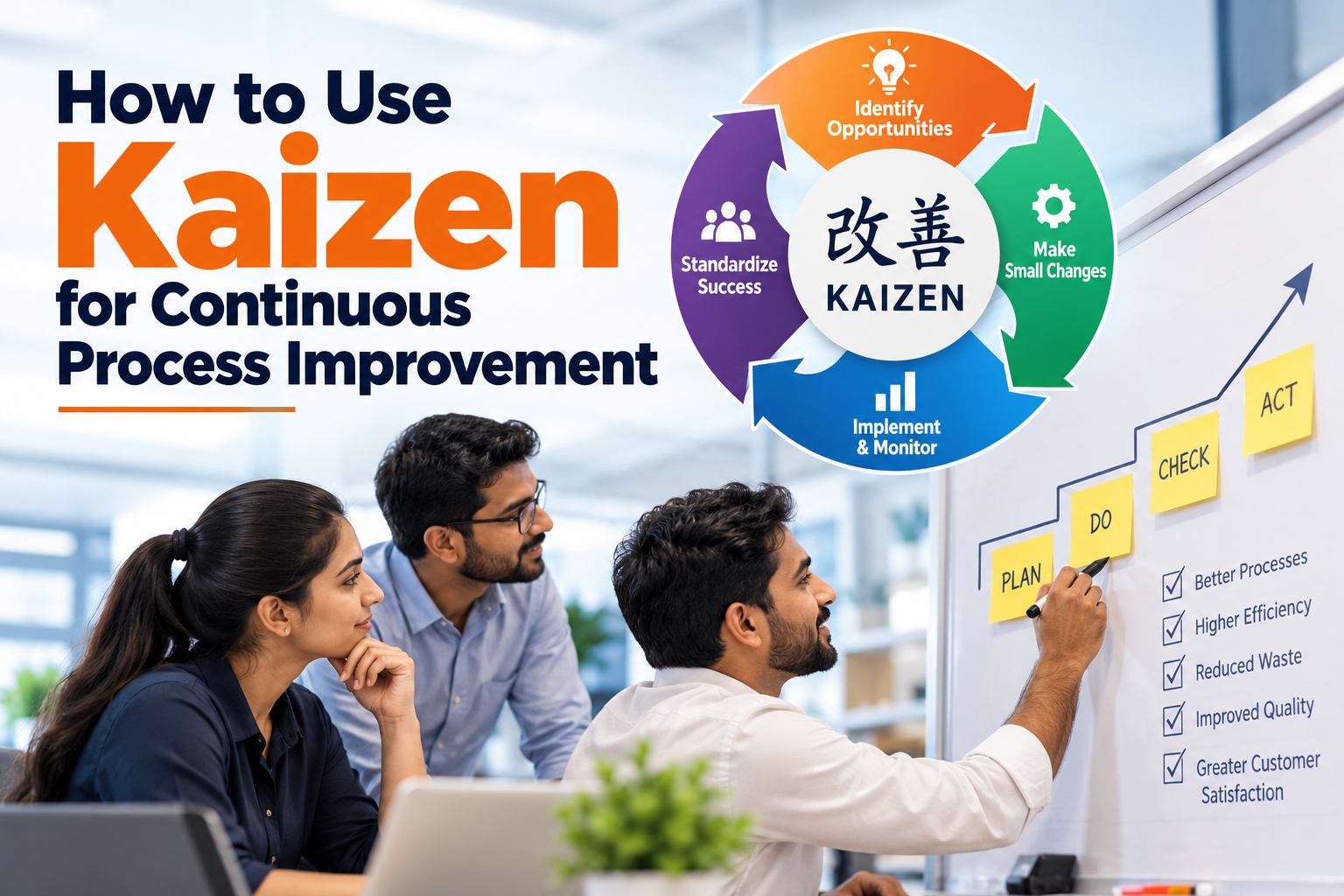
In today's fast-paced business environment, organizations are constantly seeking ways to improve their processes and enhance efficiency. One effective approach that has gained popularity in recent years is the Kaizen methodology, a Japanese term meaning "continuous improvement." This blog will explore how you can implement Kaizen for ongoing process enhancement, particularly focusing on its relevance to Indian businesses.
Understanding Kaizen Methodology
Kaizen is not just a set of tools; it's a philosophy that encourages every employee, from top management to front-line workers, to contribute to incremental improvements. The core idea is that small, continuous changes can lead to significant improvements over time. This concept is particularly applicable in Indian industries, where traditional practices can often be enhanced through modern methodologies.
Key Principles of Kaizen
1. Respect for People
At the heart of the Kaizen methodology is the respect for individuals. Engaging employees in the improvement process fosters a culture of collaboration and respect. When employees feel valued, they are more likely to contribute ideas and suggestions for improvement.
2. Continuous Improvement
Kaizen emphasizes ongoing improvement rather than a one-time overhaul. Embracing continuous improvement means that organizations should always be on the lookout for ways to enhance processes, reduce waste, and improve quality.
3. Gemba (The Real Place)
Kaizen stresses the importance of going to the source to understand the process. This principle encourages managers to observe operations in real time to identify areas for improvement directly.
4. Iterative Changes
Instead of implementing drastic changes, Kaizen advocates for small, manageable adjustments. These incremental changes are easier to implement and less likely to encounter resistance from employees.
Implementing Kaizen in Your Organization
1. Foster a Culture of Continuous Improvement
To successfully implement the Kaizen methodology, it’s essential to cultivate a culture that embraces change. This involves training employees at all levels about the principles of Kaizen and how they can contribute. Regular workshops and training sessions can be effective in promoting this philosophy.
2. Identify Areas for Improvement
Conduct a thorough analysis of your current processes to identify bottlenecks and inefficiencies. Engage your team in brainstorming sessions to gather insights on areas needing improvement. This collaborative approach not only helps in identifying problems but also encourages ownership among employees.
3. Set Clear Goals
Once you've identified areas for improvement, set clear and measurable goals. These should be realistic and achievable within a specific timeframe. Clear goals will help keep the team focused and motivated.
4. Implement Changes Gradually
Instead of making sweeping changes, implement improvements gradually. This allows you to assess the impact of each change and make adjustments as necessary. It also minimizes disruption to daily operations.
5. Measure and Analyze Results
After implementing changes, it’s crucial to measure their effectiveness. Use KPIs (Key Performance Indicators) to evaluate whether the changes lead to improvements. Regularly review these metrics to ensure continuous progress.
6. Encourage Feedback
Feedback is an integral part of the Kaizen methodology. Encourage employees to provide input on the changes made and how they can be further improved. This creates a sense of involvement and fosters a culture of continuous improvement.
Challenges in Implementing Kaizen
While the Kaizen methodology offers numerous benefits, organizations may face challenges during implementation:
1. Resistance to Change
Employees accustomed to traditional ways of working may resist new processes. To overcome this, emphasize the long-term benefits of Kaizen and involve them in the decision-making process.
2. Lack of Management Support
Successful Kaizen implementation requires commitment from upper management. Leaders should actively participate in improvement initiatives and encourage a culture of innovation.
3. Insufficient Training
Without proper training and understanding of the Kaizen principles, employees may struggle to implement changes effectively. Invest in training programs to equip your team with the necessary skills.
Real-Life Examples of Kaizen in Indian Industries
Many Indian companies have successfully adopted the Kaizen methodology to enhance their operations:
1. Tata Motors
Tata Motors implemented Kaizen practices in their manufacturing plants, focusing on waste reduction and increased efficiency. By involving employees in the improvement process, they achieved significant cost savings and enhanced product quality.
2. Infosys
Infosys adopted Kaizen to streamline their project management processes. Through continuous feedback and iterative improvements, they enhanced their service delivery and client satisfaction.
FAQs about Kaizen Methodology
What is the primary goal of the Kaizen methodology?
The primary goal of the Kaizen methodology is to foster a culture of continuous improvement within an organization, encouraging all employees to contribute to enhancing processes and eliminating waste.
How can Kaizen benefit my organization?
Kaizen can lead to improved efficiency, reduced costs, enhanced quality, and greater employee engagement. It empowers employees to take ownership of their work and promotes a proactive approach to problem-solving.
Is Kaizen suitable for all types of businesses?
Yes, Kaizen can be applied in various industries, from manufacturing to services. Its principles are versatile and can be tailored to fit the specific needs of any organization.
How do I start implementing Kaizen in my organization?
Begin by fostering a culture of continuous improvement, identifying areas for enhancement, setting clear goals, and involving employees in the process. Gradually implement changes and measure their effectiveness.
Conclusion
Implementing the Kaizen methodology can lead to significant improvements in your organization's processes. By fostering a culture of continuous improvement, engaging employees, and focusing on incremental changes, you can enhance efficiency and productivity. Embrace Kaizen today and watch your organization thrive in the competitive market.
Call to Action
If you're ready to take your organization to the next level with the Kaizen methodology, contact us today! Our team of experts can help you implement effective strategies for continuous process improvement tailored to your business needs.




Leave a Comment