
 Quality Management



















 IT Service Management



 Project Management



 Agile Management




 Web Development



 Cloud Computing


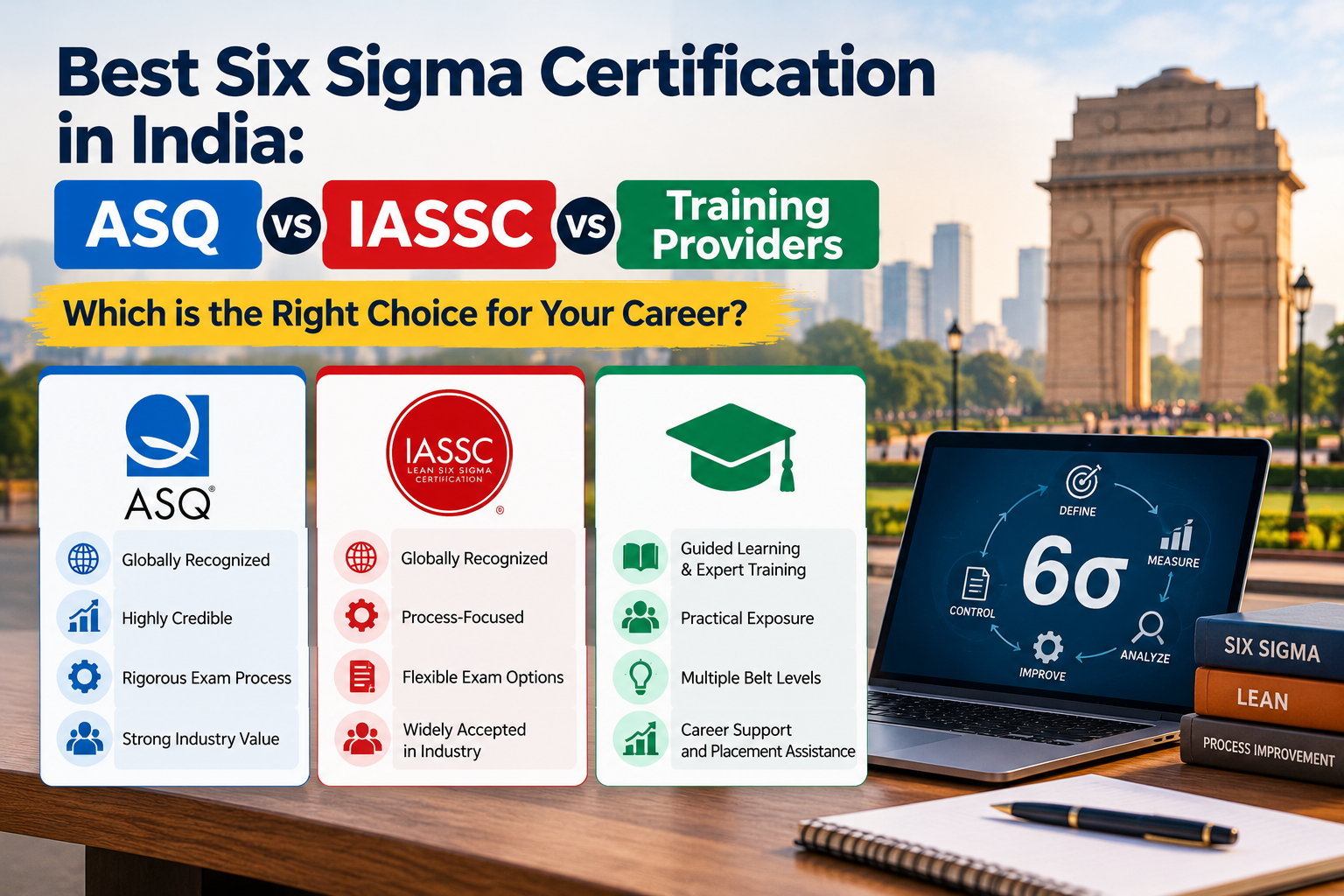
Are you contemplating the best way to enhance your career prospects in quality management? With the increasing demand for Six Sigma professionals across various industries in India, choosing the right certification can significantly impact your career trajectory. But with so many options available, how do you decide between ASQ, IASSC, and other training providers?
- Understanding Six Sigma certifications and their significance.
- Comparing ASQ and IASSC certifications.
- Evaluating the costs and benefits of various training providers.
- Common myths surrounding Six Sigma certification.
- Key tips for choosing the best certification for your career.
Understanding Six Sigma Certifications
Six Sigma is a data-driven methodology aimed at eliminating defects and improving processes in various sectors including manufacturing, healthcare, and IT. In India, obtaining a Six Sigma certification can open doors to numerous job opportunities and higher salaries. The most recognized certifications come from various certification bodies like the American Society for Quality (ASQ) and the International Association for Six Sigma Certification (IASSC).
ASQ vs IASSC: A Detailed Comparison
When evaluating the best Six Sigma certification in India, ASQ and IASSC are two leading bodies that often come up. Here’s how they compare:
| Criteria | ASQ | IASSC |
|---|---|---|
| Certification Levels | Yellow Belt, Green Belt, Black Belt | Yellow Belt, Green Belt, Black Belt |
| Recognition | Highly regarded, especially in manufacturing | Globally recognized |
| Exam Format | Multiple choice, open book | Multiple choice, closed book |
| Exam Fees (₹) | ₹20,000 - ₹30,000 | ₹15,000 - ₹20,000 |
| Validity | Lifetime | Lifetime |
Career Benefits of Six Sigma Certification
Holding a Six Sigma certification can lead to numerous career advancements and opportunities:
- Higher Salary: Certified professionals typically earn ₹5,00,000 to ₹15,00,000 annually, depending on experience and industry.
- Increased Job Opportunities: Many companies prefer candidates with Six Sigma credentials for roles in quality management, process improvement, and project management.
- Enhanced Skills: Certification processes equip you with valuable skills in data analysis, project management, and team leadership.
Common Myths About Six Sigma Certification
There are several misconceptions about Six Sigma certifications that can hinder potential candidates:
- Myth 1: Six Sigma is only for engineers - Reality: It's applicable across various sectors including healthcare, finance, and IT.
- Myth 2: Certification guarantees a job - Reality: While it enhances your profile, practical experience and networking are equally crucial.
- Myth 3: Six Sigma is too technical - Reality: The methodology is designed to be accessible to professionals from diverse backgrounds.
Cost of Six Sigma Certifications in India
Understanding the financial investment required for Six Sigma certification is essential. Here’s a breakdown of costs associated with various certification bodies:
| Certification Body | Certification Level | Approximate Exam Fees (₹) | Training Provider Fees (₹) |
|---|---|---|---|
| ASQ | Green Belt | ₹20,000 - ₹30,000 | ₹30,000 - ₹50,000 |
| IASSC | Green Belt | ₹15,000 - ₹20,000 | ₹25,000 - ₹45,000 |
| Other Providers | Green Belt | ₹10,000 - ₹25,000 | ₹20,000 - ₹40,000 |
Eligibility and Exam Considerations in India
When considering Six Sigma certification, it's important to know the eligibility criteria:
- Educational Background: Most certification bodies require a bachelor's degree or equivalent.
- Work Experience: Some levels, especially Black Belt, may require prior experience in project management or quality assurance.
- Exam Preparation: It's advisable to take preparatory courses, especially for the Black Belt level, to understand complex concepts.
Expert Tips for Choosing the Right Certification
To ensure you make the best choice for your career, consider the following tips:
- Evaluate your career goals: Understand how a certification aligns with your future aspirations.
- Research training providers: Look for accredited institutions with good reviews and success stories.
- Consider your industry: Different industries may have preferences for specific certification bodies.
Frequently Asked Questions
What is the best Six Sigma certification in India?
The best Six Sigma certification in India often depends on your career goals and industry. However, ASQ and IASSC certifications are widely recognized and highly regarded.
How much do Six Sigma certification exams cost in India?
Six Sigma certification exam fees in India typically range from ₹10,000 to ₹30,000 depending on the certification body and level.
What are the prerequisites for Six Sigma certification?
Prerequisites vary by certification level, but generally, a bachelor’s degree and some work experience in a related field are recommended, especially for higher levels like Black Belt.
Is online training for Six Sigma certification effective?
Yes, many candidates find online training for Six Sigma certification effective, especially when the course includes interactive elements and real-world case studies.
What is the salary range for Six Sigma certified professionals in India?
Six Sigma certified professionals in India can earn between ₹5,00,000 to ₹15,00,000 annually, depending on their level of certification, experience, and the industry they work in.
Are there any myths about Six Sigma certification?
Common myths include beliefs that Six Sigma is only for engineers or that certification guarantees a job. In reality, it is applicable across various sectors and requires practical experience for job placement.
If you’re ready to take the next step in your career and explore Six Sigma certification, Haworth Solutions offers comprehensive training programs tailored for professionals like you. Contact us to book a free demo session or request a corporate training quote today!



.png)
Leave a Comment