
 Quality Management


















 IT Service Management



 Project Management



 Agile Management



 Web Development



 Cloud Computing


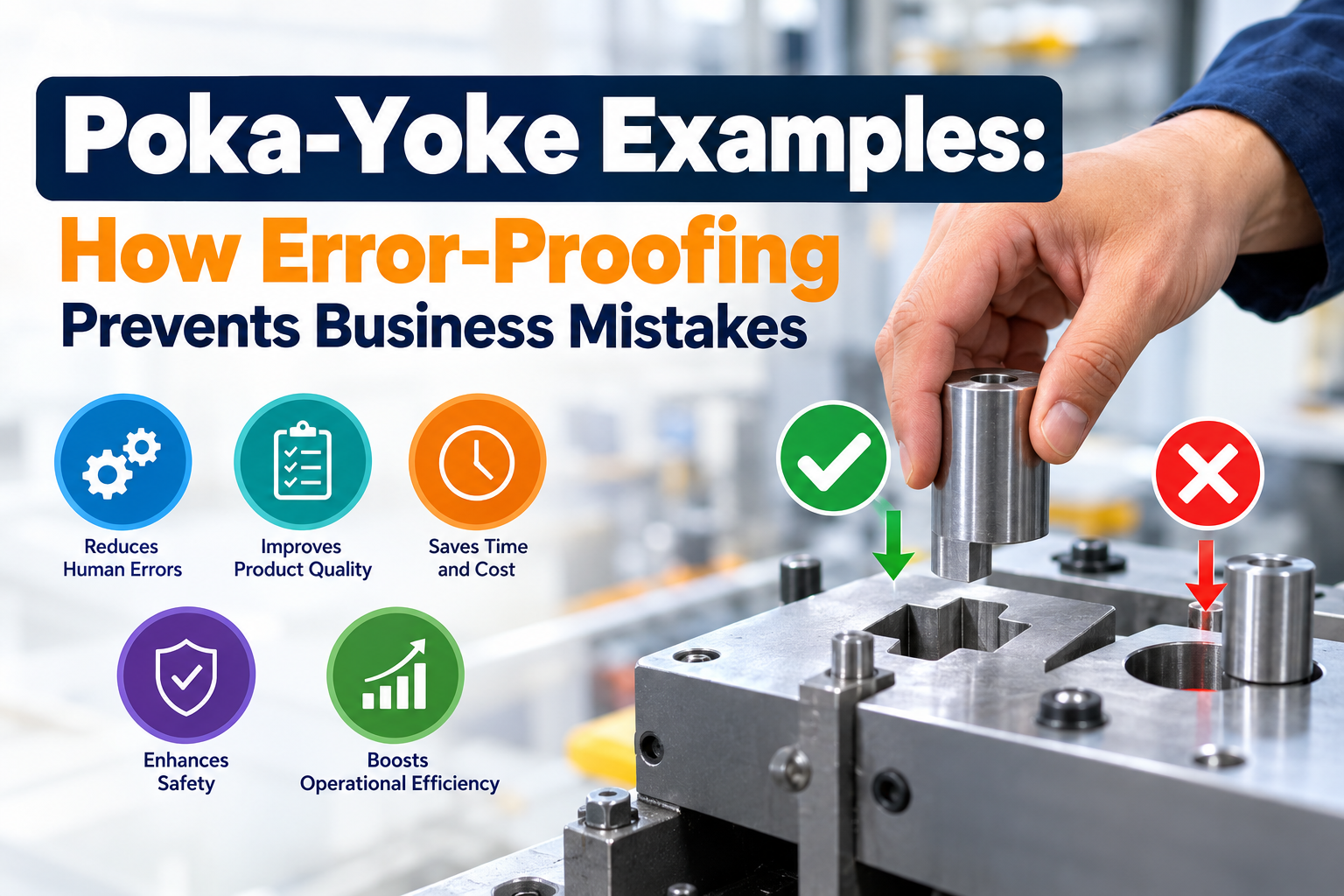
In the fast-paced world of business, mistakes can be costly—both financially and reputationally. As companies strive for excellence, the need for effective error-proofing methods has never been more critical. One such method gaining traction in India is Poka-Yoke, a Japanese term meaning “mistake-proofing.” This article explores various Poka-Yoke examples and how implementing these strategies can significantly reduce errors and enhance productivity.
Understanding Poka-Yoke
Poka-Yoke was developed by Shigeo Shingo as part of the Toyota Production System. It focuses on designing processes and systems that make it nearly impossible to make mistakes. The goal is to ensure that errors are detected and corrected before they lead to defects or failures.
In an Indian context, where businesses are increasingly adopting lean methodologies and quality control measures, Poka-Yoke examples can be a game-changer. They not only streamline operations but also foster a culture of continuous improvement.
Poka-Yoke Examples in Various Industries
1. Manufacturing Industry
In the manufacturing sector, where precision is paramount, Poka-Yoke examples often involve simple physical mechanisms. For instance, consider a scenario where an assembly line worker is tasked with inserting a screw into a component. A common Poka-Yoke mechanism is the use of color-coded screws and holes. If a worker attempts to use the wrong screw, the mismatch in color will serve as a visual cue, prompting them to correct the error before proceeding.
2. Hospitality Sector
The hospitality industry thrives on customer satisfaction, making error-proofing vital. A notable example is the use of checklists by hotel staff. When preparing rooms, staff can follow a printed checklist that ensures every task—like checking for cleanliness and amenities—is completed. This simple yet effective Poka-Yoke mechanism minimizes the chances of overlooking essential tasks, leading to a better guest experience.
3. Healthcare Services
In healthcare, even minor mistakes can have severe consequences. One effective Poka-Yoke example is the use of pre-filled syringes. These syringes are designed to prevent dosage errors by providing a clear visual indication of the medication and its quantity. Furthermore, hospitals in India have started employing barcode scanning systems for patient identification. This mechanism ensures that the right patient receives the right treatment, thus avoiding potentially life-threatening errors.
4. Retail Sector
Retailers can also benefit from Poka-Yoke techniques. For instance, automated checkout systems utilize weight sensors to ensure that the items scanned match the items placed in the bagging area. If the weight doesn’t match, the system alerts the cashier, preventing theft or errors in pricing. This is a practical Poka-Yoke example that safeguards both the retailer and the customer.
5. Information Technology
In the realm of software development, Poka-Yoke can manifest in the form of input validation. For example, when filling out a form, users are prompted to enter data in the correct format. If a user tries to enter text in a phone number field, the system immediately flags the error, ensuring that the correct data is captured. This not only improves data quality but also enhances user experience.
Benefits of Implementing Poka-Yoke
Adopting Poka-Yoke techniques offers numerous benefits for businesses in India:
- Error Reduction: By implementing simple yet effective mechanisms, businesses can significantly reduce the frequency of errors.
- Cost Savings: Fewer mistakes mean lower costs associated with rework, returns, and customer complaints.
- Improved Efficiency: Streamlined processes lead to faster turnaround times and increased productivity.
- Enhanced Customer Satisfaction: Fewer errors translate into better quality products and services, boosting customer loyalty.
- Cultivation of a Quality Culture: Poka-Yoke encourages a mindset focused on quality, benefiting the entire organization.
How to Implement Poka-Yoke in Your Business
For Indian businesses looking to implement Poka-Yoke, here are some practical steps:
- Identify Critical Processes: Begin by analyzing processes prone to errors. Focus on those that significantly impact quality or customer satisfaction.
- Engage Employees: Involve employees in brainstorming sessions to identify potential Poka-Yoke solutions. Their hands-on experience can provide valuable insights.
- Design Simple Solutions: The best Poka-Yoke solutions are often the simplest. Look for straightforward mechanisms that can be easily integrated into existing processes.
- Test and Iterate: Implement the solutions on a small scale first. Gather feedback and make necessary adjustments before full-scale implementation.
- Monitor and Improve: Continuously monitor the effectiveness of Poka-Yoke mechanisms and be open to improvements as processes evolve.
FAQs About Poka-Yoke
What does Poka-Yoke mean?
Poka-Yoke is a Japanese term that translates to “mistake-proofing.” It refers to techniques and mechanisms designed to prevent errors in processes.
Can Poka-Yoke be applied to service industries?
Yes, Poka-Yoke can be effectively applied to service industries, such as hospitality and healthcare, to minimize errors and enhance service quality.
What are some common examples of Poka-Yoke in daily life?
Common examples include color-coded wiring in electronics, the design of plug-and-play devices, and automated systems that prompt users for correct input.
Is Poka-Yoke expensive to implement?
No, many Poka-Yoke solutions are low-cost or even free. The key is to identify simple mechanisms that can be integrated into existing processes.
Conclusion
Poka-Yoke is more than just a methodology; it is a mindset that encourages businesses to strive for perfection by minimizing errors. By implementing Poka-Yoke examples tailored to their unique processes, Indian businesses can enhance efficiency, reduce costs, and improve customer satisfaction. The journey toward error-proofing begins with a single step—identify, innovate, and improve.
If you’re ready to take your business to the next level with Poka-Yoke techniques, don’t hesitate! Start exploring how these simple yet effective solutions can transform your operations today. For more insights on quality improvement strategies, subscribe to our newsletter or reach out for a consultation!



Leave a Comment