 Quality Management



















 IT Service Management



 Project Management


 Agile Management



 Web Development


 Cloud Computing
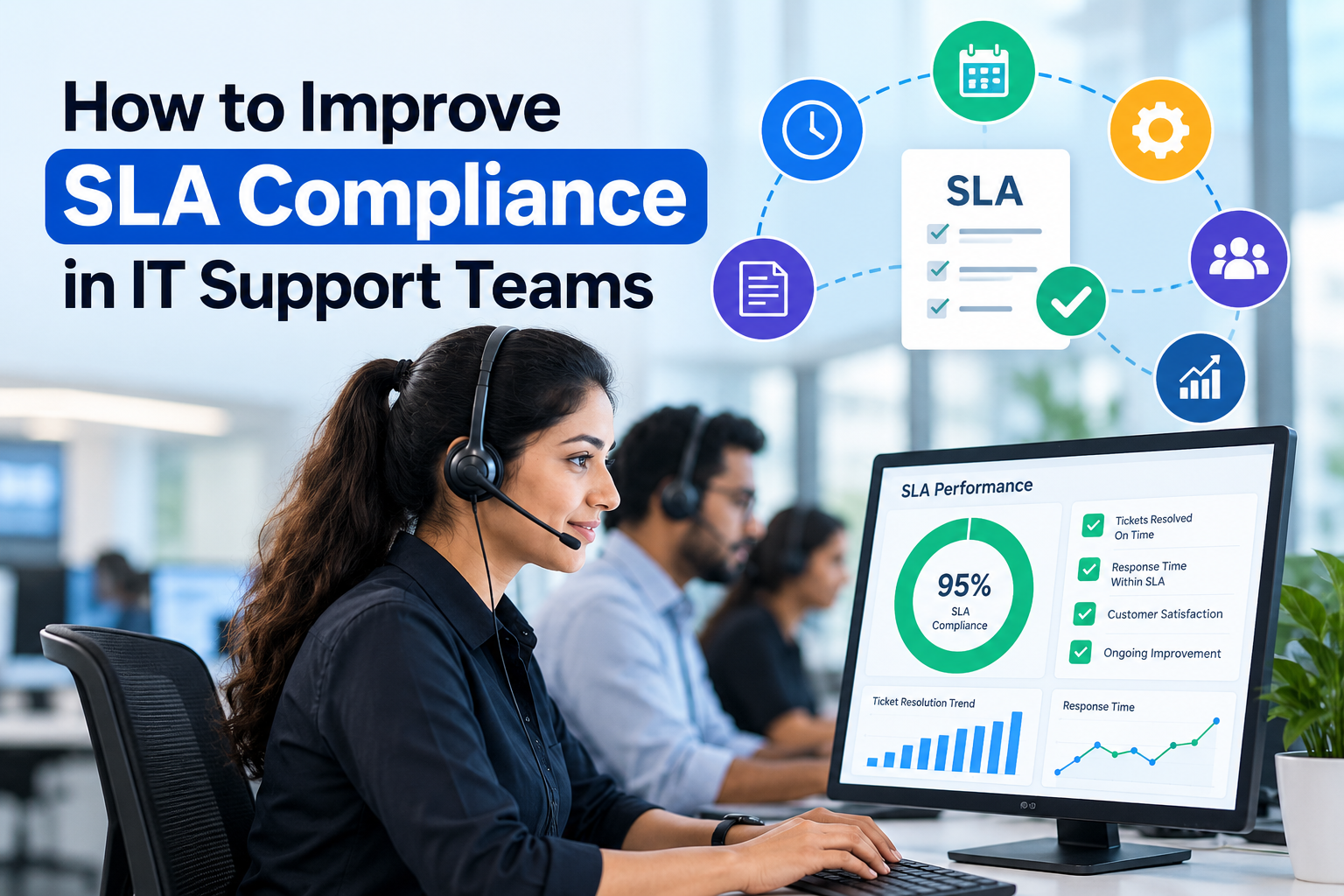
In the fast-paced world of IT support, achieving optimal Service Level Agreement (SLA) compliance is crucial for maintaining customer satisfaction and operational efficiency. SLA compliance not only helps in setting clear expectations but also plays a vital role in enhancing the overall productivity of IT support teams. In this blog, we will explore how to improve SLA compliance by focusing on essential elements like response and resolution targets, ticket priorities, breach alerts, reporting, and escalation matrices.
Understanding SLA Compliance
SLA compliance refers to the adherence to the terms outlined in a service level agreement, which can include response times, resolution times, and service quality metrics. For IT support teams, maintaining high SLA compliance is essential for client satisfaction, brand reputation, and operational efficiency.
Why is SLA Compliance Important?
High SLA compliance leads to:
- Improved customer satisfaction
- Enhanced team accountability
- Reduced churn rates
- Better resource allocation
1. Cover Response and Resolution Targets
The first step toward improving SLA compliance is defining clear response and resolution targets. These targets should be realistic and tailored to the specific needs of your organization and customers.
Setting Effective Response Targets
Response targets should be time-bound and should reflect the urgency of the issue. For instance:
- Critical issues should be responded to within 1 hour.
- High-priority issues should be addressed within 4 hours.
- Medium-priority issues should have a response time of 1 business day.
Establishing Resolution Targets
Resolution targets should also be categorized based on ticket priorities:
- Critical issues should be resolved within 4 hours.
- High-priority issues should take no longer than 1 business day.
- Medium-priority issues should be targeted for resolution within 3 business days.
2. Ticket Priorities: The Key to Effective Management
Prioritizing tickets is essential for effective SLA compliance. Not all issues hold the same weight; hence, categorizing them can significantly improve response and resolution times.
Creating a Priority Matrix
Your organization should establish a priority matrix that categorizes tickets into critical, high, medium, and low priorities. This matrix should be influenced by:
- Impact on business operations
- Number of users affected
- Compliance and regulatory requirements
Training Your Team
Ensure that your IT support team is well-trained in understanding the priority matrix. Regular training sessions can help them recognize the urgency of issues quickly.
3. Implementing Breach Alerts
Breach alerts are essential for monitoring SLA compliance in real-time. They notify the support team when a ticket is nearing its response or resolution target, allowing them to take immediate action.
Setting Up Automated Alerts
Utilizing automated tools can streamline the process of breach alerts. Here are some features to consider:
- Customizable alert thresholds based on ticket priorities.
- Real-time notifications via email or messaging apps.
- Dashboard indicators that highlight SLA compliance status.
4. Comprehensive Reporting
Regular reporting is a cornerstone for improving SLA compliance. It allows you to track performance metrics, identify trends, and make informed decisions.
Key Metrics to Monitor
When generating reports, focus on the following key metrics:
- Percentage of SLA compliance
- Average response and resolution times
- Number of tickets by priority level
- Trends in breach alerts
Using Reports for Continuous Improvement
Share these reports with your team to foster a culture of accountability. Encourage them to analyze the data and suggest improvements based on performance insights.
5. Establishing Escalation Matrices
When issues remain unresolved beyond the established SLA targets, having a well-defined escalation matrix is essential. This process ensures that critical issues receive the attention they deserve.
Creating an Effective Escalation Protocol
Define clear escalation paths for different ticket priorities:
- Critical issues should escalate immediately to senior management.
- High-priority issues should be escalated after the first breach alert.
- Medium-priority issues can be revisited if the resolution time exceeds the target.
Communicating the Escalation Process
Ensure that your team understands the escalation protocol. Regularly review this process and update it according to changes in your organization or customer needs.
Conclusion
Improving SLA compliance in IT support teams is a multifaceted approach that involves setting clear response and resolution targets, prioritizing tickets effectively, implementing breach alerts, conducting comprehensive reporting, and establishing escalation matrices. By focusing on these elements, businesses can enhance their service delivery, boost customer satisfaction, and promote a culture of accountability within their teams.
FAQs
What is SLA compliance in IT support?
SLA compliance in IT support refers to the adherence to the terms outlined in a service level agreement, including response times, resolution times, and service quality metrics.
Why is it essential to prioritize tickets?
Prioritizing tickets helps ensure that the most critical issues are addressed promptly, enhancing overall SLA compliance and customer satisfaction.
How can breach alerts help improve SLA compliance?
Breach alerts notify the support team when a ticket is nearing its response or resolution target, allowing them to take immediate action to prevent SLA violations.
What metrics should I track for SLA compliance?
Key metrics include percentage of SLA compliance, average response and resolution times, number of tickets by priority level, and trends in breach alerts.
How can I communicate the escalation process effectively?
Regular training sessions, visual aids like flowcharts, and documentation can help ensure that the escalation process is well understood by your IT support team.
Call to Action
Are you ready to enhance your IT support team's SLA compliance? Start by implementing the strategies discussed in this blog, and watch your customer satisfaction soar! For more insights and tailored solutions, feel free to contact us today!


Leave a Comment