
 Quality Management



















 IT Service Management



 Project Management



 Agile Management




 Web Development



 Cloud Computing


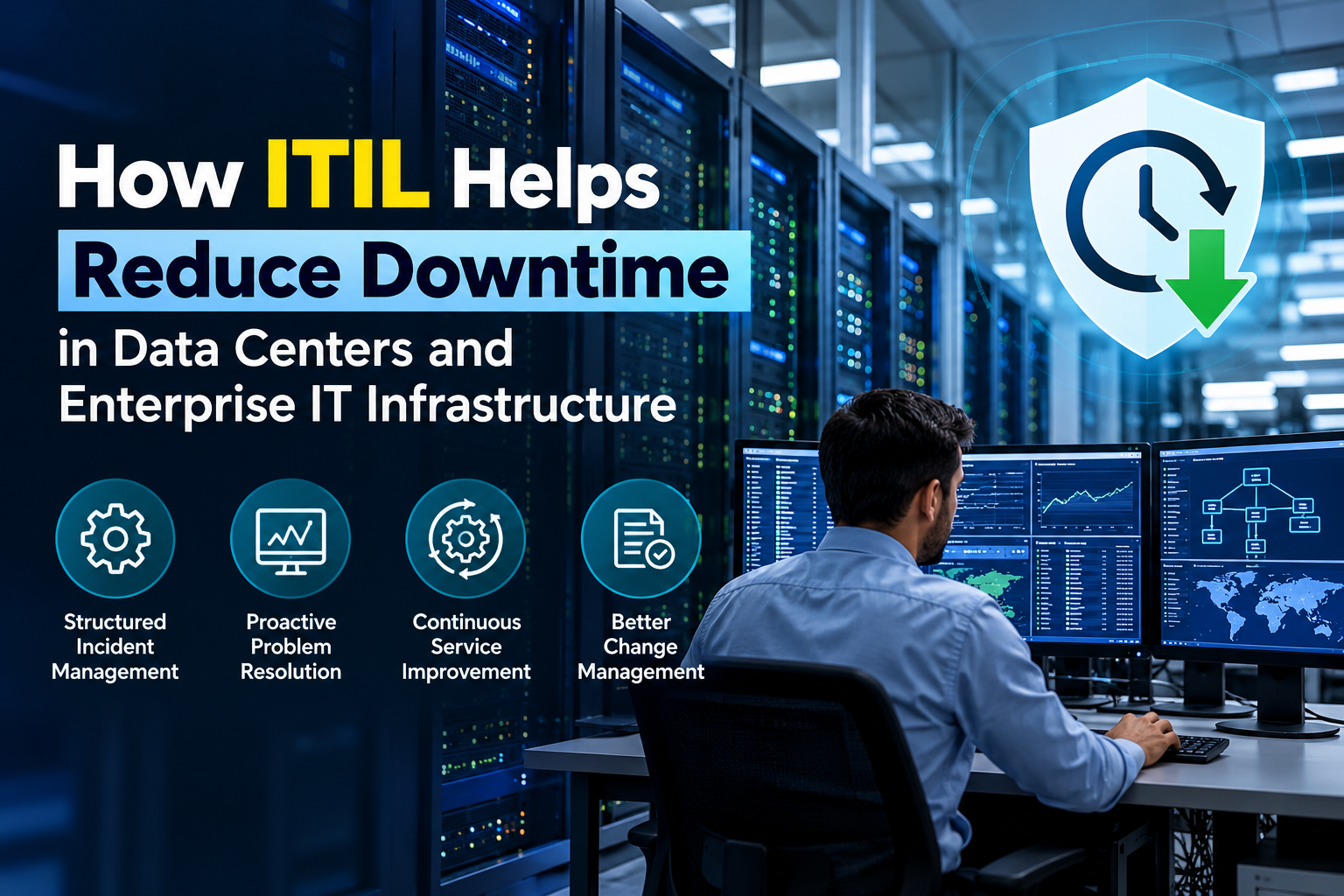
In today's fast-paced digital landscape, data centers and enterprise IT infrastructure play a crucial role in the success of every organization. With the increasing reliance on technology, the need for optimal performance and minimal downtime has never been greater. This is where ITIL (Information Technology Infrastructure Library) comes into the picture. By implementing ITIL practices, organizations can significantly reduce downtime, enhance service delivery, and improve overall operational efficiency. In this blog post, we will explore how connecting ITIL practices with monitoring, incident response, change control, availability, and service continuity can help streamline IT operations and minimize disruptions.
Understanding ITIL and Its Importance
ITIL is a set of best practices designed for IT service management (ITSM). It provides a framework that helps organizations align their IT services with business needs, ensuring that IT delivers value to the organization. ITIL emphasizes service management as a critical component of IT operations, focusing on delivering quality services while minimizing risks and maximizing productivity.
For Indian enterprises, adopting ITIL practices can lead to improved service quality, increased customer satisfaction, and reduced operational costs. In a country where competition is fierce, having a robust IT infrastructure is essential for staying ahead of the curve.
Key ITIL Practices to Reduce Downtime
1. Monitoring
Effective monitoring is the cornerstone of a resilient IT infrastructure. ITIL provides guidelines for implementing monitoring tools that help track system performance, resource utilization, and service health. By continuously monitoring the IT environment, organizations can proactively identify potential issues before they escalate into significant problems.
For instance, with real-time monitoring, IT teams can detect unusual spikes in server load or bandwidth usage, allowing them to take immediate corrective actions. This proactive approach significantly reduces the risk of downtime and ensures that services remain available to users.
2. Incident Response
Despite best efforts, incidents are inevitable in any IT environment. ITIL's incident management practices focus on minimizing the impact of incidents on service delivery. By establishing a well-defined incident response process, organizations can ensure that incidents are reported, prioritized, and resolved quickly and efficiently.
In India, where businesses operate in diverse sectors, having a streamlined incident response plan can be a game-changer. For example, if a critical application goes down, an effective incident response team can quickly diagnose the issue, communicate with stakeholders, and implement a fix, thus reducing downtime significantly.
3. Change Control
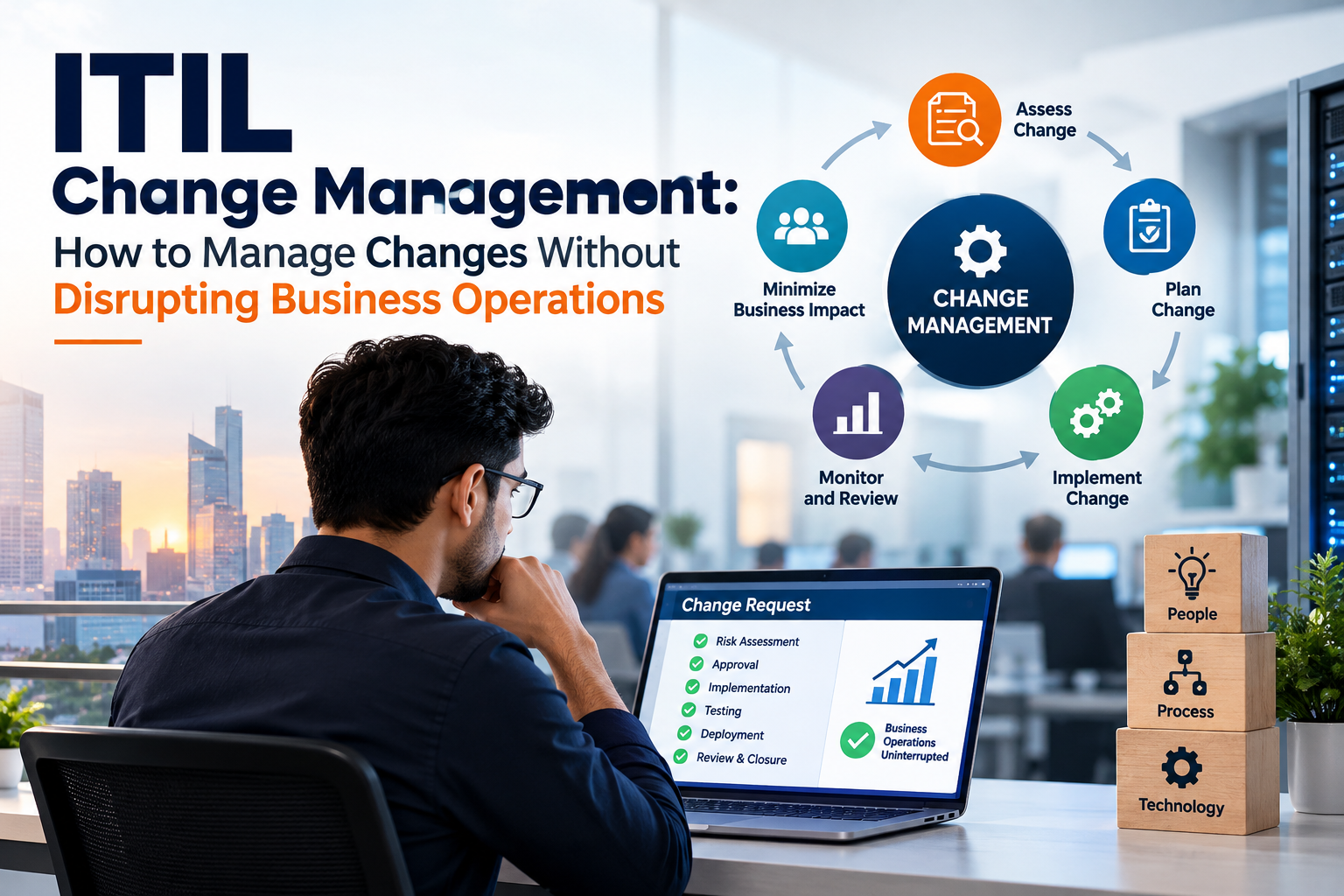
Change is a constant in the IT world, but poorly managed changes can lead to service disruptions. ITIL's change management framework emphasizes the importance of evaluating, approving, and implementing changes in a controlled manner. By following change control practices, organizations can minimize the risks associated with changes to their IT infrastructure.
For Indian enterprises, where rapid growth often necessitates frequent changes, having a robust change control process is vital. It ensures that any changes made to the IT environment are well-planned and tested, reducing the likelihood of failures that could lead to downtime.
4. Availability Management
Availability management is about ensuring that IT services are reliable and accessible whenever needed. ITIL provides a structured approach to assess and enhance the availability of services. By identifying critical services and establishing performance metrics, organizations can better understand their availability requirements.
In the Indian context, where businesses are increasingly reliant on digital services, ensuring high availability is crucial. ITIL practices help organizations set realistic availability targets, monitor performance against those targets, and implement strategies for improvement, thus significantly reducing downtime.
5. Service Continuity
Service continuity is essential for maintaining business operations in the event of a major incident or disaster. ITIL's service continuity management practices guide organizations in developing and testing business continuity plans. By having a robust plan in place, organizations can ensure that they can recover quickly from disruptions, minimizing downtime and its impact on the business.
For many Indian enterprises, having a service continuity plan is not just a best practice; it's a necessity. Businesses that can quickly recover from incidents are better positioned to maintain customer trust and satisfaction, which is vital in a competitive market.
Real-World Examples of ITIL in Action
Several organizations in India have successfully implemented ITIL practices to reduce downtime in their data centers and IT infrastructure. For instance, a leading e-commerce company adopted ITIL’s incident management framework and saw a 40% reduction in incident resolution times. This improvement not only enhanced service availability but also boosted customer satisfaction.
Similarly, a major banking institution leveraged ITIL’s change control practices to streamline their software deployment processes. By doing so, they reduced the risk of service disruptions caused by changes, ensuring that critical banking services remained available to customers at all times.
Challenges of Implementing ITIL in India
While ITIL offers numerous benefits, implementing its practices can come with challenges. Organizations may face resistance to change, lack of skilled personnel, or insufficient resources. It's crucial for businesses to invest in training and awareness programs to ensure that employees understand and embrace ITIL practices.
Moreover, organizations should consider customizing ITIL practices to fit their specific needs and culture. A one-size-fits-all approach may not work effectively in the diverse landscape of Indian enterprises.
Conclusion
In conclusion, connecting ITIL practices with monitoring, incident response, change control, availability, and service continuity is essential for reducing downtime in data centers and enterprise IT infrastructure. By adopting these best practices, Indian organizations can enhance service delivery, improve operational efficiency, and better align IT services with business objectives.
As the digital landscape continues to evolve, the importance of a resilient IT infrastructure cannot be overstated. Embracing ITIL is not just an option; it is a strategic necessity for organizations aiming to thrive in today's competitive environment.
FAQs
Q1: What is ITIL?
ITIL stands for Information Technology Infrastructure Library, a set of best practices for IT service management that helps organizations align their IT services with business needs.
Q2: How does ITIL reduce downtime?
ITIL reduces downtime by implementing structured practices in monitoring, incident response, change control, availability, and service continuity, allowing organizations to proactively manage their IT infrastructure.
Q3: Is ITIL suitable for all types of organizations?
Yes, ITIL can be adapted to suit organizations of all sizes and types, including those in diverse sectors like finance, healthcare, and e-commerce.
Q4: What are the key benefits of adopting ITIL?
Key benefits of adopting ITIL include improved service quality, reduced operational costs, enhanced customer satisfaction, and minimized risks associated with IT services.
Call to Action
If you are looking to enhance your organization's IT service management and reduce downtime, consider implementing ITIL practices today. Start by assessing your current IT operations and identifying areas for improvement. For further guidance, you can reach out to IT consultants or take ITIL training courses to equip your team with the necessary skills.
Don’t let downtime affect your business! Embrace ITIL and ensure your IT infrastructure is resilient and reliable.



Leave a Comment