
 Quality Management



















 IT Service Management



 Project Management



 Agile Management




 Web Development



 Cloud Computing


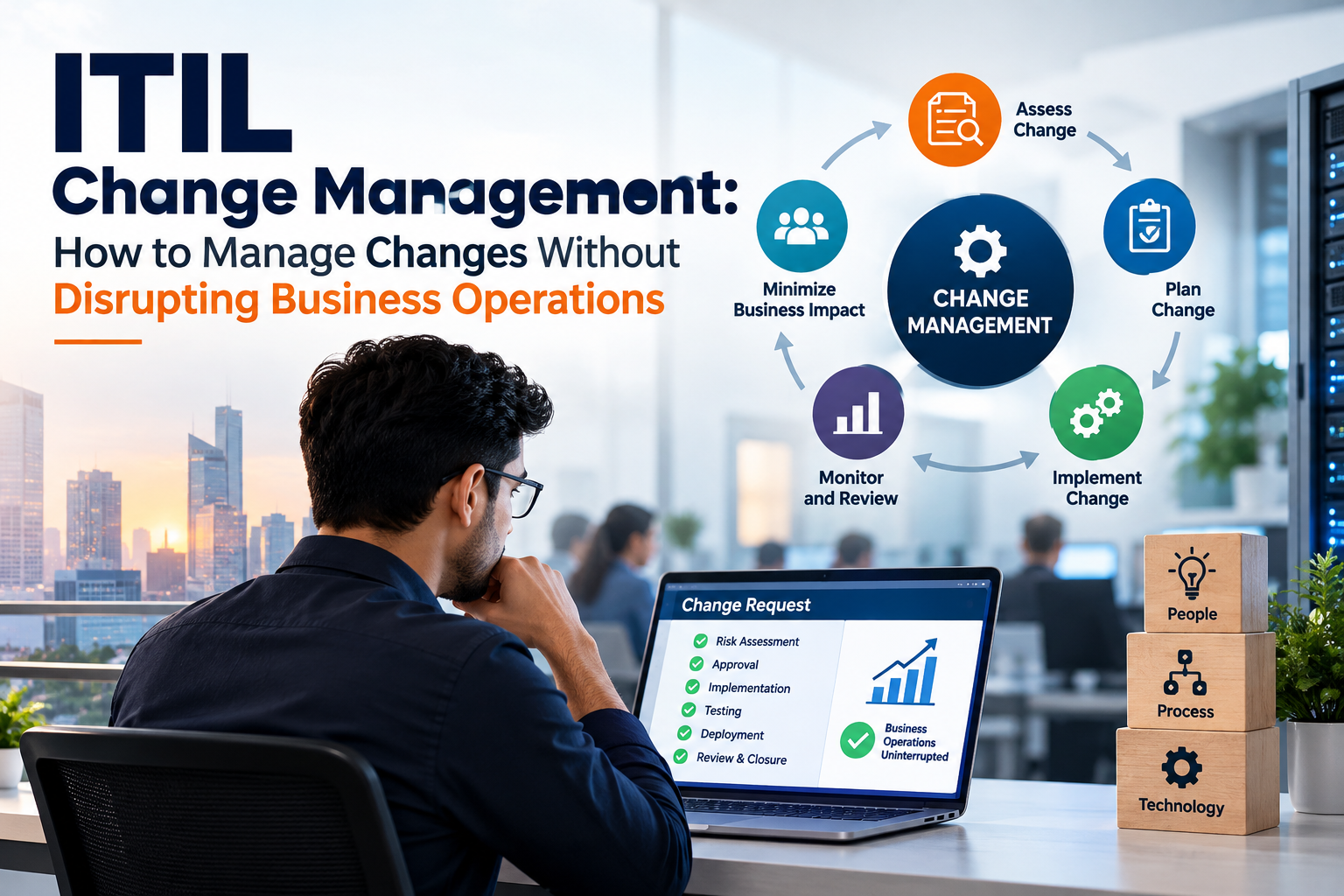
In today’s fast-paced technological landscape, managing changes within an organization is crucial for maintaining operational stability and efficiency. ITIL (Information Technology Infrastructure Library) provides a structured framework for managing these changes effectively. In this blog, we will explore various aspects of ITIL Change Management, including change requests, risk assessment, approvals, implementation, rollback plans, and post-implementation reviews. Understanding these components is essential for any organization, especially in the Indian context, where businesses are rapidly adopting digital transformation.
Understanding Change Management in ITIL
Change Management is a systematic approach to managing changes in IT services, ensuring that all changes are made with minimal disruption to services and business operations. The ITIL framework emphasizes the importance of a structured process to handle changes, which can range from minor updates to significant shifts in technology or processes.
What is a Change Request?
A change request is a formal proposal for an alteration to any component of the IT infrastructure. This may include changes to software, hardware, or any other IT services. In India, where businesses are often at different stages of digital maturity, understanding how to submit and manage change requests effectively is vital for seamless operations.
The change request must include details such as:
- Description of the change
- Reason for the change
- Impact assessment
- Proposed implementation timeline
Risk Assessment: The Backbone of Change Management
Before any change is approved, a thorough risk assessment must be conducted. This involves identifying potential risks associated with the change and evaluating their impact on current operations. In the Indian context, where businesses often operate in dynamic environments, a comprehensive risk assessment helps in making informed decisions.
Risk assessment typically includes:
- Identifying risks associated with the change
- Evaluating the likelihood of these risks occurring
- Determining the potential impact on business operations
- Developing mitigation strategies to address these risks
Approvals: Gaining Consensus
Once the risk assessment is complete, the next step involves obtaining the necessary approvals. This is a critical phase in the change management process as it ensures that all stakeholders are on board with the proposed change. In India, where collaborative decision-making is often valued, it’s essential to have clear communication channels and defined roles for approvals.
Key aspects of the approval process include:
- Identifying stakeholders who need to approve the change
- Setting up a Change Advisory Board (CAB) to review and endorse significant changes
- Documenting the approval process for future reference
Implementation: Putting Plans into Action
Once approvals are in place, the organization can move forward with the implementation of the change. This phase requires meticulous planning and execution to minimize disruption. In the Indian business landscape, where rapid changes can have significant downstream effects, effective implementation is key.
Successful implementation involves:
- Communicating the change to all affected parties
- Training staff, if necessary
- Following the established timeline and process
- Monitoring the implementation for any unforeseen issues
Rollback Plans: Preparing for the Unexpected
Despite careful planning, changes can sometimes lead to unexpected challenges. This is where having a rollback plan becomes essential. A rollback plan outlines the steps to revert to the previous state if the change does not yield the desired results or causes disruptions. In the context of Indian businesses, where the tolerance for downtime is often minimal, rollback plans can save both time and resources.
Key components of a rollback plan include:
- Steps to revert the changes made
- Establishing a timeline for rollback
- Identifying responsible personnel
- Testing the rollback process before actual implementation
Post-Implementation Reviews: Learning and Adapting
After a change has been implemented, it is crucial to conduct a post-implementation review. This review assesses whether the change met its objectives and identifies any areas for improvement. In the Indian IT landscape, where adaptability is key to business success, these reviews can provide valuable insights for future changes.
During the post-implementation review, consider the following:
- Did the change achieve its objectives?
- What challenges were faced during implementation?
- What lessons can be learned for future changes?
- How can the process be improved?
Conclusion
In conclusion, ITIL Change Management is a vital process for organizations looking to manage changes effectively without disrupting business operations. By understanding and implementing the components of change requests, risk assessment, approvals, implementation, rollback plans, and post-implementation reviews, Indian businesses can navigate the complexities of change management with confidence.
Whether you are a small startup or a large enterprise, adopting a structured approach to change management can significantly enhance your operational efficiency and minimize risks. As the business landscape continues to evolve, those who can adapt swiftly and effectively will remain competitive.
FAQs
What is the importance of change management in ITIL?
Change management in ITIL is crucial as it helps organizations manage changes systematically, reducing the risk of service disruptions and improving overall efficiency.
How can I improve my organization’s change management process?
To improve your change management process, ensure clear communication, involve all stakeholders, conduct thorough risk assessments, and regularly review and refine your processes based on feedback.
What should be included in a rollback plan?
A rollback plan should include the steps necessary to revert to the previous state, a timeline for executing the rollback, responsible personnel, and testing protocols for the rollback process.
Why are post-implementation reviews important?
Post-implementation reviews are important because they allow organizations to assess the success of changes, identify challenges faced, and gather insights for improving future changes.
Call to Action
If you’re looking to enhance your organization’s change management processes, we can help! Contact us today for expert guidance tailored to your specific needs. Together, we can build a robust change management strategy that ensures your business remains agile and competitive in the digital age.




Leave a Comment