 Quality Management


















 IT Service Management



 Project Management



 Agile Management




 Web Development



 Cloud Computing


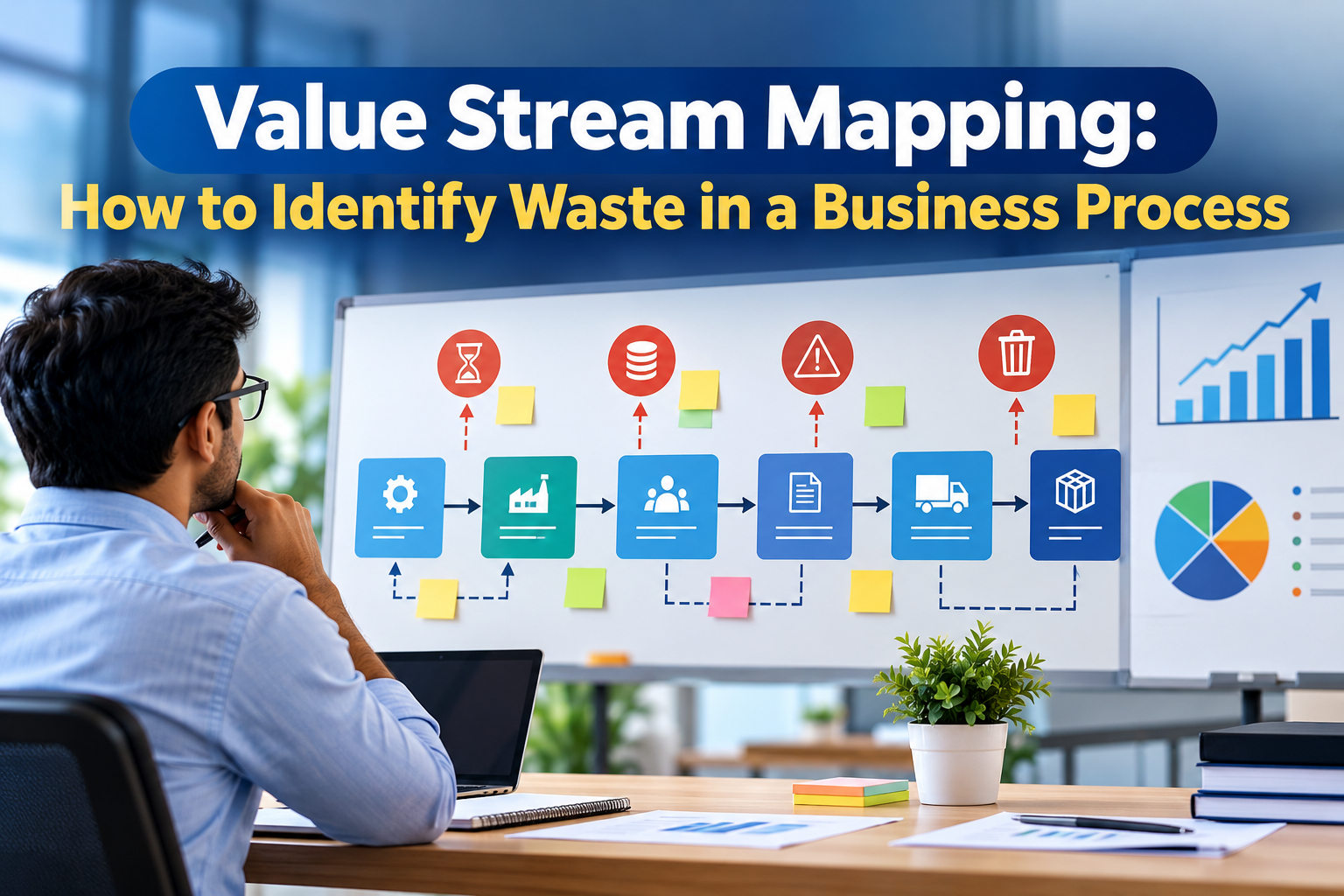
In today's fast-paced business environment, efficiency is paramount. Companies across India are constantly seeking ways to improve their processes and eliminate waste. One powerful tool that can significantly aid in this endeavor is value stream mapping. This methodology helps organizations visualize their processes, identify inefficiencies, and enhance overall productivity. In this blog, we will explore the concept of value stream mapping, its benefits, steps for implementation, and how it can help in identifying waste in business processes.
What is Value Stream Mapping?
Value stream mapping (VSM) is a lean-management method used to analyze and design the flow of materials and information required to bring a product or service to a consumer. Originating from the Toyota Production System, VSM helps organizations visualize their processes from start to finish, pinpointing areas of waste and inefficiency.
In essence, VSM enables businesses to see the "big picture" of their operations, facilitating informed decisions aimed at enhancing productivity and customer satisfaction.
Why is Value Stream Mapping Important?
Value stream mapping is crucial for several reasons:
- Identifying Waste: VSM helps in recognizing non-value-adding activities in a process, which can lead to significant time and cost savings.
- Improving Efficiency: By streamlining processes, organizations can enhance productivity and reduce lead times.
- Facilitating Communication: VSM provides a common language for teams, promoting better collaboration and understanding across different departments.
- Enhancing Customer Satisfaction: By reducing waste and improving processes, businesses can deliver high-quality products and services more quickly.
Steps to Implement Value Stream Mapping
Implementing value stream mapping involves several structured steps. Here’s how to get started:
1. Define the Scope
Begin by determining the specific process you want to analyze. It could be anything from order processing to product development. Clearly defining the scope helps in focusing your efforts and resources effectively.
2. Assemble a Cross-Functional Team
Gather a team that includes members from various departments involved in the process. This diversity will provide different perspectives and insights, making the mapping process more comprehensive.
3. Gather Data
Collect data on the current process, including cycle times, lead times, and inventory levels. Observing the process in action can also provide valuable insights that numbers alone might not convey.
4. Create the Current State Map
Using the data collected, create a visual representation of the current state of the process. This map should illustrate how information and materials flow through the system, highlighting areas where waste occurs.
5. Identify Waste
Analyze the current state map to identify types of waste, which may include:
- Overproduction: Producing more than what is needed.
- Waiting: Time spent waiting for the next step in the process.
- Transportation: Unnecessary movement of materials or information.
- Overprocessing: Doing more work than necessary.
- Inventory: Excess inventory that is not needed.
- Defects: Errors that require rework or corrections.
- Unused Talent: Not utilizing employees' skills and talents effectively.
6. Create the Future State Map
Once you've identified waste, create a future state map that outlines a more efficient process. This map should illustrate how the process can operate with minimal waste, focusing on value-adding activities.
7. Develop an Action Plan
With the future state map in hand, develop an actionable plan for implementing the changes. Assign responsibilities, set timelines, and establish metrics for measuring success.
8. Implement Changes
Execute the action plan while ensuring continuous communication with your team. Encourage feedback and make adjustments as necessary to ensure the changes are effective.
9. Monitor and Review
After implementing changes, monitor the new process closely. Use key performance indicators (KPIs) to measure improvements and ensure that the process is functioning as intended. Regularly review the process to identify any new areas of waste that may arise.
Benefits of Value Stream Mapping for Indian Businesses
For businesses in India, value stream mapping offers unique advantages:
- Cost Reduction: In a competitive market, reducing operational costs is vital. VSM helps identify and eliminate waste, leading to substantial savings.
- Enhanced Quality: By streamlining processes, businesses can improve the quality of their products and services, which is crucial for customer retention.
- Faster Response Times: In an era where customer expectations are high, VSM enables businesses to respond more swiftly to market demands.
- Support for Digital Transformation: As Indian businesses increasingly adopt digital technologies, VSM can help identify areas where digital solutions can enhance process efficiency.
Challenges in Value Stream Mapping
While value stream mapping is a powerful tool, it comes with its challenges:
- Resistance to Change: Employees may resist changes to processes they are accustomed to.
- Time-Consuming: The mapping process can be time-consuming, especially for complex processes.
- Requires Training: Teams may need training to effectively use VSM tools and methodologies.
FAQs About Value Stream Mapping
What industries can benefit from value stream mapping?
Value stream mapping can benefit various industries, including manufacturing, healthcare, logistics, and service sectors. Any organization looking to improve efficiency and reduce waste can implement VSM.
How often should value stream mapping be conducted?
It is advisable to conduct value stream mapping periodically or whenever significant changes occur in the process. Regular reviews help in maintaining efficiency and adapting to new challenges.
Is value stream mapping a one-time process?
No, value stream mapping is an ongoing process. Continuous improvement is a key principle of lean management, and businesses should regularly revisit their maps to identify new opportunities for enhancement.
Conclusion
Value stream mapping is an invaluable tool for businesses aiming to identify and eliminate waste in their processes. By providing a clear visual representation of how a process operates, VSM empowers organizations to make informed decisions that enhance efficiency and promote a culture of continuous improvement.
For Indian businesses looking to stay competitive in a rapidly evolving market, embracing value stream mapping can lead to significant operational benefits. Are you ready to identify waste and streamline your processes? Start your value stream mapping journey today and watch your business thrive!
Call to Action
If you're interested in learning more about value stream mapping and how it can transform your business, contact us today! Our experts are ready to assist you in implementing effective solutions tailored to your unique needs.


Leave a Comment