
 Quality Management


















 IT Service Management



 Project Management



 Agile Management



 Web Development



 Cloud Computing

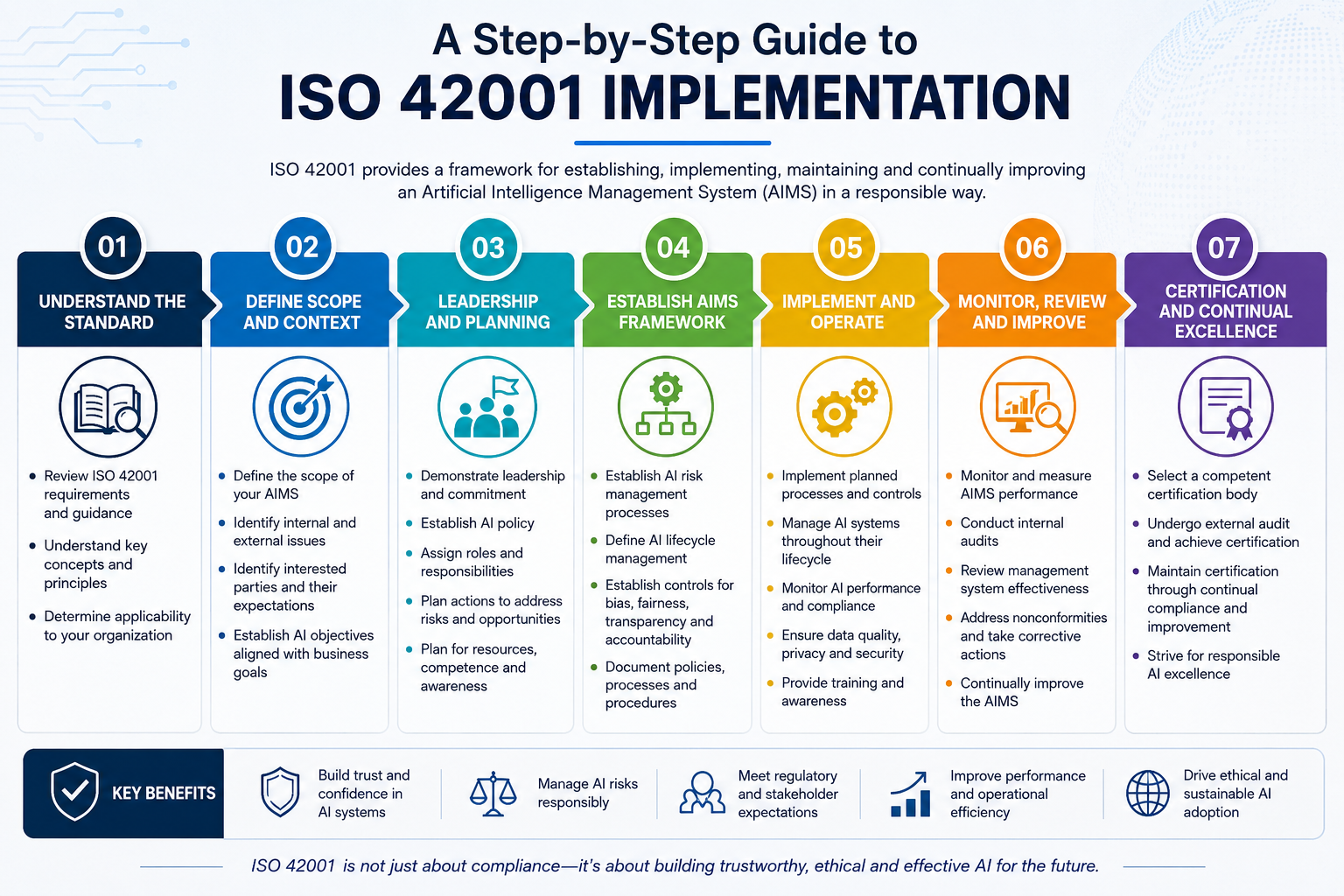
As businesses increasingly leverage artificial intelligence (AI) to enhance operations and customer experiences, the need for a robust compliance framework has never been more critical. Enter ISO 42001, a standard specifically designed to guide organizations in establishing an effective AI management system. In this comprehensive guide, we will delve into the ISO 42001 implementation process, its benefits, and what businesses in India need to know to achieve ISO certification.
Understanding ISO 42001
ISO 42001 is a groundbreaking standard that addresses the management of AI systems. It aims to ensure that AI technologies are developed and deployed responsibly, minimizing risks while maximizing benefits. The standard provides a framework for organizations to establish governance structures, risk management processes, and compliance mechanisms tailored to the unique challenges posed by AI.
Why Implement ISO 42001?
Implementing ISO 42001 offers numerous advantages for businesses:
- Enhanced Trust: Achieving ISO certification demonstrates a commitment to ethical AI practices, fostering trust among customers and stakeholders.
- Risk Mitigation: The standard helps identify and mitigate potential risks associated with AI, ensuring safer outcomes.
- Competitive Advantage: Companies that adopt ISO 42001 can differentiate themselves in the market, attracting clients who prioritize compliance and ethical standards.
- Regulatory Compliance: ISO 42001 can help organizations meet local and international regulations regarding AI deployment.
Step-by-Step Guide to ISO 42001 Implementation
Step 1: Familiarize Yourself with ISO 42001
Before diving into the implementation process, it’s essential to understand the ISO 42001 standard thoroughly. Review the documentation, attend workshops, and consult experts if needed. Familiarity with the standard will help in aligning your organization’s current practices with ISO requirements.
Step 2: Assess Current Practices
Conduct a comprehensive assessment of your existing AI systems and compliance framework. Identify gaps between your current practices and the requirements of ISO 42001. This will provide a clear understanding of what needs to be improved or modified.
Step 3: Form an Implementation Team
Establish a dedicated team responsible for the ISO 42001 implementation. This team should include members from various departments, such as IT, compliance, legal, and operations. Their diverse perspectives will ensure a holistic approach to the implementation process.
Step 4: Develop an AI Compliance Framework
Create an AI compliance framework based on ISO 42001 guidelines. This framework should encompass:
- Governance Structures: Define roles and responsibilities for AI management within your organization.
- Risk Management Processes: Identify potential risks associated with AI and establish protocols to mitigate them.
- Performance Monitoring: Implement metrics to evaluate the performance of AI systems regularly.
Step 5: Training and Awareness
Conduct training sessions for employees to ensure they understand the importance of ISO 42001 and how it applies to their roles. Awareness programs can help cultivate a culture of compliance and ethical AI practices across the organization.
Step 6: Document Everything
Thorough documentation is crucial in the ISO certification process. Maintain records of your compliance framework, risk assessments, training sessions, and any changes made during the implementation. This documentation will be vital during the certification audit.
Step 7: Conduct Internal Audits
Before seeking formal certification, conduct internal audits to assess the effectiveness of your AI management system. Identify any areas that require improvement and address them promptly. Internal audits provide a valuable opportunity to refine your processes before the official audit.
Step 8: Select a Certification Body
Research and choose an accredited certification body that specializes in ISO 42001. Ensure that the chosen body has a good reputation and experience in your industry. This will provide credibility to your certification process.
Step 9: Undergo the Certification Audit
Schedule the certification audit with your chosen certification body. During this audit, external auditors will evaluate your AI management system against the ISO 42001 standard. Be prepared to demonstrate compliance and provide necessary documentation.
Step 10: Continuous Improvement
Once certified, the journey doesn’t end. ISO 42001 emphasizes continuous improvement. Regularly review and update your AI management system to adapt to new challenges and ensure ongoing compliance with the standard.
Challenges in ISO 42001 Implementation
Implementing ISO 42001 can pose certain challenges:
- Resource Allocation: Dedication of time and financial resources is critical for successful implementation.
- Employee Resistance: Change can be met with resistance; therefore, effective communication is essential.
- Keeping Up with Technology: The rapid evolution of AI technology may necessitate frequent updates to compliance practices.
FAQs About ISO 42001 Implementation
What is ISO 42001?
ISO 42001 is a standard that provides guidelines for organizations to manage and ensure compliance in their AI systems, focusing on ethical and responsible practices.
Why is ISO 42001 important for businesses in India?
ISO 42001 helps Indian businesses establish a governance framework for AI, ensuring compliance with local and international regulations while fostering trust among stakeholders.
How long does the ISO certification process take?
The duration of the ISO certification process varies based on the organization’s size and complexity. Typically, it can take anywhere from a few months to over a year.
Is ISO 42001 certification mandatory?
No, ISO 42001 certification is not mandatory. However, obtaining it can significantly enhance your organization’s credibility and showcase a commitment to responsible AI practices.
How can I maintain compliance after obtaining ISO 42001 certification?
Regularly review and update your AI management system, conduct internal audits, and provide ongoing training for employees to ensure continuous compliance with ISO 42001.
Conclusion
Implementing ISO 42001 is a crucial step for organizations looking to navigate the complex landscape of AI responsibly and ethically. By following this step-by-step guide, businesses in India can effectively establish an AI management system that adheres to international standards, fostering trust and compliance in an increasingly AI-driven world.
If you’re ready to take the leap towards ISO 42001 implementation and certification, don't hesitate to reach out for expert guidance and support. Together, we can ensure that your organization thrives in the age of AI!
Contact us today to get started on your ISO 42001 journey!


Leave a Comment