
 Quality Management


















 IT Service Management



 Project Management



 Agile Management




 Web Development



 Cloud Computing


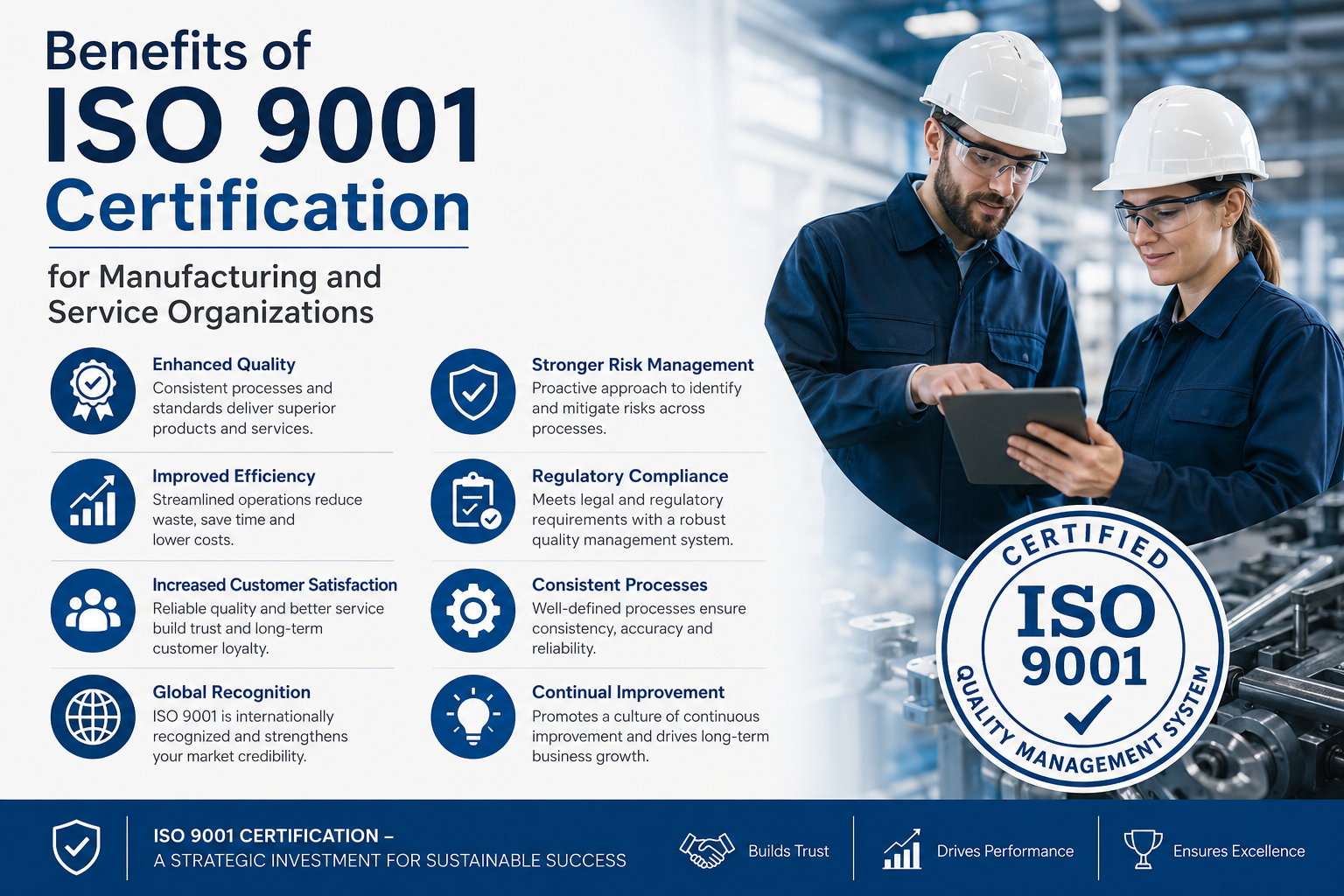
In today's competitive landscape, organizations across sectors are constantly seeking ways to enhance their operations, improve customer satisfaction, and achieve greater efficiency. One of the most effective ways to achieve these goals is by obtaining ISO 9001 certification. This globally recognized standard for quality management systems (QMS) offers numerous benefits that can significantly impact both manufacturing and service organizations. In this blog, we will explore the key ISO 9001 benefits, including its role in the quality management certification process, continuous improvement, and customer satisfaction.
Understanding ISO 9001 Certification
ISO 9001 is an international standard that specifies requirements for a quality management system. It provides a framework that organizations can follow to ensure they consistently meet customer and regulatory requirements while enhancing customer satisfaction. The certification process involves a thorough evaluation of an organization’s processes, policies, and procedures to ensure they align with the ISO 9001 standards.
Key Benefits of ISO 9001 Certification
1. Enhanced Quality Management
One of the primary ISO 9001 benefits is the significant improvement in quality management practices. By adopting a structured approach to quality management, organizations can identify areas of improvement, streamline their processes, and ensure consistent output. This structured approach not only helps in meeting customer expectations but also in minimizing errors and defects.
2. Increased Customer Satisfaction
In an era where customer expectations are soaring, organizations must prioritize customer satisfaction. ISO 9001 certification provides a solid foundation for understanding customer needs and expectations. Through regular feedback mechanisms and customer engagement, certified organizations can tailor their products and services to meet or exceed these expectations, resulting in higher customer loyalty and repeat business.
3. Process Improvement and Efficiency
The focus on continuous improvement is a core principle of ISO 9001. By implementing a quality management system, organizations can regularly assess their processes and identify opportunities for improvement. This leads to increased efficiency, reduced waste, and optimized resource utilization. For manufacturing organizations, this translates to lower production costs, while service organizations can provide faster and more efficient services.
4. Competitive Advantage
In a thriving market like India, having an ISO 9001 certification can set an organization apart from its competitors. Many clients and stakeholders prefer to work with certified organizations, as it serves as a testament to the organization’s commitment to quality and excellence. This competitive edge can be crucial for winning contracts and establishing long-term partnerships.
5. Improved Employee Engagement and Morale
When employees understand the importance of quality and are involved in the quality management process, their engagement levels rise. ISO 9001 certification encourages organizations to foster a culture of quality, where everyone is responsible for maintaining high standards. As a result, employees feel valued and motivated, leading to improved morale and productivity.
6. Better Risk Management
ISO 9001 emphasizes the importance of risk-based thinking, helping organizations to identify potential risks and implement strategies to mitigate them. This proactive approach to risk management ensures that organizations can navigate uncertainties more effectively, safeguarding their operations and reputation.
7. Compliance with Regulatory Requirements
For many manufacturing and service organizations, compliance with local and international regulations is paramount. ISO 9001 certification helps organizations develop processes that ensure adherence to legal and regulatory requirements. This not only reduces the risk of non-compliance but also enhances the organization’s credibility in the eyes of customers and regulators alike.
8. Global Recognition
ISO 9001 is recognized worldwide, making it easier for certified organizations to operate internationally. This global recognition can open doors to new markets and opportunities, allowing organizations to expand their reach and increase their customer base.
Implementation of ISO 9001 Certification
Obtaining ISO 9001 certification is a systematic process that involves several steps:
- Gap Analysis: Assess current processes against ISO 9001 requirements to identify gaps.
- Training: Train employees on the quality management system principles and ISO 9001 requirements.
- Documentation: Develop and document processes, policies, and procedures in line with ISO 9001 standards.
- Implementation: Implement the quality management system across the organization.
- Internal Audit: Conduct internal audits to ensure compliance and identify areas for improvement.
- Management Review: Review the system’s effectiveness and make necessary adjustments.
- Certification Audit: Engage a certification body to conduct an external audit for certification.
ISO 9001 Certification Cost in India
The cost of ISO 9001 certification can vary based on several factors, including the size of the organization, the complexity of processes, and the certification body chosen. On average, organizations in India may spend anywhere from INR 50,000 to INR 2,00,000 for certification. While this investment may seem substantial, the long-term benefits and return on investment can far outweigh the initial costs.
FAQs about ISO 9001 Certification
What is the duration of ISO 9001 certification?
ISO 9001 certification is typically valid for three years, after which organizations must undergo a recertification audit to maintain their status.
How long does it take to get ISO 9001 certified?
The duration to achieve ISO 9001 certification can vary based on the organization’s readiness and complexity but typically ranges from a few months to a year.
Is ISO 9001 certification mandatory?
No, ISO 9001 certification is not legally required; however, many organizations pursue it to enhance their credibility and improve overall quality management.
Can small businesses benefit from ISO 9001 certification?
Absolutely! Small businesses can significantly benefit from ISO 9001 certification by improving processes, customer satisfaction, and gaining a competitive advantage.
Conclusion and Call to Action
In conclusion, the benefits of ISO 9001 certification for manufacturing and service organizations are vast and impactful. From enhancing quality management and customer satisfaction to improving operational efficiency and risk management, the certification serves as a catalyst for organizational growth and success. If you are considering ISO 9001 certification for your organization, now is the time to take action.
Don’t miss out on the opportunity to elevate your organization’s standards. Contact us today to learn more about the ISO 9001 certification process and how we can assist you in achieving your quality management goals!



Leave a Comment