
 Quality Management



















 IT Service Management



 Project Management



 Agile Management




 Web Development



 Cloud Computing


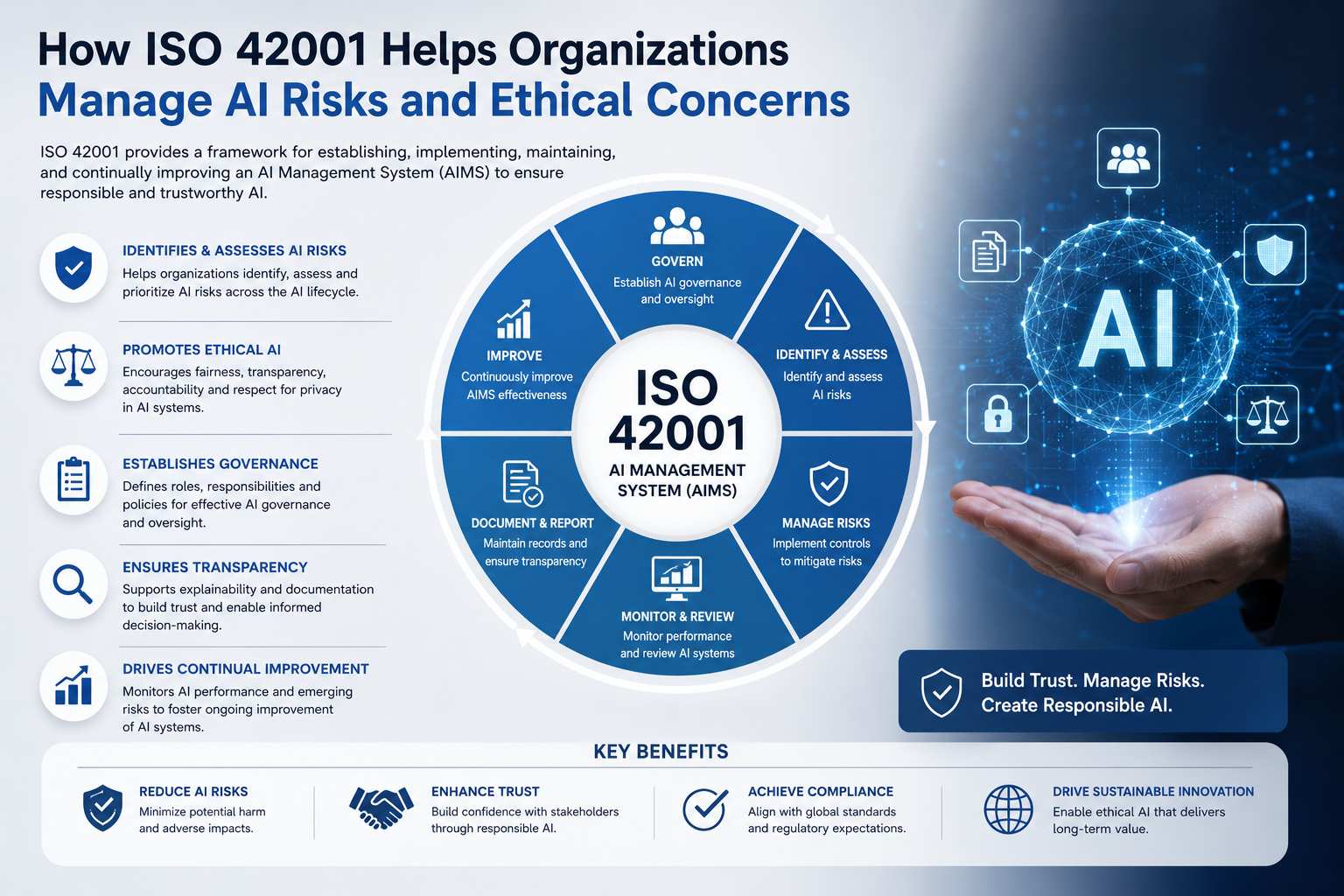
In today's rapidly evolving digital landscape, the proliferation of artificial intelligence (AI) technologies presents both unprecedented opportunities and significant challenges. As Indian organizations increasingly integrate AI into their operations, understanding how to manage AI risks and address ethical concerns is paramount. The ISO 42001 standard offers a robust framework for organizations striving to implement responsible AI, ensuring ethical AI governance across various sectors.
Understanding ISO 42001
ISO 42001 is an international standard designed specifically for AI governance, focusing on the management of risks associated with AI technologies. It provides organizations with guidelines to help them create a structured approach to implementing AI responsibly while addressing ethical considerations. The standard emphasizes the importance of transparency, accountability, and fairness in AI systems, which are crucial for fostering trust among stakeholders.
Why AI Risk Management is Essential
As AI systems become more complex and integral to business operations, the potential risks involved also increase. AI risk management is essential for several reasons:
- Compliance and Regulation: With governments and regulatory bodies worldwide scrutinizing AI technologies, compliance with established standards like ISO 42001 is crucial for legal and ethical operations.
- Reputation Management: Organizations that fail to manage AI risks effectively may face public backlash, damaging their reputation and customer trust.
- Operational Efficiency: A structured approach to AI risk management helps organizations identify and mitigate risks early, leading to smoother operations and better decision-making.
Key Features of ISO 42001
ISO 42001 introduces several key features that enable organizations to manage AI risks and ethical concerns effectively:
1. Comprehensive Risk Assessment
The standard encourages organizations to conduct thorough risk assessments that consider the unique challenges posed by AI technologies. This includes evaluating potential biases in algorithms, data privacy issues, and security vulnerabilities. By understanding these risks, organizations can develop strategies to mitigate them proactively.
2. Framework for Ethical AI Implementation
ISO 42001 outlines a framework for ethical AI implementation, ensuring that AI systems are designed and deployed with fairness, accountability, and transparency in mind. This framework is particularly relevant in the Indian context, where diverse cultural perspectives and values must be considered in AI deployment.
3. Stakeholder Engagement
Engaging stakeholders is a critical aspect of ISO 42001. The standard encourages organizations to involve various stakeholders, including employees, customers, and regulators, in discussions about AI governance. This collaborative approach helps organizations align their AI initiatives with societal values and expectations.
4. Continuous Monitoring and Improvement
ISO 42001 emphasizes the importance of continuous monitoring and improvement of AI systems. Organizations are encouraged to regularly review their AI practices, assess their effectiveness, and make necessary adjustments to enhance ethical AI governance.
Benefits of Implementing ISO 42001 in Indian Organizations
For Indian organizations, the adoption of ISO 42001 can yield numerous benefits:
1. Enhanced Trust and Credibility
By implementing ISO 42001, organizations can demonstrate their commitment to ethical AI practices. This enhances trust and credibility among customers, partners, and regulators, which is essential for long-term success in the competitive Indian market.
2. Competitive Advantage
Organizations that prioritize AI risk management and ethical considerations are more likely to stand out in their industry. By leveraging ISO 42001, businesses can differentiate themselves as leaders in responsible AI implementation, attracting customers who value ethical practices.
3. Risk Mitigation
ISO 42001 helps organizations identify and mitigate AI-related risks, reducing the likelihood of costly mistakes and legal repercussions. By addressing these risks proactively, businesses can protect their assets and reputation.
Challenges in Implementing ISO 42001
While the benefits of ISO 42001 are clear, organizations may face challenges during implementation:
1. Resistance to Change
Some employees may resist changes to established processes, especially if they perceive AI as a threat to their jobs. Organizations must foster a culture of openness and education about the benefits of ethical AI practices.
2. Resource Constraints
Implementing ISO 42001 may require significant resources, including time, money, and expertise. Organizations should be prepared to allocate sufficient resources to ensure successful implementation.
3. Keeping Up with Rapid Changes
The AI landscape is constantly evolving, making it challenging for organizations to stay up-to-date with the latest developments and best practices. Continuous learning and adaptation are essential for maintaining compliance with ISO 42001.
FAQs
What is ISO 42001?
ISO 42001 is an international standard that provides guidelines for organizations to manage AI risks and implement ethical AI practices effectively.
How can ISO 42001 benefit Indian organizations?
ISO 42001 can enhance trust, provide a competitive advantage, and help mitigate risks associated with AI technologies, ultimately leading to better business outcomes.
What are the key components of AI risk management?
Key components include comprehensive risk assessment, stakeholder engagement, ethical framework implementation, and continuous monitoring and improvement.
Is implementing ISO 42001 mandatory for organizations in India?
While not mandatory, adopting ISO 42001 is highly recommended for organizations that wish to establish a strong foundation for ethical AI governance and risk management.
Conclusion
In an era where AI is transforming industries, the need for responsible AI implementation has never been more critical. ISO 42001 provides a comprehensive framework that empowers organizations to navigate the complex landscape of AI risks and ethical concerns. By adopting this standard, Indian organizations can build trust, enhance their reputation, and ensure that their AI initiatives align with societal values.
If you're looking to implement responsible AI practices in your organization, consider adopting ISO 42001 today. For more information and assistance with ISO 42001 implementation, contact us today!


Leave a Comment