
 Quality Management



















 IT Service Management



 Project Management



 Agile Management




 Web Development



 Cloud Computing


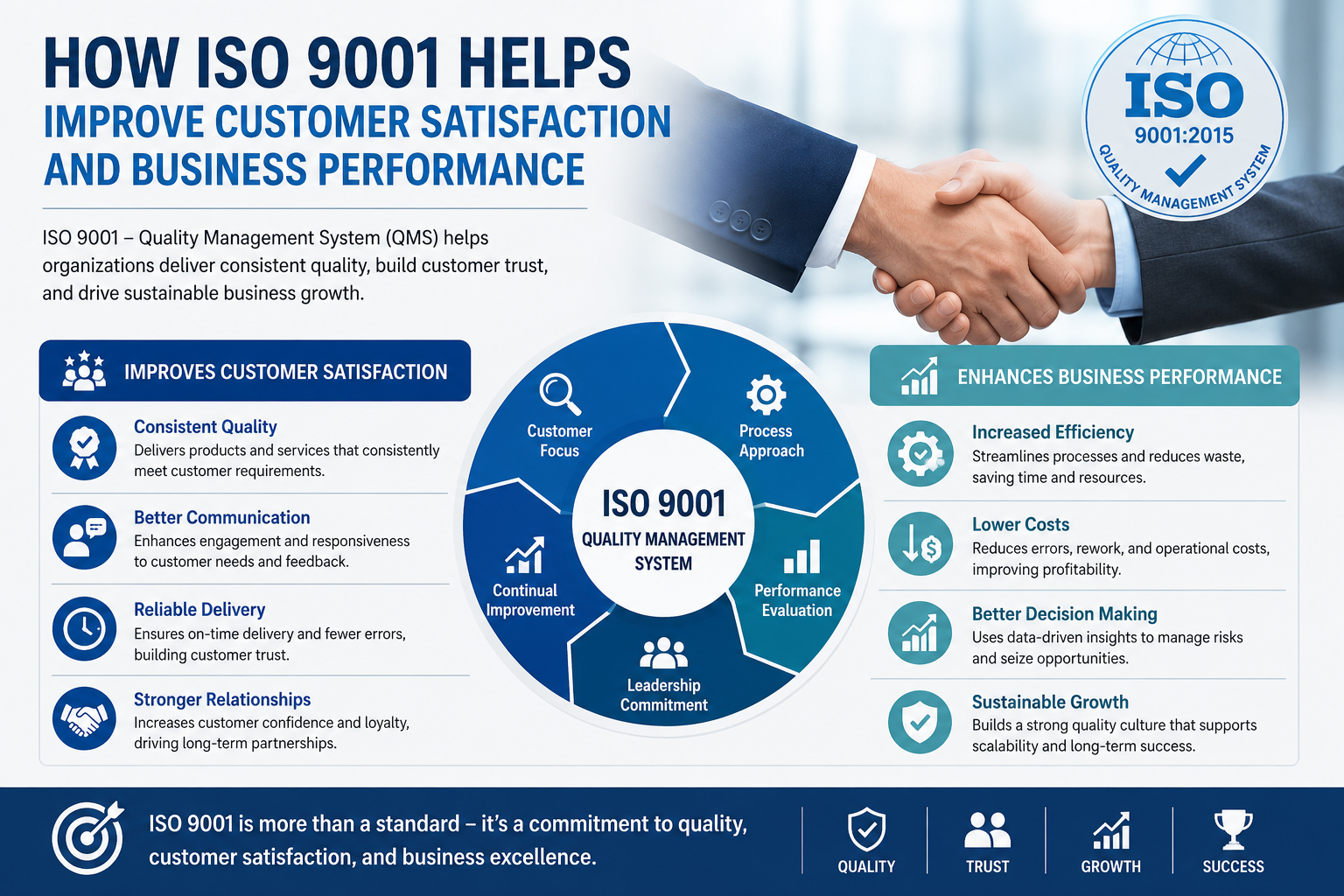
In today's competitive marketplace, businesses strive to deliver high-quality products and services that meet customer expectations. One of the most effective ways to achieve this is by implementing ISO 9001, the international standard for quality management systems. This blog explores how ISO 9001 can enhance customer satisfaction, ensure quality assurance, and drive continuous improvement within organizations, particularly in the Indian context.
Understanding ISO 9001
ISO 9001 is a globally recognized standard that establishes the criteria for a quality management system (QMS). It is designed to help organizations ensure that they meet the needs and expectations of customers while complying with regulatory requirements. The standard focuses on a process approach, promoting a culture of continuous improvement and customer satisfaction.
The Importance of Quality Assurance
Quality assurance is a vital component of any business strategy. By adhering to ISO quality standards, organizations can systematically improve their processes, leading to higher product reliability, reduced waste, and increased efficiency. This proactive approach not only enhances product quality but also builds customer trust and loyalty.
Enhancing Customer Satisfaction
Customer satisfaction is the cornerstone of any successful business. ISO 9001 provides a framework that helps organizations understand and meet customer needs effectively. Here are some ways ISO 9001 enhances customer satisfaction:
1. Understanding Customer Needs
ISO 9001 emphasizes the importance of understanding customer requirements. By actively seeking feedback and conducting surveys, businesses can gain insights into customer expectations. This data can then be used to refine products and services, ensuring they align with what customers truly want.
2. Consistency in Quality
One of the key benefits of ISO 9001 is the establishment of standardized processes. This consistency ensures that products and services are delivered with the same level of quality each time, reducing variability and increasing customer confidence. When customers know they can rely on a brand for quality, their satisfaction levels rise significantly.
3. Efficient Complaint Resolution
ISO 9001 encourages businesses to implement effective complaint handling processes. By addressing customer complaints promptly and efficiently, organizations can turn potentially negative experiences into positive ones. This responsiveness not only resolves issues but also demonstrates a commitment to customer satisfaction.
Boosting Business Performance
In addition to enhancing customer satisfaction, ISO 9001 has a profound impact on overall business performance. Here are some key areas where ISO 9001 contributes to improved performance:
1. Increased Operational Efficiency
By streamlining processes and eliminating inefficiencies, ISO 9001 helps organizations save time and resources. The focus on continuous improvement means that businesses are always looking for ways to enhance their operations, resulting in better productivity and reduced costs.
2. Better Employee Engagement
ISO 9001 promotes a culture of involvement and empowerment among employees. When employees are engaged in the quality management process and understand how their roles contribute to customer satisfaction, they are more motivated and productive. This leads to lower turnover rates and a more skilled workforce.
3. Enhanced Market Reputation
Achieving ISO 9001 certification can significantly enhance a company's reputation in the market. Customers and stakeholders often regard ISO certification as a mark of quality and reliability. This can lead to increased customer loyalty, new business opportunities, and a competitive advantage in the marketplace.
Continuous Improvement as a Core Principle
At the heart of ISO 9001 is the principle of continuous improvement. This philosophy encourages organizations to regularly assess and refine their processes, products, and services. Here’s how continuous improvement can be integrated into business practices:
1. Setting Measurable Goals
To foster continuous improvement, businesses should set clear, measurable goals. These goals should align with customer satisfaction and business performance metrics. By regularly tracking progress against these objectives, organizations can identify areas for improvement and implement necessary changes.
2. Training and Development
Investing in employee training and development is crucial for fostering a culture of continuous improvement. Employees should be equipped with the skills and knowledge needed to contribute to quality assurance initiatives. Regular workshops and training sessions can help keep the workforce informed about best practices and new developments in quality management.
3. Utilizing Data for Decision Making
Data plays a critical role in continuous improvement. Organizations should leverage data analytics to gain insights into customer behavior, operational performance, and market trends. This data-driven approach enables businesses to make informed decisions and adapt to changing customer needs swiftly.
Implementing ISO 9001 in India
For Indian businesses, implementing ISO 9001 can be particularly advantageous. With a rapidly growing economy and increasing competition, companies that prioritize quality and customer satisfaction will stand out in the market. Here are some steps for Indian organizations looking to adopt ISO 9001:
1. Conduct a Gap Analysis
The first step in implementing ISO 9001 is to conduct a gap analysis. This involves assessing current processes against ISO standards to identify areas that require improvement. Understanding these gaps is essential for developing a tailored implementation plan.
2. Engage Leadership
Leadership commitment is critical for successful ISO implementation. Top management should actively support the initiative and communicate its importance to the entire organization. This commitment sets the tone for a quality-focused culture.
3. Train Employees
Training employees on ISO principles and practices is vital. Ensuring that everyone understands their role in the quality management system will foster a sense of ownership and accountability.
4. Document Processes
ISO 9001 requires organizations to document their processes and procedures. This documentation serves as a reference for employees and is essential for maintaining consistency and compliance with quality standards.
5. Monitor and Review
Once ISO 9001 is implemented, organizations should continuously monitor and review their processes. Regular audits and management reviews will help identify areas for improvement and ensure ongoing compliance with ISO standards.
FAQs
1. What is ISO 9001?
ISO 9001 is an international standard that specifies the requirements for a quality management system. It helps organizations improve customer satisfaction and operational efficiency.
2. How does ISO 9001 improve customer satisfaction?
ISO 9001 enhances customer satisfaction by ensuring consistency in product quality, facilitating efficient complaint resolution, and actively seeking customer feedback to understand their needs.
3. What are the benefits of implementing ISO 9001 in Indian businesses?
Implementing ISO 9001 in Indian businesses leads to improved quality assurance, operational efficiency, enhanced market reputation, and increased customer loyalty.
4. Is ISO 9001 certification mandatory for businesses?
No, ISO 9001 certification is not mandatory. However, it is highly recommended for organizations aiming to improve quality management practices and customer satisfaction.
5. How long does it take to get ISO 9001 certified?
The time required to achieve ISO 9001 certification varies depending on the organization's size and complexity. Typically, it can take anywhere from a few months to over a year.
Conclusion
In conclusion, implementing ISO 9001 is a strategic move for businesses looking to enhance customer satisfaction and improve overall performance. By focusing on quality assurance, continuous improvement, and customer needs, organizations can position themselves for success in the competitive Indian market. If you're ready to take your business to the next level, consider adopting ISO 9001 standards today!
Call to Action: If you're interested in learning more about how ISO 9001 can transform your business, contact our team of experts today for a consultation!




Leave a Comment