
 Quality Management



















 IT Service Management



 Project Management



 Agile Management




 Web Development



 Cloud Computing


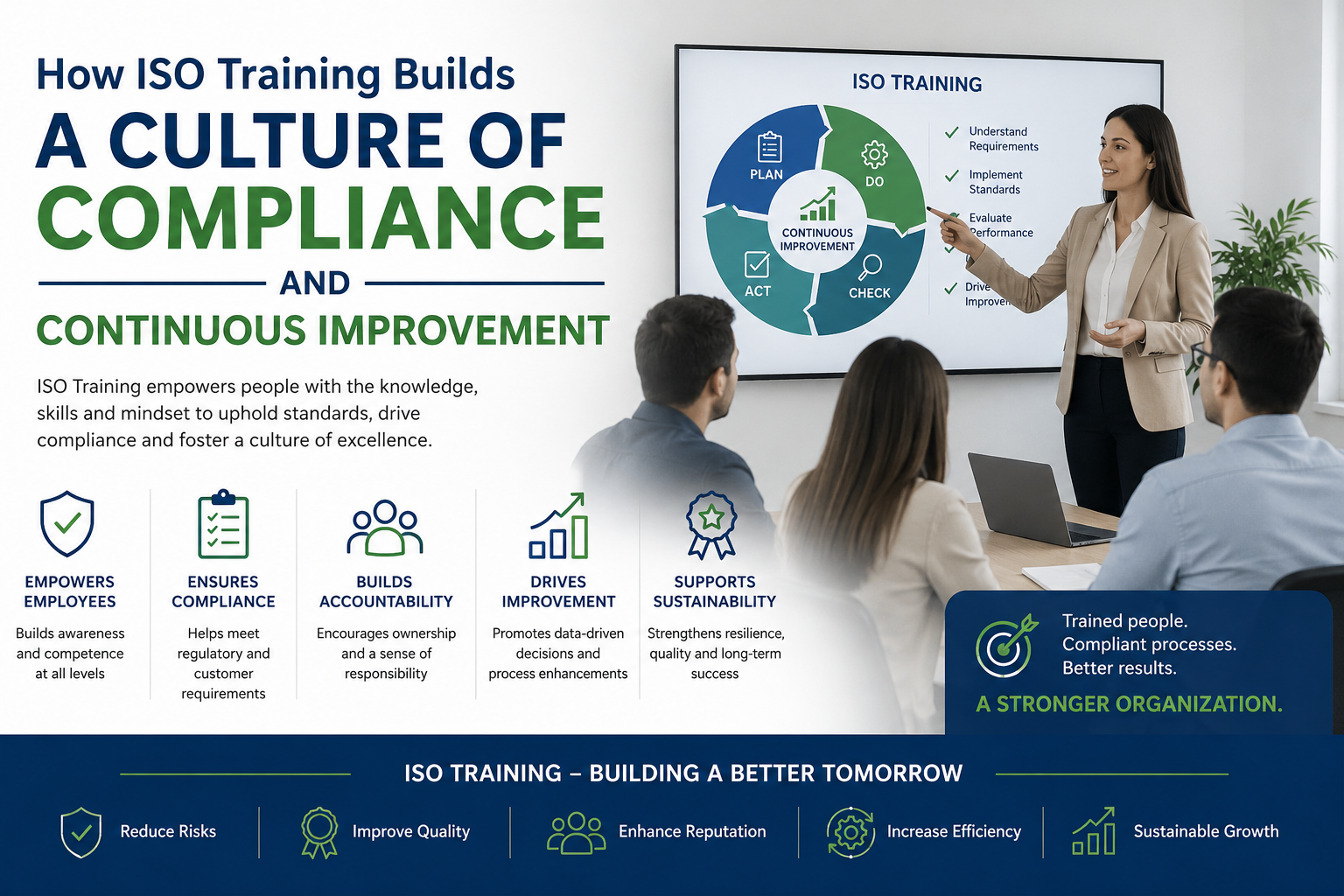
In today’s competitive business landscape, organizations are continuously seeking ways to enhance their operational efficiency and ensure compliance with industry standards. One powerful method to achieve this is through ISO certification training. This blog explores how ISO training not only fosters a robust culture of compliance but also drives process improvement training within organizations, particularly in the Indian context.
Understanding ISO and Its Importance
ISO, or the International Organization for Standardization, is an independent body that develops international standards. These standards are crucial for ensuring quality, safety, efficiency, and interoperability across various industries. In India, companies are increasingly adopting ISO standards to improve their operational frameworks and enhance customer satisfaction.
The Role of ISO Training in Building Compliance Culture
Implementing ISO standards involves thorough training and understanding of compliance requirements. ISO training focuses on educating employees about these standards, ensuring they comprehend their roles in maintaining compliance. Here’s how ISO training contributes to building a culture of compliance:
1. Awareness and Understanding of Standards
ISO training sessions equip employees with the knowledge of specific standards relevant to their industry. For example, an organization pursuing ISO 9001 certification will ensure that its staff understands quality management principles. This awareness creates a proactive approach to compliance, where employees are not just following rules but are genuinely invested in maintaining quality.
2. Empowering Employees
Training empowers employees by providing them with the skills and knowledge necessary to identify compliance issues. When staff members are trained effectively, they become advocates for compliance, fostering a culture where everyone is responsible for upholding standards. This empowerment leads to increased accountability and better adherence to organizational policies.
3. Continuous Monitoring and Improvement
ISO training emphasizes the importance of regular audits and assessments. Employees learn how to monitor compliance and identify areas for improvement, thus embedding a continuous improvement mindset within the organization. This is crucial in maintaining certifications and ensuring that the organization remains competitive in its sector.
Continuous Improvement through ISO Training
Continuous improvement is a vital aspect of any successful organization. ISO training not only focuses on compliance but also encourages a culture of ongoing enhancement. Here’s how ISO training drives process improvement:
1. Systematic Approach to Problem Solving
ISO standards provide a systematic framework for identifying and solving problems. Through training, employees learn methodologies such as Plan-Do-Check-Act (PDCA), which encourages them to analyze processes, implement changes, and evaluate outcomes. This structured approach fosters a mindset geared towards improvement.
2. Data-Driven Decision Making
ISO training emphasizes the importance of data in decision-making processes. Employees are trained to collect, analyze, and interpret data effectively, enabling them to identify trends and areas needing improvement. This data-driven approach leads to more informed decisions that can enhance operational efficiency.
3. Encouraging Innovation
A culture of compliance established through ISO training can stimulate innovation. When employees feel secure in their understanding of compliance, they are more likely to propose new ideas and improvements. ISO training creates an environment where experimentation is encouraged, leading to innovative solutions that drive the organization forward.
Implementing ISO Training Effectively
To maximize the benefits of ISO certification training, organizations must implement it effectively. Here are some strategies to consider:
1. Tailored Training Programs
Different organizations have unique needs based on their industry and size. Tailoring ISO training programs to fit specific organizational requirements ensures that employees gain relevant knowledge applicable to their roles.
2. Engaging Training Methods
Utilizing various training methods—interactive workshops, e-learning modules, and practical exercises—can enhance employee engagement. This engagement is crucial for retaining information and applying learned concepts in real-world scenarios.
3. Regular Refresher Courses
ISO standards evolve, and so should employee knowledge. Conducting regular refresher courses helps maintain a high level of awareness and competence among employees, ensuring that compliance culture remains strong.
FAQs about ISO Training and Compliance Culture
1. What is ISO certification training?
ISO certification training is a program designed to educate employees about ISO standards and compliance requirements relevant to their organization. It focuses on instilling knowledge and skills necessary for maintaining quality and compliance.
2. How does ISO training contribute to process improvement?
ISO training encourages a systematic approach to problem-solving and emphasizes data-driven decision making. This leads to identifying inefficiencies and implementing changes that enhance overall operational performance.
3. Is ISO training only for management personnel?
No, ISO training is beneficial for all employees, regardless of their role within the organization. Each employee plays a crucial part in maintaining compliance and driving continuous improvement.
4. How can organizations ensure effective ISO training?
Organizations can ensure effective ISO training by tailoring programs to their specific needs, utilizing engaging training methods, and conducting regular refresher courses to keep knowledge current.
Conclusion
In conclusion, ISO certification training plays a vital role in building a culture of compliance and continuous improvement within organizations. By investing in quality training, companies can empower their employees, enhance operational efficiency, and foster an environment where compliance is a shared responsibility. As Indian businesses strive for excellence and global competitiveness, embracing ISO standards through comprehensive training programs is not just beneficial; it is essential.
If your organization is looking to implement ISO training and cultivate a culture of compliance and continuous improvement, contact us today to learn more about our tailored training solutions!


Leave a Comment