
 Quality Management



















 IT Service Management



 Project Management



 Agile Management




 Web Development



 Cloud Computing


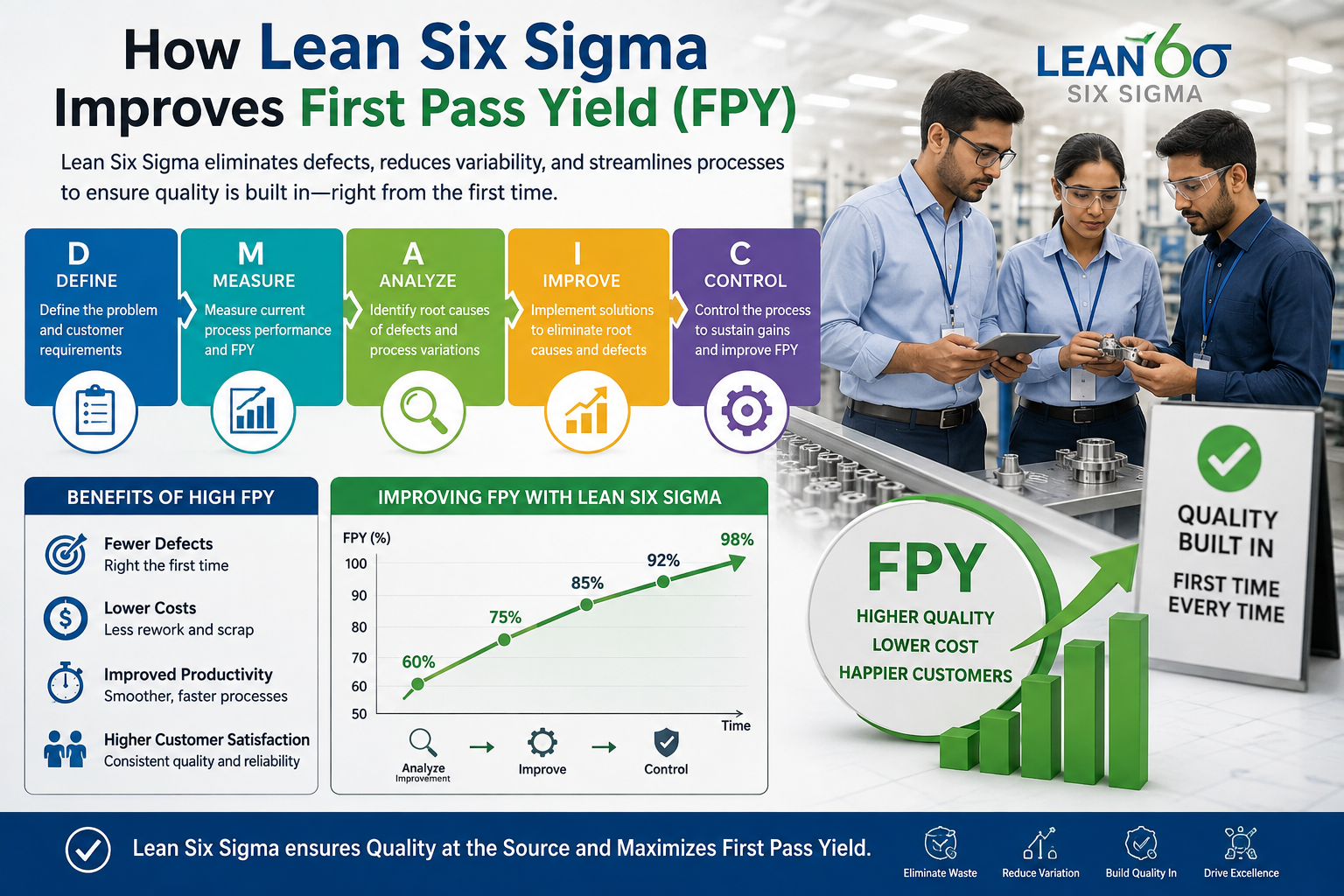
In the dynamic landscape of Indian manufacturing, maintaining high quality standards while ensuring process efficiency is crucial. One of the key metrics that organizations focus on is First Pass Yield (FPY). This metric not only reflects the efficiency of manufacturing processes but also has significant implications for cost reduction and customer satisfaction. In this blog, we will delve into how Lean Six Sigma can be leveraged to enhance FPY, thereby improving overall manufacturing quality.
Understanding First Pass Yield (FPY)
First Pass Yield (FPY) is a critical measure of process efficiency in manufacturing. It represents the percentage of products that are manufactured correctly without any need for rework. A higher FPY indicates that a manufacturing process is performing well, reducing waste and costs associated with corrections and rework.
For Indian manufacturers, achieving a high FPY is essential to remain competitive in the global market. Challenges such as production delays, defects, and rework can significantly degrade FPY and, consequently, the bottom line. This is where Lean Six Sigma comes into play.
What is Lean Six Sigma?
Lean Six Sigma is a powerful methodology that combines Lean manufacturing principles with Six Sigma quality control techniques. The goal is to improve process efficiency, reduce waste, and enhance quality. Lean focuses on eliminating non-value-adding activities, while Six Sigma emphasizes the reduction of process variation and defects.
By integrating these methodologies, organizations can create a culture of continuous improvement, leading to better FPY and overall manufacturing quality.
The Importance of Lean Quality Metrics
Lean quality metrics, including FPY, are vital for assessing and improving manufacturing processes. By focusing on these metrics, organizations can identify areas for improvement, streamline operations, and increase production efficiency. This is especially important in India, where the manufacturing sector is rapidly evolving and becoming more competitive.
How Lean Six Sigma Drives FPY Improvement
There are several key ways in which Lean Six Sigma contributes to FPY improvement:
1. Identifying and Eliminating Waste
Lean principles focus on identifying waste in processes. By systematically analyzing each step in the manufacturing process, teams can pinpoint areas of inefficiency that affect FPY. Whether it’s excess inventory, waiting times, or unnecessary motion, eliminating these wastes leads to smoother operations and higher quality outputs.
2. Standardizing Processes
One of the core tenets of Six Sigma is the establishment of standardized work procedures. By creating clear guidelines and standard operating procedures (SOPs), organizations can ensure that every employee follows the same process, which reduces variability and enhances FPY. Standardization also facilitates training new employees, minimizing the learning curve and potential errors.
3. Data-Driven Decision Making
Lean Six Sigma relies heavily on data analysis to drive decisions. By collecting and analyzing data related to FPY, manufacturers can uncover trends, identify root causes of defects, and make informed decisions on how to improve processes. This data-driven approach ensures that changes made are effective and based on factual insights rather than assumptions.
4. Fostering a Culture of Continuous Improvement
Implementing Lean Six Sigma encourages a culture where continuous improvement is valued. Employees are motivated to identify problems and propose solutions, leading to ongoing enhancements in FPY. This proactive approach not only improves quality but also boosts employee engagement and satisfaction.
5. Utilizing Quality Tools
Lean Six Sigma employs various quality tools such as Pareto charts, fishbone diagrams, and control charts. These tools help teams visualize problems, analyze data, and monitor improvements in FPY. By consistently applying these tools, organizations can maintain high standards of manufacturing quality and process efficiency.
Real-World Applications of Lean Six Sigma in India
Many Indian manufacturers have successfully implemented Lean Six Sigma to improve their FPY. For instance, automotive and electronics sectors have reported significant reductions in defects and rework rates, leading to enhanced customer satisfaction and profitability. Companies that embrace Lean Six Sigma often see FPY improvement as a natural outcome of their commitment to quality and efficiency.
Challenges in Implementing Lean Six Sigma
While the benefits of Lean Six Sigma are clear, Indian manufacturers may face challenges in its implementation:
- Resistance to Change: Employees may be hesitant to adopt new processes or methodologies, particularly if they are comfortable with existing practices.
- Lack of Training: Proper training is essential for successful implementation. Organizations must invest in educating their workforce on Lean Six Sigma tools and techniques.
- Data Management: Effective data collection and analysis are critical. Some organizations may struggle with inadequate data management systems.
Overcoming these challenges requires strong leadership, a commitment to change, and a willingness to invest in training and development.
Measuring FPY Improvement
To gauge the effectiveness of Lean Six Sigma initiatives, organizations must establish metrics and benchmarks. Regularly monitoring FPY and related quality metrics allows manufacturers to assess the impact of their efforts and make necessary adjustments. Setting clear goals for FPY improvement and celebrating milestones can motivate teams and reinforce the importance of quality.
FAQs
What is an ideal FPY percentage?
An ideal FPY percentage varies by industry; however, a common benchmark is around 95% or higher. Achieving this level indicates that most products are produced without defects, enhancing overall manufacturing quality.
How long does it take to see results from Lean Six Sigma?
The timeline for seeing results can vary. Some organizations may notice improvements within a few months, while for others, it may take longer. The key is to remain committed to the process and continuously monitor progress.
Can Lean Six Sigma be applied to service industries?
Absolutely! While Lean Six Sigma is widely recognized in manufacturing, its principles can also be effectively applied in service industries to improve quality and efficiency.
Conclusion
In today's competitive manufacturing landscape, improving First Pass Yield (FPY) is essential for success. Lean Six Sigma offers a comprehensive approach to enhancing manufacturing quality and process efficiency. By focusing on waste reduction, standardization, data-driven decision-making, and fostering a culture of continuous improvement, organizations can achieve significant FPY improvements. Investing in Lean Six Sigma not only elevates product quality but also enhances customer satisfaction and drives profitability.
Are you ready to take your manufacturing processes to the next level? Start your Lean Six Sigma journey today and experience the transformative benefits it can bring to your organization. Contact us to learn more about how we can assist you in implementing Lean Six Sigma for FPY improvement!


Leave a Comment