
 Quality Management



















 IT Service Management



 Project Management



 Agile Management



 Web Development


 Cloud Computing
In today's competitive business environment, organizations are constantly looking for ways to improve efficiency and reduce waste. One of the most effective methodologies for achieving these goals is Six Sigma. Many companies in India are now investing in Corporate Six Sigma Training to empower their employees with the skills needed to drive quality improvement initiatives. But how long does this training actually take? Let's delve into the details.
Understanding Corporate Six Sigma Training
Corporate Six Sigma Training is designed to equip employees with the knowledge and tools necessary to identify and eliminate defects in processes. It focuses on data-driven decision-making and aims to enhance the overall quality of products and services. This training is crucial for organizations aiming to achieve operational excellence and maintain a competitive edge.
The Importance of Lean Six Sigma Corporate Training
Lean Six Sigma combines the principles of Lean manufacturing and Six Sigma to streamline processes, reduce costs, and improve quality. Organizations in India are increasingly adopting Lean Six Sigma Corporate Training to foster a culture of continuous improvement. This training not only benefits the company but also enhances the skill set of the employees, making them valuable assets in the industry.
Factors Affecting Corporate Six Sigma Training Duration
The duration of Corporate Six Sigma Training can vary widely depending on several factors:
1. Level of Certification
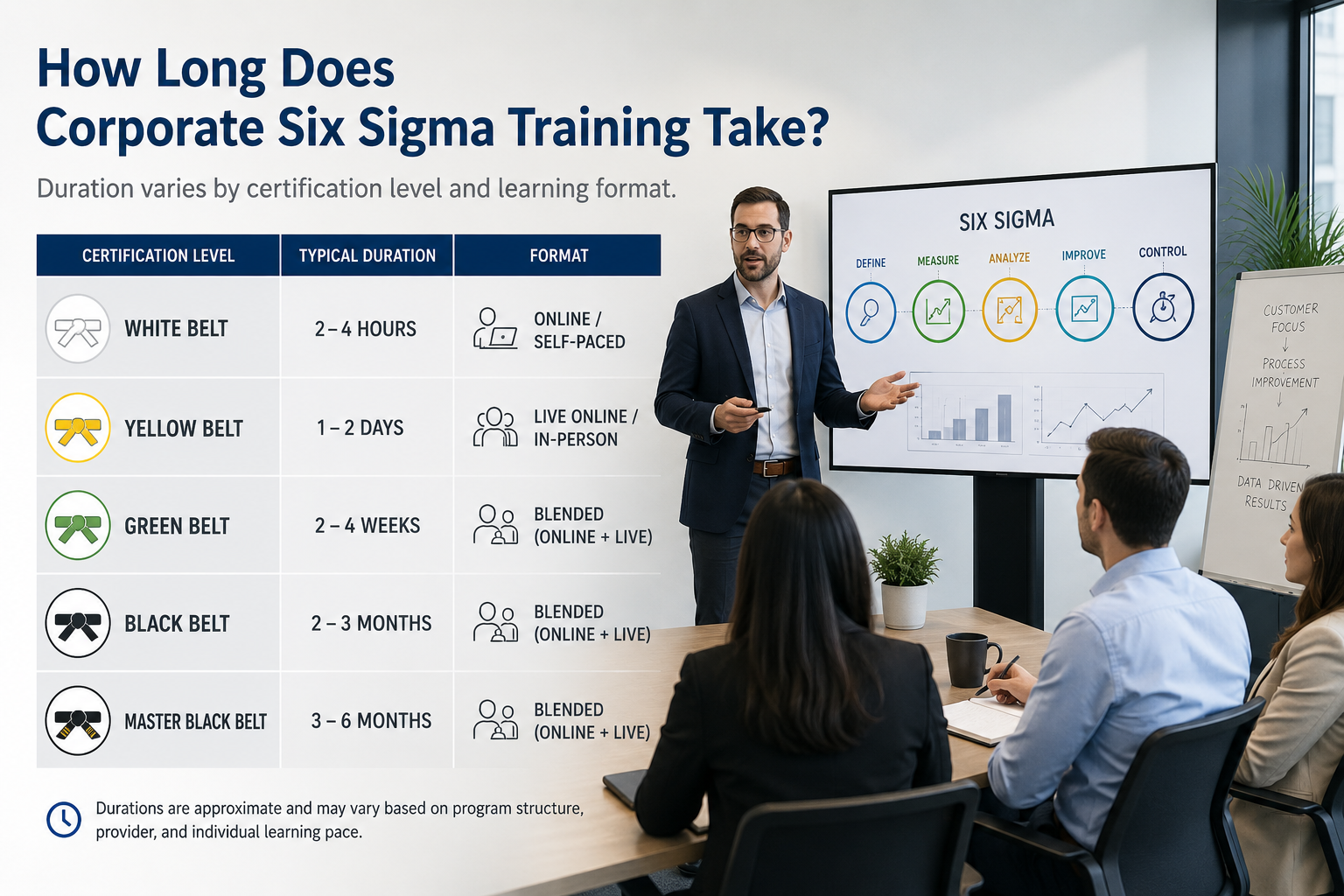
Six Sigma training is available at various levels, including Yellow Belt, Green Belt, Black Belt, and Master Black Belt. Each level has a different duration:
- Yellow Belt: Typically takes 2-5 days.
- Green Belt: Usually spans 1-2 weeks, combining classroom learning with practical applications.
- Black Belt: This advanced level can require 3-4 weeks of training, focusing on complex problem-solving techniques.
- Master Black Belt: It often involves several weeks of training, with a strong emphasis on leadership and mentoring.
2. Training Format
The format of the training can also influence its duration. Companies may choose from:
- In-Person Training: This traditional format usually spans longer periods to accommodate interactive sessions and group activities.
- Online Training: Offers flexibility and may take less time, as participants can learn at their own pace.
- Hybrid Training: A combination of both formats, which can vary in duration based on the structure.
3. Industry Requirements
Different industries may have specific training requirements that can affect the duration. For instance, manufacturing sectors may require more in-depth training compared to service-oriented industries.
4. Organizational Goals
The goals set by the organization for the training program can also impact its length. If a company aims for a comprehensive implementation of Six Sigma across multiple departments, the training duration may be extended to ensure all employees are adequately prepared.
Typical Duration of Corporate Six Sigma Training
On average, Corporate Six Sigma Training can take anywhere from a few days to several weeks, depending on the factors mentioned above. Here’s a breakdown of what participants can expect:
- Yellow Belt Training: 2-5 days
- Green Belt Training: 1-2 weeks
- Black Belt Training: 3-4 weeks
- Master Black Belt Training: 4-6 weeks or more
Organizations often tailor the duration to meet their specific needs, ensuring that employees grasp the concepts thoroughly while balancing their regular work responsibilities.
Benefits of Investing Time in Corporate Six Sigma Training
While the duration of Corporate Six Sigma Training may seem extensive, the benefits far outweigh the time invested:
1. Enhanced Efficiency
Employees trained in Six Sigma are equipped to identify inefficiencies and implement solutions, resulting in improved operational efficiency and reduced costs.
2. Improved Quality
By focusing on data-driven decision-making, organizations can enhance the quality of their products and services, leading to increased customer satisfaction.
3. Employee Empowerment
Training empowers employees by providing them with the skills to take charge of process improvement initiatives, fostering a sense of ownership and pride in their work.
4. Competitive Advantage
Investing in Six Sigma training positions a company as a leader in its industry, capable of delivering superior value to customers.
FAQs About Corporate Six Sigma Training Duration
Q1: Is Corporate Six Sigma Training suitable for all employees?
A: Yes, Six Sigma training can benefit employees at all levels, from entry-level staff to executives. It fosters a culture of continuous improvement across the organization.
Q2: Can I complete Six Sigma training online?
A: Absolutely! Many organizations offer online training programs that allow participants to learn at their own pace, making it a flexible option for busy professionals.
Q3: How do I choose the right level of Six Sigma training?
A: Consider your current role, career aspirations, and the specific needs of your organization. Consulting with a training provider can help you determine the best fit.
Q4: What are the costs associated with Corporate Six Sigma Training?
A: Costs can vary widely based on the training provider, format, and certification level. It's advisable to research and compare options to find the best fit for your organization’s budget.
Q5: How can I ensure successful implementation after training?
A: Successful implementation requires ongoing support, such as mentoring and access to resources, as well as a commitment from leadership to foster a culture of continuous improvement.
Conclusion
The duration of Corporate Six Sigma Training can vary based on several factors, including certification level, training format, and organizational goals. Investing time in this training can yield significant benefits, including enhanced efficiency, improved quality, and a competitive advantage in the marketplace.
If your organization is considering Lean Six Sigma Corporate Training, now is the time to take action. Equip your team with the skills they need to succeed. Contact us today to learn more about our training programs and how we can help you achieve operational excellence!


Leave a Comment