
 Quality Management



















 IT Service Management



 Project Management



 Agile Management



 Web Development



 Cloud Computing


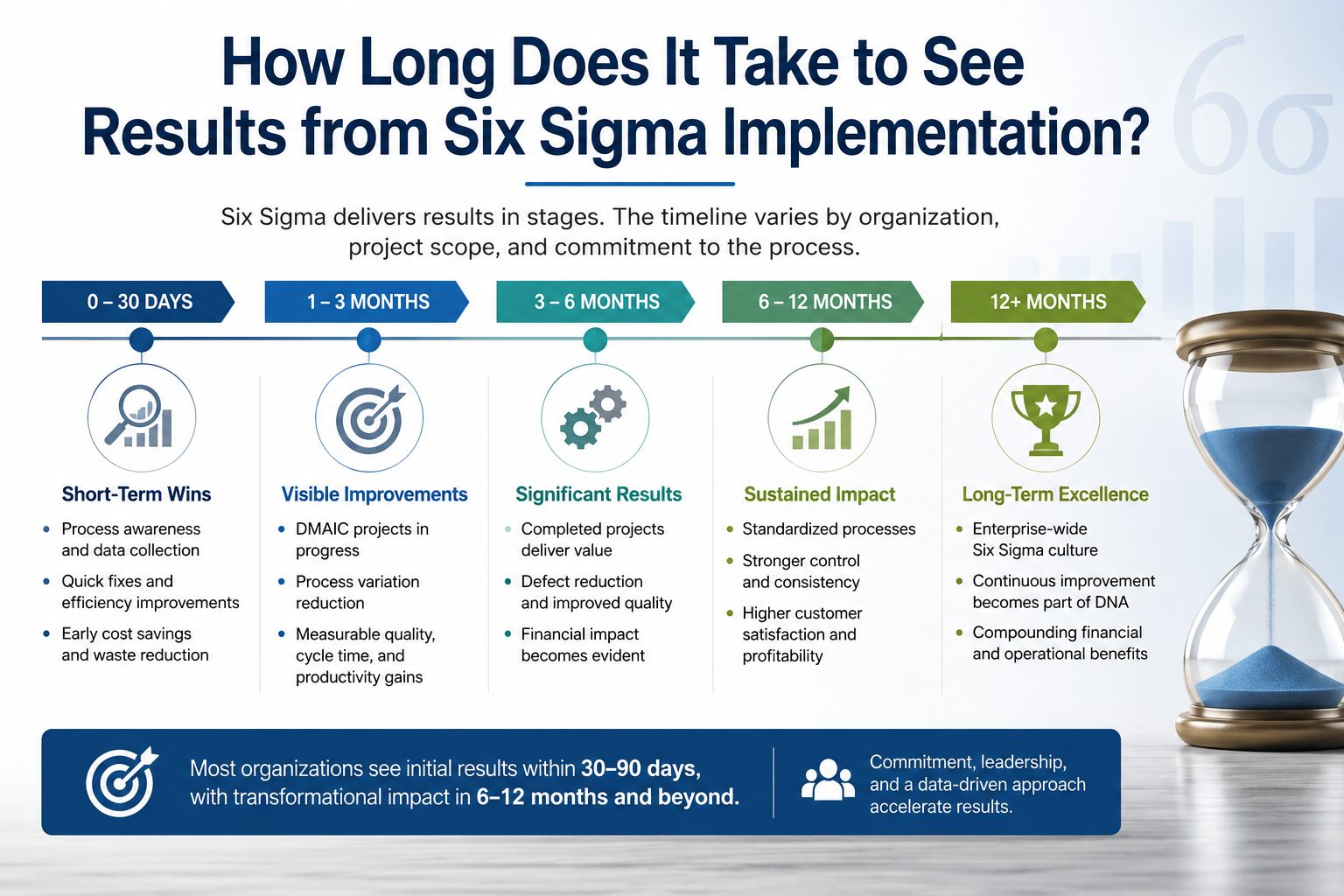
In today's competitive business environment, organizations in India are increasingly looking to improve their processes to ensure operational excellence. One of the most effective methodologies for achieving this is the Six Sigma implementation process. However, many businesses often wonder, "How long does it take to see results from Six Sigma implementation?" In this blog, we will explore the timeline for realizing improvements and the factors that influence these results.
Understanding Six Sigma
Six Sigma is a data-driven methodology that aims to eliminate defects and ensure quality in a product or service. By using statistical tools and techniques, organizations can identify areas for improvement and streamline their processes. The core objective is to achieve process improvement results that lead to enhanced customer satisfaction and operational efficiency.
Factors Influencing the Timeline of Six Sigma Implementation
The time it takes to see results from Six Sigma implementation can vary significantly based on several factors:
1. Organizational Readiness
Before embarking on the Six Sigma journey, it's crucial to assess the organization's readiness. This includes leadership commitment, employee engagement, and existing process maturity. If the organization is already data-driven and has a culture of continuous improvement, results may be seen quicker compared to organizations that are less prepared.
2. Project Scope and Complexity
The scope and complexity of the Six Sigma project play a vital role in determining the timeline. Simple projects with a narrow focus can yield quick wins, often within a few months, while more complex projects might take a year or longer to show substantial results.
3. Training and Skill Development
Training employees in Six Sigma methodologies is essential. The time required for training can impact the overall timeline for results. Organizations that invest in comprehensive training for their team members often see faster improvements, as employees become proficient in applying Six Sigma tools and techniques.
4. Data Availability and Quality
Six Sigma relies heavily on data for analysis and decision-making. Organizations with robust data collection and management systems can implement changes swiftly, while those struggling with data quality may experience delays in seeing tangible results.
5. Project Implementation Strategy
The strategy adopted for implementing Six Sigma can also affect the timeline. Organizations that take a phased approach, piloting projects in specific departments before a full rollout, often experience quicker results. Conversely, a 'big bang' approach may prolong the process as it can lead to overwhelming challenges.
Typical Timelines for Six Sigma Results
While the factors mentioned above can influence results, here’s a general timeline based on various phases of Six Sigma implementation:
1. Initial Phase (0-3 Months)
During the initial phase, organizations focus on training and defining project scopes. Leaders should allocate resources and identify key performance indicators (KPIs). Though tangible results may not be evident, laying a solid foundation is critical.
2. Project Execution Phase (3-9 Months)
Once training is completed and projects are defined, teams begin executing the Six Sigma projects. During this phase, organizations can start seeing early improvements, especially in simple projects. Metrics should be monitored closely to gauge progress.
3. Review and Optimize Phase (9-18 Months)
As projects mature, organizations can expect to see more substantial process improvement results. This phase often includes analyzing data, refining processes, and implementing solutions. Continuous monitoring is essential to sustain gains and achieve operational excellence.
4. Sustaining Improvements (18+ Months)
After the initial implementations, maintaining the momentum is crucial. Organizations should focus on integrating Six Sigma practices into their culture, ensuring long-term sustainability of process improvements. At this stage, organizations can expect to see significant advancements in operational excellence.
Case Studies: Six Sigma Success in India
To further illustrate the effectiveness of Six Sigma, let's look at a few examples from Indian companies:
1. Tata Steel
Tata Steel implemented Six Sigma to improve its manufacturing processes. Within six months, the company reported a reduction in defects by 50%, leading to substantial cost savings and enhanced product quality.
2. Wipro
Wipro adopted Six Sigma as part of its commitment to operational excellence. The company noted significant improvements in service delivery times and customer satisfaction scores within the first year of implementation.
FAQs about Six Sigma Implementation
1. What is the primary goal of Six Sigma?
The primary goal of Six Sigma is to reduce defects and improve overall process quality, leading to enhanced customer satisfaction and operational excellence.
2. How do I start with Six Sigma implementation?
Begin by assessing organizational readiness, training employees, defining project scope, and establishing performance metrics for monitoring progress.
3. Can Six Sigma be applied in all industries?
Yes, Six Sigma can be applied across various industries, including manufacturing, healthcare, finance, and service sectors, making it a versatile methodology for process improvement.
4. What qualifications do I need to lead a Six Sigma project?
Typically, a Six Sigma Green Belt or Black Belt certification is preferred for leading projects. These certifications provide the necessary skills and knowledge to effectively implement Six Sigma methodologies.
5. What if my organization does not see immediate results?
It's important to remain patient and persistent. Continuous monitoring, data analysis, and process adjustments are key to achieving long-term improvements.
Conclusion
In conclusion, the timeline for seeing results from Six Sigma implementation can vary significantly based on numerous factors, including organizational readiness, project scope, and training. While quick wins can be achieved within months, substantial improvements often take up to 18 months or longer. However, the long-term benefits of operational excellence and enhanced customer satisfaction are well worth the investment.
If you are considering implementing Six Sigma in your organization, it’s time to take the first step toward achieving operational excellence. Contact us today to learn more about our Six Sigma training programs and consultancy services!


Leave a Comment