 Quality Management


















 IT Service Management


 Project Management



 Agile Management



 Web Development


 Cloud Computing
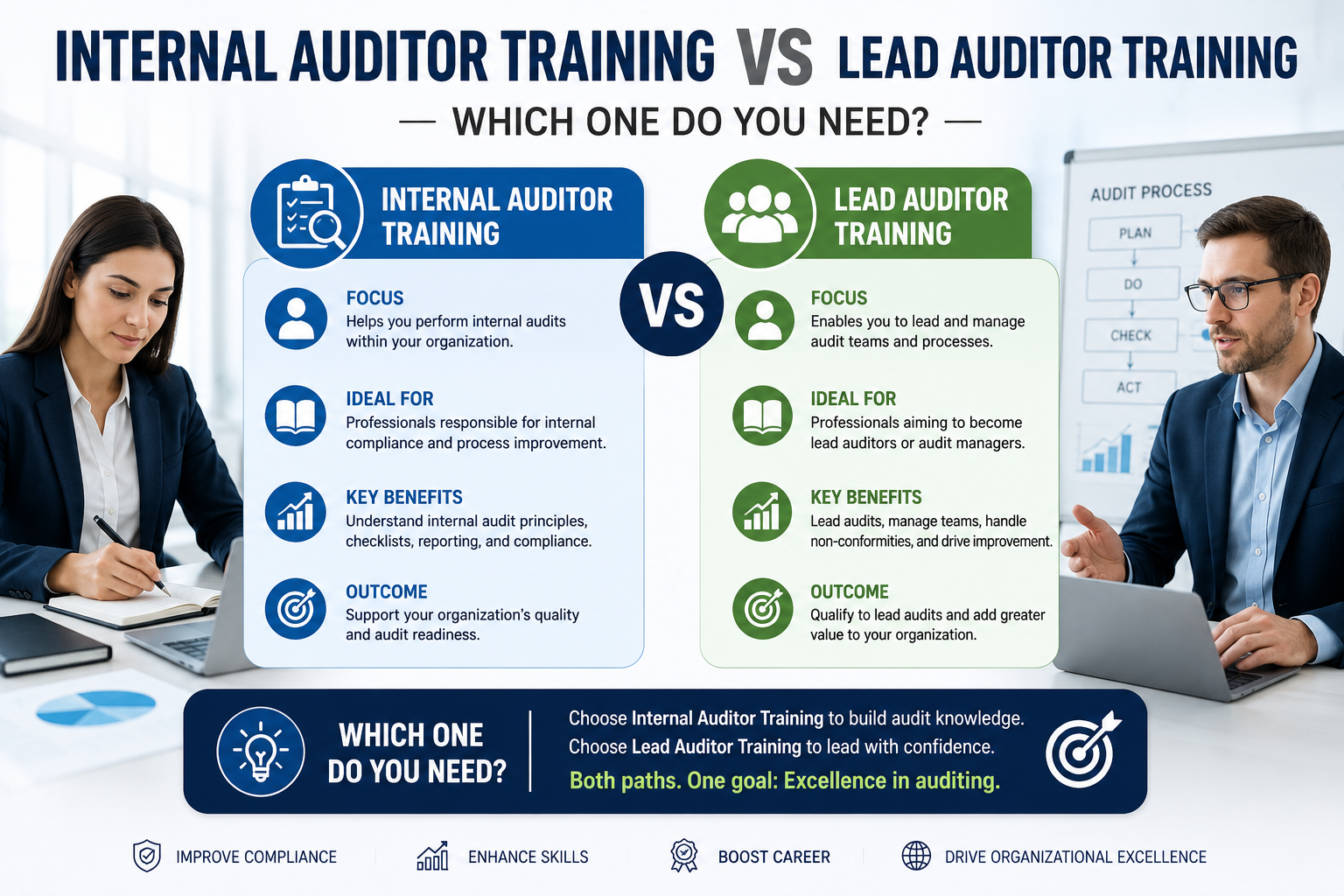
In the world of quality management and compliance, understanding the distinction between internal auditor training and lead auditor training is crucial for professionals aiming to enhance their skills. Whether you are an aspiring auditor or a seasoned professional, knowing which course to pursue can greatly impact your career trajectory. In this blog, we will explore the differences, benefits, and relevance of internal auditor training and lead auditor training, particularly in the context of ISO auditor certification and audit training.
Understanding Internal Auditor Training
Internal auditor training focuses on equipping individuals with the skills and knowledge necessary to conduct audits within their own organizations. This training is vital for ensuring compliance with internal policies and industry regulations. The course typically covers:
- Basics of auditing principles and techniques
- Understanding of ISO standards
- Audit planning, execution, and reporting
- Risk assessment and management
- Communication and interpersonal skills for effective auditing
Internal auditors play a critical role in identifying areas of improvement within an organization. They help in maintaining operational efficiency and ensuring that the organization adheres to regulatory requirements. The training prepares participants to act as the first line of defense in upholding the integrity of their organization's processes.
Benefits of Internal Auditor Training
1. Enhanced Compliance: Internal auditor training helps ensure that your organization complies with various standards and regulations, reducing the risk of non-compliance penalties.
2. Cost Savings: By identifying inefficiencies and areas for improvement, internal auditors can help organizations save money in the long run.
3. Career Advancement: Completing internal auditor training can open up new career opportunities within your organization or in other companies.
Exploring Lead Auditor Training
Lead auditor training, on the other hand, is designed for individuals who want to take on a more advanced role within the auditing process. This course is geared toward those who will lead audit teams and conduct external audits. Key components of lead auditor training include:
- In-depth understanding of ISO standards
- Leadership and team management skills
- Advanced audit techniques and methodologies
- Effective communication and negotiation skills
- Reporting and follow-up strategies
Lead auditors are responsible for planning, executing, and leading audits across various departments or even different organizations. Their role often involves working closely with senior management to ensure that audit findings are addressed effectively.
Benefits of Lead Auditor Training
1. Leadership Skills: Lead auditor training enhances your ability to lead audit teams and manage complex audit processes effectively.
2. Broader Career Opportunities: Completing a lead auditor course can significantly widen your career options, allowing you to work as a consultant or in senior management roles.
3. Increased Credibility: Holding a lead auditor certification boosts your professional credibility, making you a valuable asset to any organization.
Comparing Internal Auditor Training and Lead Auditor Training
While both internal auditor training and lead auditor training are essential for professionals in the auditing field, they serve different purposes and cater to different levels of expertise. Here’s a comparison:
| Aspect | Internal Auditor Training | Lead Auditor Training |
|---|---|---|
| Target Audience | Entry to mid-level auditors | Experienced auditors and team leaders |
| Focus | Internal audits and compliance | Leading audit teams and external audits |
| Skills Developed | Basic auditing skills, compliance knowledge | Leadership, advanced auditing techniques |
| Outcome | Internal auditor certification | Lead auditor certification |
Which Course Should You Choose?
Deciding between internal auditor training and lead auditor training depends primarily on your current role, career aspirations, and the specific needs of your organization. Here are some factors to consider:
Your Current Role
If you are new to auditing or currently work in a position that requires you to understand your organization’s internal processes and compliance, internal auditor training is the ideal choice. This training will build your foundational skills and prepare you for practical auditing tasks.
Career Aspirations
If you aspire to take on leadership roles or wish to conduct external audits, lead auditor training will be more beneficial. This course will provide you with the advanced skills and knowledge needed to manage audit teams and engage with upper management.
Organizational Needs
Consider the needs of your organization. If there is a strong focus on internal compliance and continuous improvement, internal auditor training may be the priority. Conversely, if your organization regularly conducts external audits and values strong leadership in auditing processes, lead auditor training might be the way to go.
Frequently Asked Questions (FAQs)
1. What are the prerequisites for internal auditor training?
Typically, there are no strict prerequisites for internal auditor training, although having a basic understanding of your organization's processes can be beneficial.
2. How long does the lead auditor course take?
The duration of a lead auditor course varies, but it usually spans several days to a week, depending on the training provider.
3. Is ISO auditor certification necessary for my career?
While not mandatory, obtaining ISO auditor certification can significantly enhance your credibility and job prospects in the auditing field.
4. Can I switch from internal auditor training to lead auditor training later?
Yes, many professionals start with internal auditor training and later pursue lead auditor training as they advance in their careers.
Conclusion
In summary, both internal auditor training and lead auditor training serve essential functions in the auditing landscape. Understanding your career goals and organizational needs will guide your decision on which course to pursue. With the right training, you can become a valuable asset to your organization while enhancing your professional skills.
If you’re ready to take the next step in your auditing career, enroll in an internal auditor training or lead auditor course today. Explore the various ISO auditor certification programs available and set yourself on the path to success!


Leave a Comment