
 Quality Management



















 IT Service Management



 Project Management



 Agile Management




 Web Development



 Cloud Computing


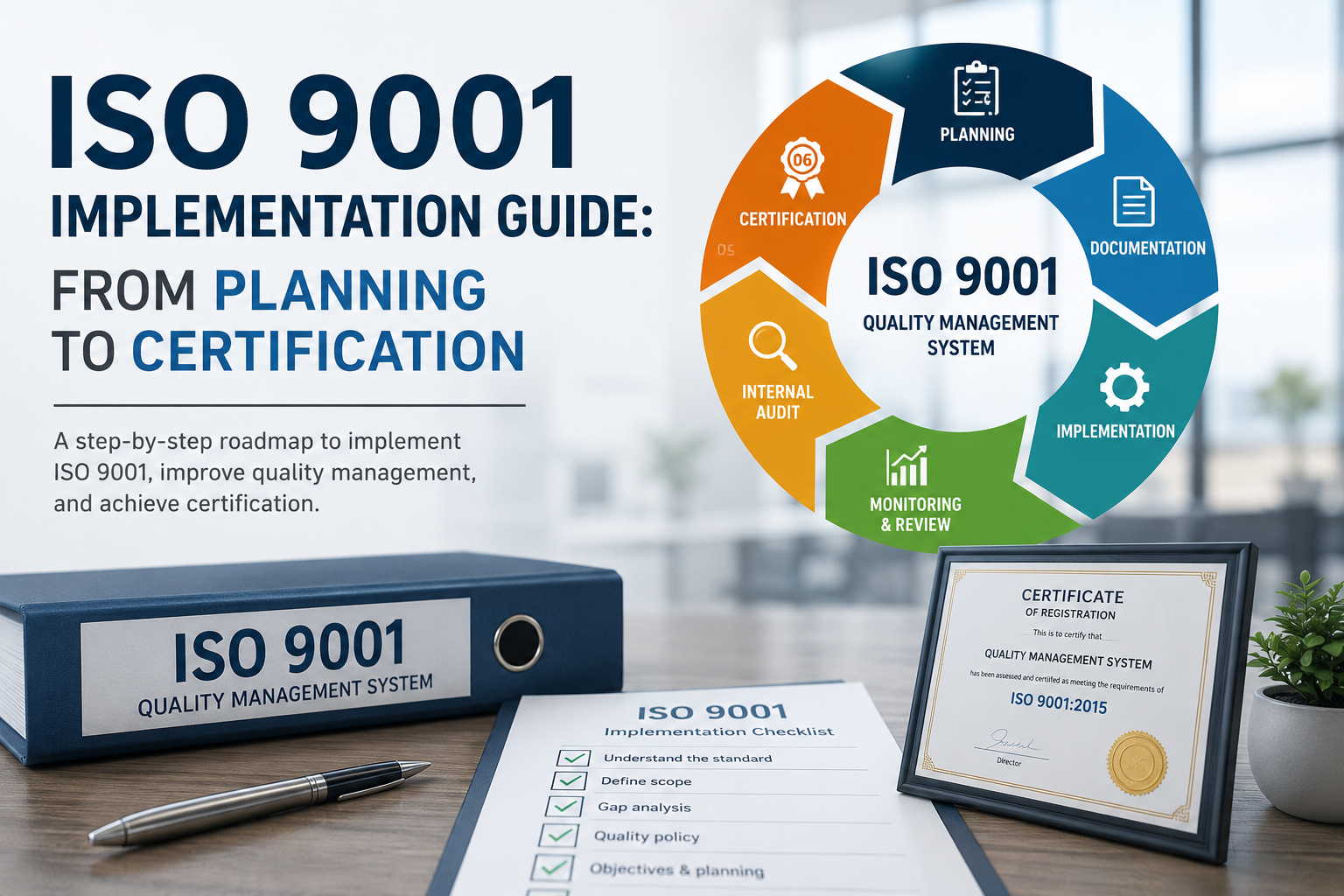
In today's competitive landscape, achieving ISO 9001 certification is not just a mark of quality; it's a strategic advantage. For businesses in India, understanding the ISO 9001 implementation process can significantly enhance operational efficiency and customer satisfaction. This guide will walk you through the steps from planning to certification, the importance of a quality management system (QMS), and the role of an ISO consultant.
What is ISO 9001?
ISO 9001 is an international standard that specifies requirements for a quality management system (QMS). Organizations use the standard to demonstrate their ability to consistently provide products and services that meet customer and regulatory requirements. It is a framework for improving overall performance and customer satisfaction.
Why Implement ISO 9001?
Implementing ISO 9001 can bring a myriad of benefits to your organization, including:
- Improved Efficiency: Streamlining processes leads to reduced waste and increased productivity.
- Enhanced Customer Satisfaction: A focus on quality ensures that customer needs are met consistently.
- Market Advantage: ISO certification can differentiate your business in a crowded marketplace.
- Risk Management: A structured QMS helps identify and mitigate risks effectively.
Steps for ISO 9001 Implementation
1. Planning for ISO 9001 Implementation
Before diving into implementation, thorough planning is essential. Here are the steps to consider:
- Conduct a Gap Analysis: Assess your current processes against ISO 9001 requirements to identify areas for improvement.
- Define Objectives: Set clear, measurable objectives for your QMS. These should align with your business goals.
- Select an ISO Consultant: Engaging with an experienced ISO consultant can facilitate a smoother implementation process.
2. Developing the Quality Management System
The next step is to develop your QMS based on the ISO 9001 standard:
- Document Processes: Create standard operating procedures (SOPs) for key processes.
- Establish Policies: Develop quality policies that guide your organization’s commitment to quality.
- Implement Training Programs: Train employees on the QMS and their roles within it.
3. Implementing the QMS
Once your QMS is developed, it’s time for implementation:
- Communicate Changes: Ensure all employees are aware of the new processes and policies.
- Monitor Processes: Use key performance indicators (KPIs) to track the effectiveness of your QMS.
- Engage Employees: Encourage feedback and participation from staff to enhance the QMS.
4. Conducting Internal Audits
Regular internal audits are crucial for assessing the effectiveness of your QMS:
- Schedule Audits: Plan and conduct audits at regular intervals.
- Identify Non-Conformities: Document any discrepancies and develop corrective actions.
- Review Audit Results: Use audit findings to improve processes continuously.
5. Management Review
Management involvement is critical for the success of your QMS:
- Review Performance: Evaluate the performance of the QMS against objectives.
- Make Decisions: Use the review to make informed decisions about resource allocation and process improvements.
6. Preparing for Certification
Once you feel confident in your QMS, prepare for the certification audit:
- Choose a Certification Body: Research and select an accredited certification body.
- Submit Application: Complete the necessary application forms and pay the required fees.
- Document Review: The certification body will review your documentation before the on-site audit.
7. Certification Audit
The certification audit is the final step in the ISO certification process:
- On-Site Audit: Auditors will evaluate your QMS against ISO 9001 standards.
- Address Findings: If any non-conformities are found, address them promptly to achieve certification.
- Receive Certification: Upon successful completion, you will receive your ISO 9001 certification.
Common Challenges in ISO 9001 Implementation
Implementing ISO 9001 can present several challenges, including:
- Resistance to Change: Employees may resist changes to existing processes. Effective communication and training can mitigate this.
- Lack of Management Support: Without leadership buy-in, the QMS may not be taken seriously. Ensure management is actively involved.
- Inadequate Documentation: Proper documentation is crucial for compliance. Allocate resources to develop and maintain documentation.
FAQs about ISO 9001 Implementation
What is the duration of the ISO 9001 certification process?
The duration can vary based on the size and complexity of the organization. Generally, it can take anywhere from a few months to over a year.
Do I need to hire an ISO consultant for implementation?
While it's not mandatory, hiring an ISO consultant can provide valuable expertise and facilitate a smoother implementation process.
How often do I need to renew my ISO 9001 certification?
ISO 9001 certification is usually valid for three years, after which you need to undergo a recertification audit.
Can small businesses implement ISO 9001?
Absolutely! ISO 9001 is applicable to businesses of all sizes. In fact, many small businesses have successfully implemented it to improve their processes.
Conclusion
Implementing ISO 9001 is a strategic decision that can lead to significant improvements in quality and customer satisfaction. By following this guide, businesses in India can navigate the ISO certification process effectively. Whether you’re a small enterprise or a large organization, the benefits of a robust quality management system are undeniable.
Ready to take the first step towards ISO 9001 certification? Contact us today to learn how our experienced ISO consultants can assist you in your implementation journey!
Call to Action: Don’t wait! Enhance your business quality with ISO 9001 certification. Contact us now for expert guidance and support!



Leave a Comment