
 Quality Management



















 IT Service Management



 Project Management



 Agile Management




 Web Development



 Cloud Computing


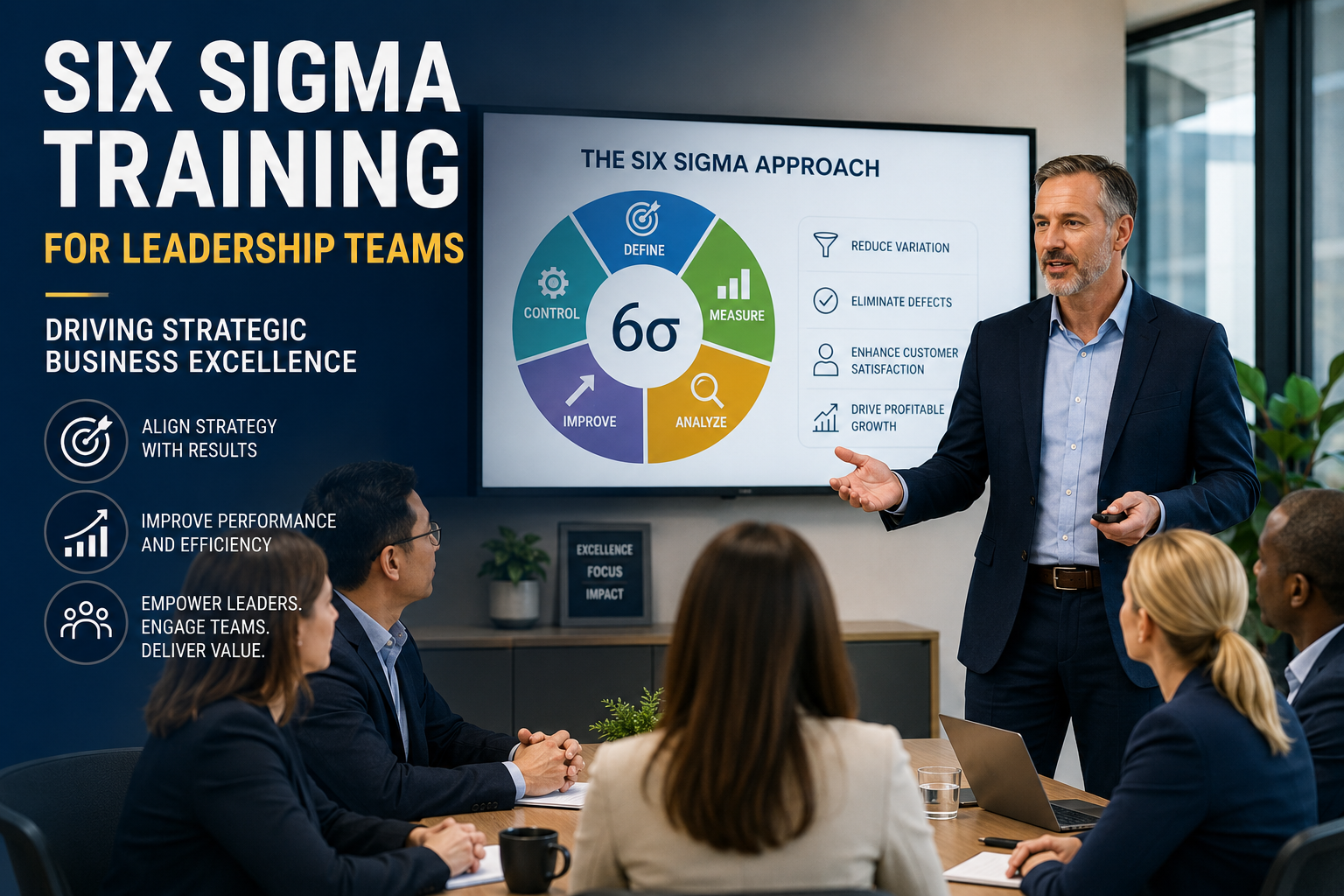
In today’s competitive business landscape, the pursuit of excellence is not just a goal but a necessity. For organizations in India, embracing methodologies like Six Sigma can significantly enhance operational efficiency and drive strategic process improvement. This blog explores how Six Sigma training for leadership teams can be a game-changer in achieving business excellence.
Understanding Six Sigma
Six Sigma is a data-driven approach aimed at eliminating defects and ensuring quality in processes. Originally developed by Motorola in the 1980s, it has since evolved into a powerful methodology embraced by organizations worldwide. The term "Six Sigma" refers to the statistical measure of process variation, aiming to achieve a level of quality that results in less than 3.4 defects per million opportunities.
The Importance of Leadership Training in Six Sigma
For any Six Sigma initiative to succeed, strong leadership is essential. Leadership teams are responsible for driving the business excellence strategy and ensuring that Six Sigma principles are integrated into the corporate culture. Here’s why executive Six Sigma training is crucial:
1. Aligning Business Goals with Process Improvement
Leadership teams play a vital role in aligning organizational objectives with process improvement strategies. Six Sigma training equips leaders with the tools to identify key performance indicators (KPIs) and align them with strategic business goals. This alignment helps in driving organizational success through targeted improvements.
2. Fostering a Culture of Continuous Improvement
A successful Six Sigma implementation requires a cultural shift within the organization. Leaders trained in Six Sigma can champion a culture of continuous improvement, encouraging employees at all levels to identify and eliminate inefficiencies. This cultural shift not only enhances productivity but also boosts employee morale.
3. Enhancing Decision-Making Skills
Effective decision-making is crucial for leadership teams. Six Sigma training enhances analytical skills, enabling leaders to make data-driven decisions. By utilizing Six Sigma tools like DMAIC (Define, Measure, Analyze, Improve, Control), leaders can evaluate processes and implement effective solutions.
Key Components of Six Sigma Training for Leadership Teams
When considering Six Sigma training for leadership teams, it's essential to focus on the key components that will drive strategic process improvement:
1. Understanding the Six Sigma Framework
Leaders must grasp the core principles of Six Sigma, including the DMAIC methodology and the roles of different team members in a Six Sigma project. Training should cover how to effectively manage Six Sigma projects and the importance of cross-functional collaboration.
2. Data Analysis and Statistical Tools
Leadership teams should be equipped with the skills to analyze data effectively. Training should include instruction on statistical tools such as regression analysis, hypothesis testing, and control charts, which are pivotal in identifying process variations and driving improvements.
3. Change Management Skills
Implementing Six Sigma initiatives often requires significant change within the organization. Leaders must be skilled in change management techniques to effectively guide their teams through transitions. This includes communication strategies, stakeholder engagement, and conflict resolution.
Implementing Six Sigma Training in Indian Corporates
For Indian organizations, implementing Six Sigma training for leadership teams can be a transformative process. Here are some steps to consider:
1. Assessing Organizational Needs
Before initiating training, it’s essential to assess the specific needs of the organization. Identify areas where process improvement is necessary and how Six Sigma can address these challenges.
2. Selecting the Right Training Provider
Choosing a reputable training provider is crucial. Look for organizations that offer tailored programs focusing on corporate leadership development and Six Sigma methodologies relevant to your industry.
3. Creating a Supportive Environment
Encourage a supportive environment for learning and implementation. Leadership teams should actively participate in training and promote the application of learned skills within their teams.
Benefits of Six Sigma Training for Leadership Teams
The benefits of implementing Six Sigma training for leadership teams in India are numerous:
1. Increased Efficiency
With a strong understanding of Six Sigma, leaders can identify inefficiencies and streamline processes, leading to increased productivity and reduced operational costs.
2. Improved Quality
Six Sigma’s focus on quality leads to fewer defects and higher customer satisfaction, ultimately enhancing the brand reputation of the organization.
3. Enhanced Employee Engagement
When leaders invest in training, it demonstrates a commitment to employee development. Engaged employees are more likely to contribute to process improvement initiatives, fostering a culture of excellence.
FAQs about Six Sigma Training for Leadership Teams
1. What is the duration of Six Sigma training for leaders?
The duration of Six Sigma training varies depending on the program, but it typically ranges from a few days to several weeks, including both classroom instruction and practical applications.
2. Is Six Sigma certification necessary for leaders?
While not mandatory, certification can enhance a leader's credibility and demonstrate their commitment to process improvement and organizational excellence.
3. How does Six Sigma training impact business strategy?
Six Sigma training helps leaders align process improvements with business strategy, ensuring that organizational goals are met through effective resource utilization and quality management.
4. Can Six Sigma be applied to all industries?
Yes, Six Sigma is versatile and can be applied across various industries, including manufacturing, healthcare, finance, and service sectors, to improve processes and enhance quality.
Conclusion
In the quest for business excellence, Six Sigma training for leadership teams emerges as a powerful strategy. By equipping leaders with the necessary skills and knowledge, organizations can drive strategic process improvement, enhance efficiency, and foster a culture of continuous improvement. Embrace Six Sigma training today and position your organization for a future of excellence.
Call to Action
Ready to elevate your organization’s performance? Invest in leadership training today and unlock the potential of Six Sigma for your business. Contact us now to learn more about our tailored Six Sigma training programs for leadership teams!


Leave a Comment