
 Quality Management



















 IT Service Management



 Project Management



 Agile Management




 Web Development



 Cloud Computing


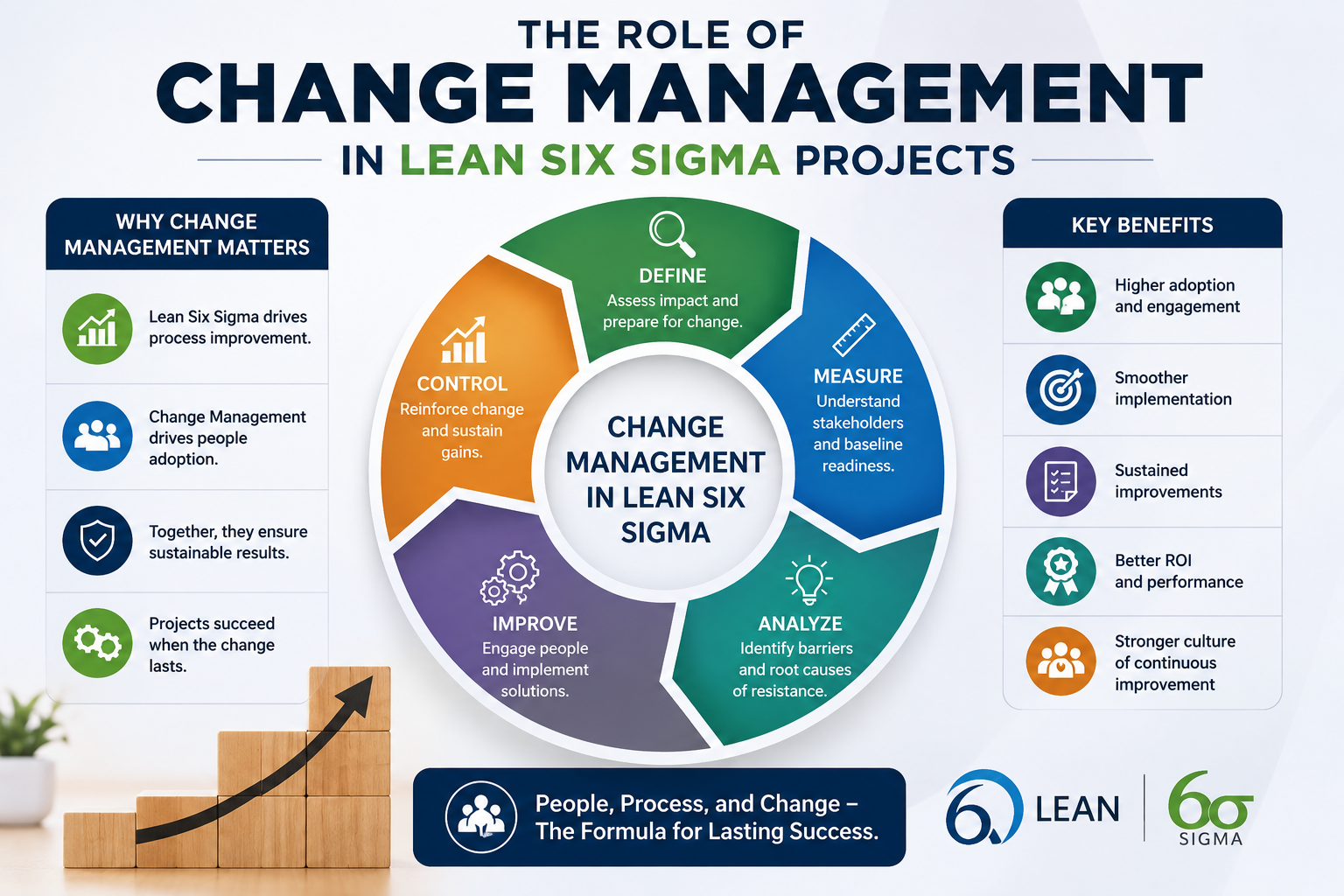
In today’s fast-paced business environment, organizations are constantly seeking ways to improve their processes and enhance operational efficiency. One of the most effective methodologies in achieving this is Lean Six Sigma. However, the success of Lean Six Sigma projects is not solely dependent on the tools and techniques used; it significantly relies on effective change management. In this blog, we will explore the intricate relationship between change management and Lean Six Sigma, and how organizations can leverage this synergy to drive business improvement and process transformation.
Understanding Lean Six Sigma
Lean Six Sigma is a powerful combination of two methodologies: Lean, which focuses on eliminating waste and increasing efficiency, and Six Sigma, which aims at reducing defects and improving quality. Together, they provide a comprehensive approach to process optimization. In India, where businesses are increasingly adopting these methodologies, understanding the fundamentals of Lean Six Sigma is crucial for any organization aiming to thrive in a competitive market.
What is Change Management?
Change management refers to the structured approach to transitioning individuals, teams, and organizations from a current state to a desired future state. This process involves preparing, supporting, and helping individuals to adopt change in order to drive organizational success. In the context of Lean Six Sigma, effective change management ensures that improvements are not only implemented but also sustained over time.
The Need for Change Management in Lean Six Sigma
While Lean Six Sigma offers a robust framework for process improvement, without proper change management, the benefits of these initiatives can be short-lived. Here are some reasons why change management is essential:
- Employee Buy-In: Successful organizational change requires the commitment of employees at all levels. Change management helps in communicating the vision and benefits of Lean Six Sigma initiatives, thus fostering buy-in.
- Minimizing Resistance: Change is often met with resistance. A well-structured change management plan addresses concerns and helps employees navigate through the transition.
- Sustaining Improvements: Lean Six Sigma projects aim for long-term improvements. Change management ensures that processes are ingrained in the organizational culture, leading to sustained benefits.
Key Components of Change Management in Lean Six Sigma
To effectively integrate change management into Lean Six Sigma projects, organizations should focus on several key components:
1. Leadership Commitment
Leadership plays a pivotal role in driving change. Leaders must be visibly committed to Lean Six Sigma initiatives and actively participate in change management efforts. This commitment sets the tone for the entire organization and encourages others to embrace change.
2. Clear Communication
Effective communication is vital for successful organizational change. Organizations must communicate the goals, benefits, and expected outcomes of Lean Six Sigma projects clearly and consistently. This transparency helps to alleviate fears and encourages participation.
3. Training and Support
Providing training and support is essential for employees to adapt to new processes and practices. Organizations should invest in training programs that equip employees with the necessary skills and knowledge to succeed in a Lean Six Sigma environment.
4. Employee Involvement
Involving employees in the change process fosters a sense of ownership and accountability. Organizations should encourage employees to share their insights and experiences, making them active participants in the transformation journey.
5. Monitoring and Feedback
Continuous monitoring and feedback mechanisms are critical for assessing the effectiveness of Lean Six Sigma initiatives. Organizations should establish metrics to evaluate progress and make necessary adjustments based on feedback from employees and stakeholders.
Best Practices for Integrating Change Management with Lean Six Sigma
Integrating change management with Lean Six Sigma requires a strategic approach. Here are some best practices to consider:
1. Start with a Comprehensive Assessment
Before embarking on a Lean Six Sigma project, conduct a thorough assessment of the current organizational culture and readiness for change. This assessment will help identify potential challenges and areas that require special attention during the change process.
2. Create a Change Management Team
Assemble a dedicated team responsible for overseeing the change management aspect of Lean Six Sigma projects. This team should include representatives from various departments to ensure a holistic approach to change.
3. Develop a Change Management Plan
A well-defined change management plan outlines the steps, timelines, and resources required for successful implementation. This plan should be flexible to accommodate feedback and adjustments as needed.
4. Celebrate Successes
Recognizing and celebrating small wins throughout the Lean Six Sigma journey boosts morale and reinforces the importance of the change. Acknowledging achievements encourages continued commitment to the process.
5. Foster a Culture of Continuous Improvement
To sustain the benefits of Lean Six Sigma, organizations must cultivate a culture of continuous improvement. This culture encourages employees to seek out opportunities for enhancement and innovation regularly.
Challenges in Change Management for Lean Six Sigma
While integrating change management with Lean Six Sigma can lead to significant improvements, organizations may encounter several challenges:
- Resistance to Change: Employees may be resistant to new processes and practices, fearing job loss or increased workload. Addressing these concerns through communication and support is crucial.
- Lack of Leadership Engagement: If leaders are not visibly committed to the change, employees may perceive it as unimportant, leading to disengagement.
- Insufficient Training: Without proper training, employees may struggle to adapt to new processes, hindering the success of Lean Six Sigma initiatives.
Conclusion
In conclusion, the role of change management in Lean Six Sigma projects cannot be overstated. By effectively managing organizational change, businesses can enhance their ability to implement process transformations that lead to substantial improvements. For Indian organizations looking to improve their operations and foster a culture of excellence, combining Lean Six Sigma with robust change management strategies is a winning formula.
FAQs
1. What is the primary goal of Lean Six Sigma?
The primary goal of Lean Six Sigma is to improve process efficiency and quality by eliminating waste and reducing defects.
2. How does change management influence Lean Six Sigma success?
Change management influences Lean Six Sigma success by ensuring employee buy-in, minimizing resistance, and sustaining improvements over time.
3. What are some common challenges faced during change management in Lean Six Sigma projects?
Common challenges include resistance to change, lack of leadership engagement, and insufficient training for employees.
4. Why is employee involvement important in Lean Six Sigma change management?
Employee involvement fosters ownership and accountability, making employees active participants in the transformation process.
5. How can organizations sustain improvements after Lean Six Sigma implementation?
Organizations can sustain improvements by fostering a culture of continuous improvement and celebrating successes along the way.
If you're ready to embark on your Lean Six Sigma journey and want to ensure effective change management for lasting business improvement, contact us today!


Leave a Comment