
 Quality Management



















 IT Service Management



 Project Management



 Agile Management



 Web Development



 Cloud Computing


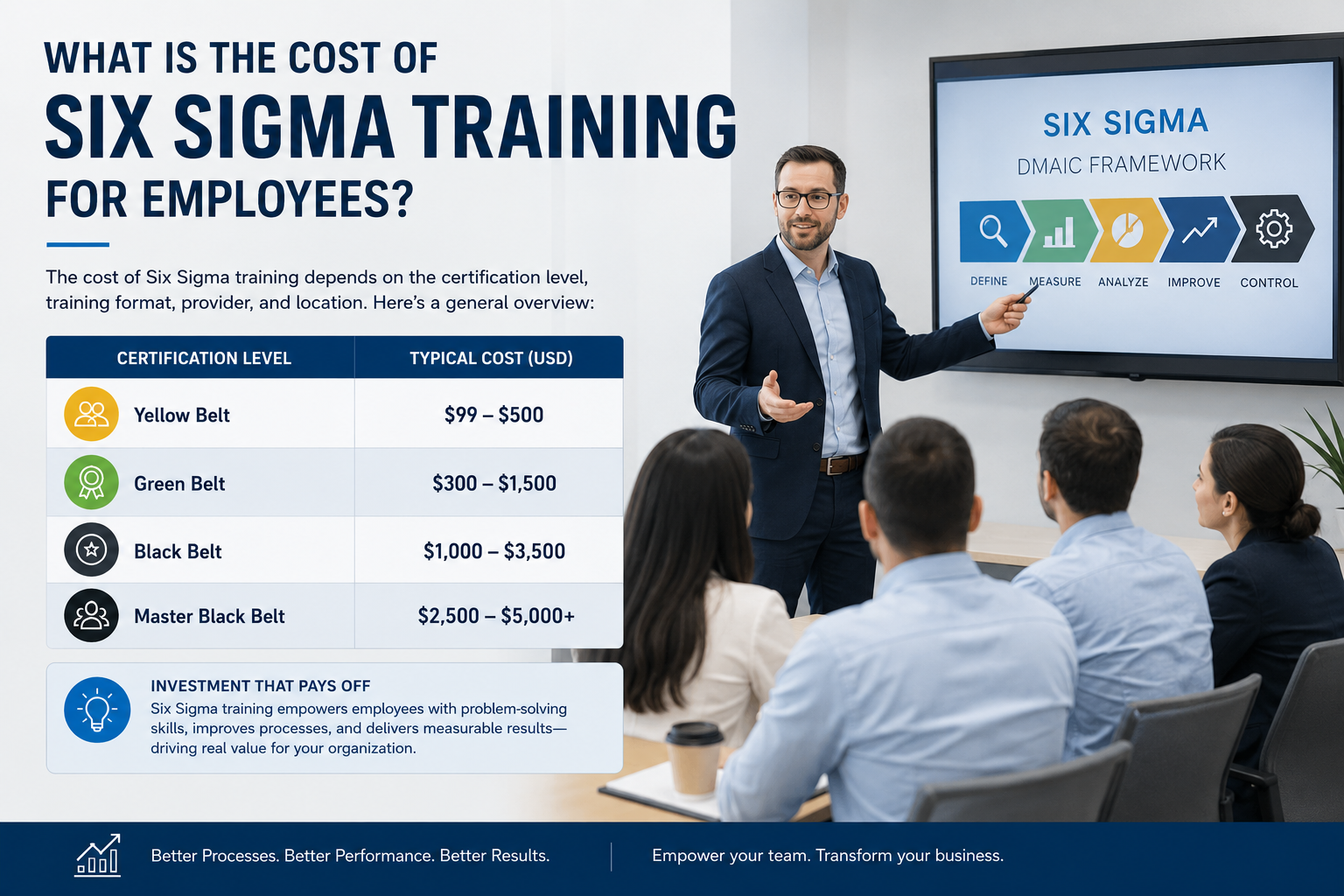
In today's competitive business environment, organizations are constantly striving for improved efficiency and quality. One of the most effective methodologies for achieving these goals is Six Sigma. However, many companies are often left wondering about the six sigma cost associated with training their employees. In this article, we will explore the various factors that influence the six sigma corporate training cost and provide insights into the overall six sigma training for employee cost in India.
Understanding Six Sigma
Before diving into the costs, it's essential to understand what Six Sigma entails. Six Sigma is a disciplined, data-driven approach aimed at reducing defects and improving process quality. It employs various tools and techniques, including statistical analysis, process mapping, and quality control measures. By adopting Six Sigma, organizations can enhance customer satisfaction, reduce operational costs, and foster a culture of continuous improvement.
Factors Influencing Six Sigma Training Costs
The cost of Six Sigma training can vary widely based on several factors, including:
1. Training Level
Six Sigma training is offered at several levels, including:
- White Belt: Introduction to Six Sigma concepts.
- Yellow Belt: Basic understanding of Six Sigma tools.
- Green Belt: Intermediate level focused on project work.
- Black Belt: Advanced level training with a focus on leadership and complex projects.
- Master Black Belt: Expert level focusing on strategy and mentoring other belts.
The higher the belt level, the more extensive the training, which can significantly increase the overall six sigma training for employee cost.
2. Training Format
Six Sigma training can be delivered in various formats:
- In-Person Training: Traditional classroom-based training led by experienced instructors.
- Online Training: Flexible, self-paced courses that can be accessed from anywhere.
- Corporate Training: Customized training tailored to the specific needs of a company.
The format chosen can impact the six sigma corporate training cost significantly. In-person training may come with additional travel and accommodation expenses, while online training may have lower overheads.
3. Training Provider
The choice of training provider can also influence costs. Well-established institutions and organizations may charge a premium for their expertise and reputation. In contrast, newer or smaller providers may offer more competitive pricing. It's essential to evaluate the credibility and experience of the training provider before making a decision.
4. Location
The geographic location of the training can also affect costs. Major cities in India, such as Mumbai, Bangalore, and Delhi, may have higher training costs compared to smaller towns. Additionally, the cost of living in these areas can contribute to the overall pricing.
5. Number of Employees
Most training providers offer discounts for bulk enrollments. If a company is training multiple employees, they may be able to negotiate a lower rate per person, thereby reducing the overall six sigma corporate training cost.
Estimated Costs of Six Sigma Training in India
While costs can vary, here are some general estimates for Six Sigma training in India:
- White Belt: ₹5,000 - ₹10,000
- Yellow Belt: ₹10,000 - ₹20,000
- Green Belt: ₹20,000 - ₹40,000
- Black Belt: ₹40,000 - ₹70,000
- Master Black Belt: ₹70,000 - ₹1,50,000
These costs typically include course materials, certification, and sometimes access to online resources. However, it's important to check with specific providers for accurate pricing and what is included in the fee.
Benefits of Investing in Six Sigma Training
Investing in Six Sigma training for employees can yield significant long-term benefits for organizations, including:
- Improved Efficiency: Six Sigma methodologies help streamline processes, leading to reduced waste and increased productivity.
- Higher Quality: By focusing on quality control and continuous improvement, organizations can enhance their product and service offerings.
- Increased Employee Engagement: Employees who receive training are often more engaged and motivated, contributing to a positive workplace culture.
- Cost Savings: Implementing Six Sigma can lead to substantial cost savings by reducing defects and inefficiencies.
Conclusion
The cost of Six Sigma training for employees can vary based on several factors, including the level of training, format, provider, location, and number of participants. However, the benefits of implementing Six Sigma methodologies far outweigh the initial investment. For organizations looking to enhance their operational efficiency and quality, investing in Six Sigma training is a strategic decision that can lead to long-term success.
FAQs about Six Sigma Training Costs
1. What is the average cost of Six Sigma training in India?
The average cost of Six Sigma training in India ranges from ₹5,000 for a White Belt to ₹1,50,000 for a Master Black Belt, depending on the level of training and provider.
2. Is online Six Sigma training cheaper than in-person training?
Generally, yes. Online Six Sigma training tends to be more affordable due to lower overhead costs, making it a popular option for companies.
3. Can organizations negotiate training costs for multiple employees?
Yes, many training providers offer discounts for bulk enrollments, allowing organizations to negotiate lower rates for training multiple employees.
4. What should I look for in a Six Sigma training provider?
When selecting a Six Sigma training provider, consider their reputation, experience, course content, certification, and post-training support.
5. What are the long-term benefits of Six Sigma training?
Long-term benefits include improved efficiency, higher quality products/services, increased employee engagement, and significant cost savings.
If you are considering investing in Six Sigma training for your employees, contact us today for a tailored training solution that meets your organization's needs. Let us help you take the first step towards operational excellence!


Leave a Comment