
 Quality Management



















 IT Service Management



 Project Management



 Agile Management




 Web Development


 Cloud Computing

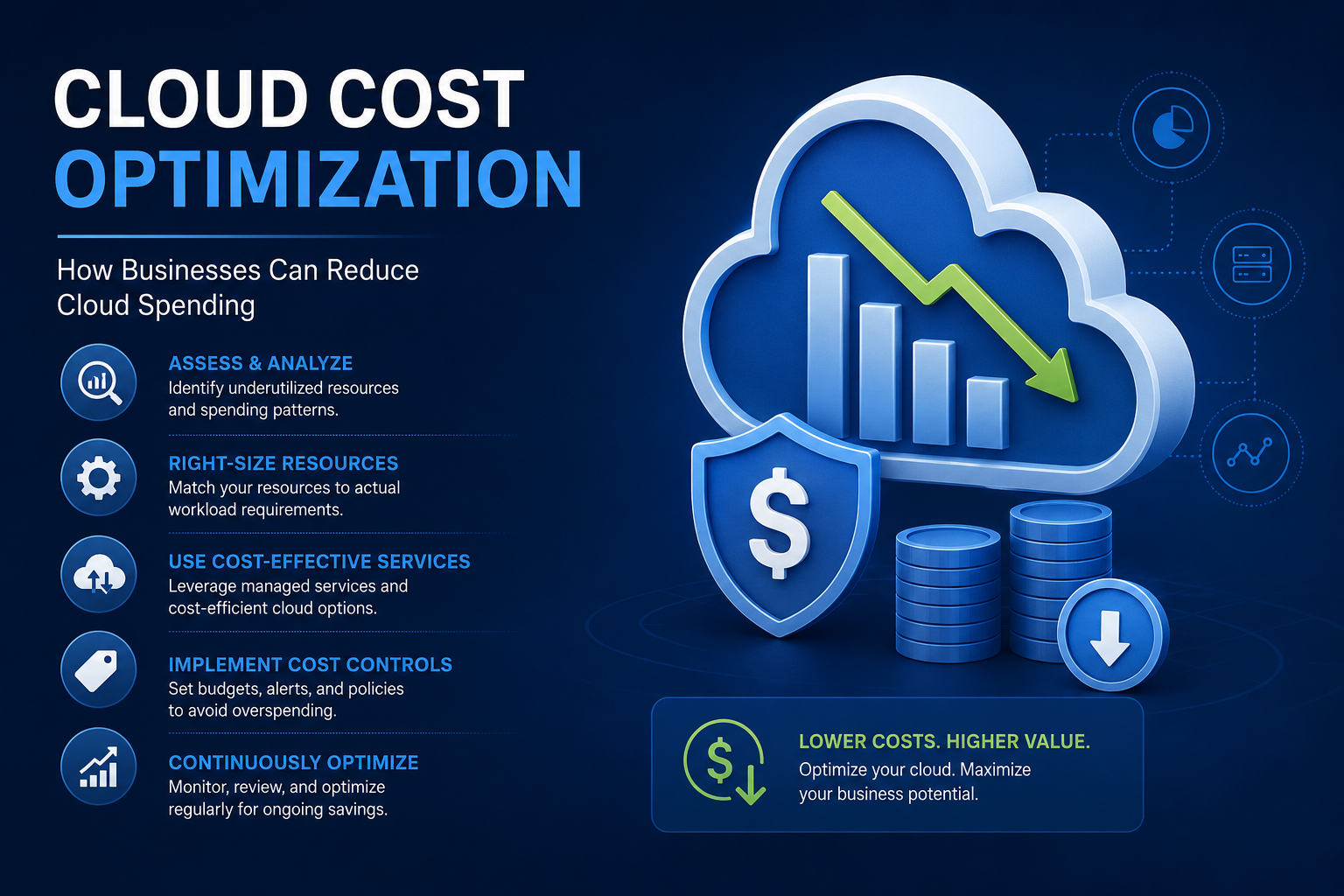
In today’s digital age, cloud computing has become integral to business operations, enabling organizations to scale efficiently and innovate rapidly. However, as more companies migrate to the cloud, cloud infrastructure costs are soaring, leading to a pressing need for effective cloud cost optimization strategies. This blog will explore how businesses can manage and reduce their cloud spending while maximizing the benefits of cloud technology.
Understanding Cloud Cost Management
Cloud cost management refers to the processes and tools that help businesses monitor, control, and optimize their cloud spending. With a plethora of services offered by major providers like AWS, Azure, and Google Cloud, it’s easy for organizations to lose track of their expenditures. Implementing an effective cloud cost management strategy can be the difference between a successful cloud deployment and a financial drain.
Why Cloud Cost Optimization Matters
Cloud computing offers immense flexibility and scalability, but it can also lead to unexpected expenses if not managed correctly. Here are a few reasons why cloud cost optimization is crucial:
- Budget Management: As businesses grow, so do their cloud needs. Effective cloud budgeting ensures that organizations do not overspend.
- Resource Efficiency: Optimizing cloud costs helps in utilizing resources more efficiently, reducing waste.
- Improved ROI: By understanding and controlling cloud expenses, businesses can achieve a better return on investment.
Strategies for Cloud Cost Optimization
1. Analyze Your Cloud Usage
The first step toward cloud cost optimization is to analyze your current cloud usage. Many organizations are unaware of how much they are spending on various services. Utilize tools provided by cloud service providers to monitor usage patterns. Regular audits help identify unused or underutilized resources that can be scaled down or terminated.
2. Right-Sizing Resources
Right-sizing involves adjusting your cloud resources to better fit your actual needs. For instance, if your application only requires a small instance size, there’s no need to pay for a larger one. Regularly review and adjust your instance sizes based on performance metrics to ensure you are not overspending on unnecessary capacity.
3. Implement Auto-Scaling
Auto-scaling is a feature offered by most cloud providers that automatically adjusts resources based on demand. It helps businesses pay only for what they use. Setting up auto-scaling can significantly reduce costs during off-peak hours while ensuring performance during peak times.
4. Utilize Reserved Instances
If your business has predictable workloads, consider purchasing reserved instances. This option allows you to commit to using a specific instance type for a set period—typically one or three years—in exchange for a lower hourly rate. This can result in substantial savings for long-term projects.
5. Leverage Spot Instances
Spot instances allow you to bid on spare cloud capacity at significantly reduced prices. While they can be interrupted if demand increases, they are ideal for flexible workloads like batch processing or development environments. Using spot instances wisely can lead to impressive cloud computing savings.
6. Optimize Storage Costs
Storage is often a hidden cost in cloud billing. Regularly review your storage usage and delete old or unnecessary data. Utilize lifecycle policies to automatically move data to cheaper storage classes, such as archival storage, when it is no longer frequently accessed.
7. Monitor and Control Third-Party Services
Many businesses use third-party services that integrate with their cloud infrastructure. These can accumulate additional costs. Regularly audit these services and evaluate their necessity. Consider consolidating services or exploring alternatives that offer better pricing.
8. Train Your Team
One of the most effective ways to manage cloud spending is to educate your team about cost implications. Provide training on cloud best practices, resource allocation, and usage optimization. A well-informed team can make better decisions that ultimately lead to lower costs.
Best Tools for Cloud Cost Management
- CloudHealth by VMware: Offers comprehensive reporting and analytics for cloud spending.
- CloudCheckr: Provides visibility into cloud costs and security compliance.
- Spot.io: Focuses on optimizing cloud costs through intelligent automation.
- AWS Cost Explorer: A free tool that helps you visualize and manage your AWS costs.
FAQs About Cloud Cost Optimization
What is cloud cost optimization?
Cloud cost optimization refers to the strategies and practices that businesses implement to reduce their cloud spending while maximizing the efficiency and performance of their cloud resources.
Why is cloud cost management important?
Effective cloud cost management is crucial to prevent overspending, improve resource efficiency, and achieve a better return on investment in cloud technologies.
How can businesses ensure effective cloud budgeting?
Businesses can ensure effective cloud budgeting by regularly analyzing their cloud usage, implementing cost-control measures, and continuously monitoring their expenditures against budgets.
What tools can help in managing cloud costs?
Tools such as CloudHealth, CloudCheckr, Spot.io, and AWS Cost Explorer can help businesses monitor, analyze, and optimize their cloud spending.
Conclusion
In conclusion, cloud cost optimization is not just a one-time effort but a continuous process that requires regular monitoring, analysis, and adjustment. By implementing the strategies discussed above, businesses in India can significantly reduce their cloud infrastructure costs and achieve considerable cloud computing savings. Embrace the cloud with a well-planned cost management strategy to reap its full benefits without breaking the bank.
If you’re looking for expert assistance in optimizing your cloud costs, contact us today. Let us help you manage your cloud expenses effectively and maximize your return on investment!




Leave a Comment