
 Quality Management



















 IT Service Management



 Project Management



 Agile Management




 Web Development



 Cloud Computing


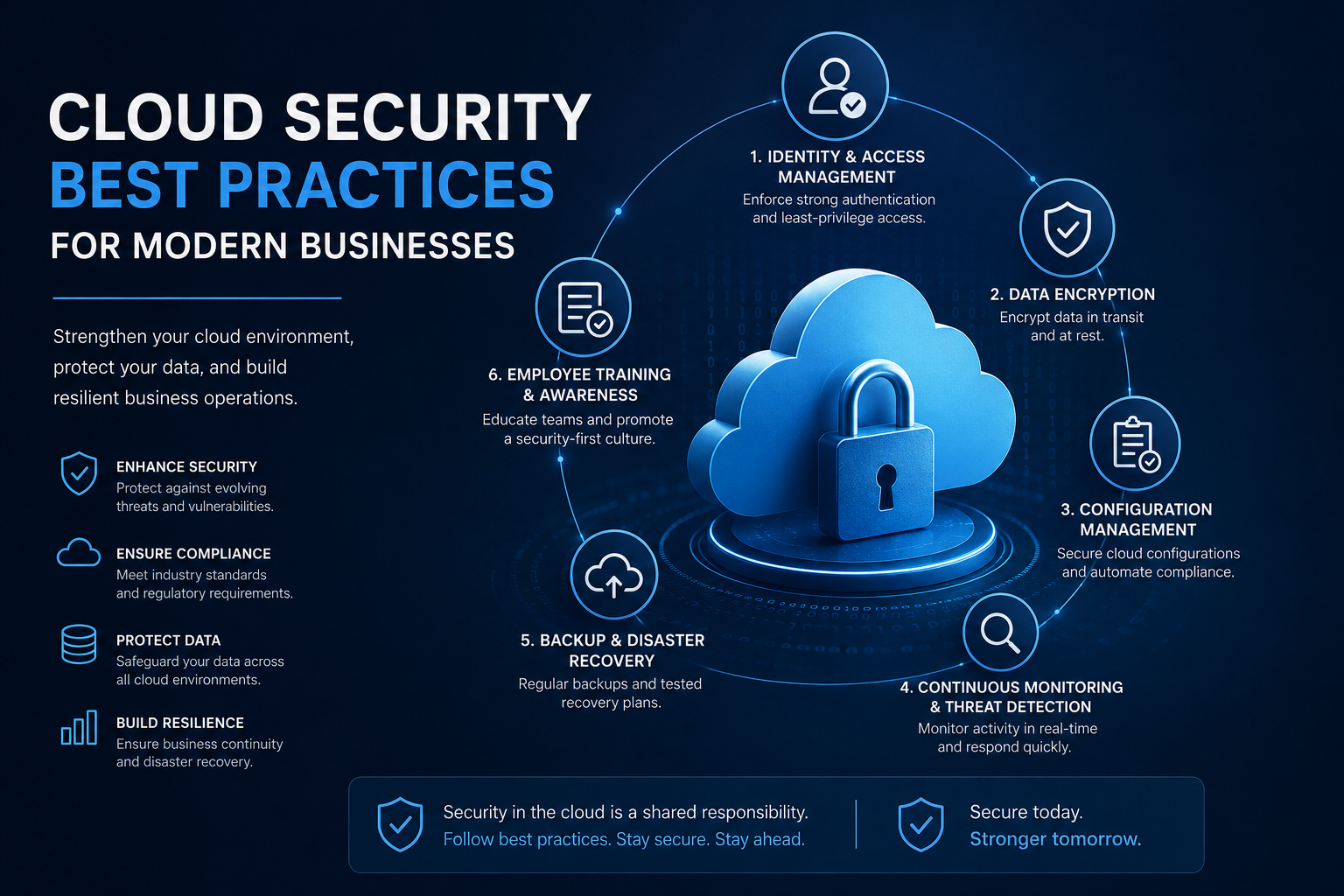
In today's digital landscape, businesses are increasingly relying on cloud solutions to enhance their operations, improve efficiency, and reduce costs. However, with the rise of cloud computing comes the pressing need for robust cloud security best practices to safeguard sensitive data. This blog delves into essential strategies for cloud data protection, ensuring a secure cloud infrastructure, and exploring effective cloud security solutions tailored for modern enterprises.
Understanding the Importance of Cloud Security
As Indian businesses shift towards digital transformation, they are migrating vast amounts of data to the cloud. While this transition provides numerous advantages, it also exposes organizations to various cybersecurity threats. According to recent studies, the cost of data breaches continues to rise, underlining the importance of prioritizing cybersecurity in cloud computing.
Key Cloud Security Best Practices
1. Conduct Regular Risk Assessments
Before implementing any cloud solution, it’s crucial to conduct a comprehensive risk assessment. Identify potential vulnerabilities within your infrastructure and evaluate the risks associated with storing sensitive data in the cloud. Regular assessments will help you stay ahead of potential threats and adjust your security measures accordingly.
2. Implement Strong Access Controls
Access control is vital in protecting your cloud data. Ensure that only authorized personnel can access sensitive information. Use multi-factor authentication (MFA) to add an extra layer of security. This practice not only secures your cloud infrastructure but also mitigates the risk of unauthorized access.
3. Encrypt Your Data
Data encryption is one of the most effective cloud data protection methods. By encrypting data both at rest and in transit, you significantly reduce the risk of data breaches. Ensure that your cloud provider offers strong encryption protocols and regularly update your encryption keys to stay secure.
4. Regularly Update and Patch Software
Outdated software can be an open door for cybercriminals. Regularly update your applications and systems to patch any vulnerabilities. Ensure that your cloud service provider also follows a strict update schedule to protect against emerging threats.
5. Monitor Cloud Activity
Continuous monitoring of your cloud environment is essential. Implement tools that provide real-time insights into user activity and data access patterns. This proactive approach helps detect suspicious behavior early, allowing for quick action to mitigate potential threats.
6. Train Employees on Security Awareness
Your employees are often the first line of defense against cyber threats. Conduct regular training sessions to educate them about the latest cybersecurity threats, phishing scams, and secure cloud practices. A well-informed team can significantly reduce the risk of security breaches.
7. Choose the Right Cloud Security Solutions
Selecting the appropriate cloud security solutions is crucial for effective data protection. Look for solutions that offer comprehensive security features, including data loss prevention, intrusion detection, and threat intelligence. Make sure these solutions comply with industry standards and regulations.
8. Develop an Incident Response Plan
Even with the best security measures in place, breaches can still occur. Having a well-defined incident response plan is essential for minimizing damage. Outline the steps your organization will take in the event of a security breach, including communication protocols and recovery procedures.
Securing Cloud Infrastructure
Building a secure cloud infrastructure involves not only implementing the best practices mentioned above but also ensuring that your cloud service provider adheres to the highest security standards. When evaluating potential providers, consider their compliance with ISO 27001, GDPR, and other relevant regulations.
1. Understand Shared Responsibility Model
In cloud computing, security is a shared responsibility between the cloud provider and the customer. Understand the division of responsibilities, and ensure that you are fulfilling your role in maintaining security. Familiarize yourself with your provider's security protocols and ensure they align with your business needs.
2. Use Virtual Private Cloud (VPC)
A Virtual Private Cloud (VPC) provides dedicated resources and additional security for your data. By isolating your resources within a virtual network, you can control traffic and restrict access, enhancing the overall security of your cloud infrastructure.
3. Backup Your Data Regularly
Data loss can occur due to various reasons, including cyberattacks and system failures. Regularly back up your data to ensure you can restore it in case of a breach or data loss event. Evaluate your cloud provider's backup solutions and ensure they align with your recovery objectives.
FAQs about Cloud Security Best Practices
What are the key cloud security best practices for businesses?
Key practices include conducting regular risk assessments, implementing strong access controls, encrypting data, monitoring cloud activity, and training employees on cybersecurity awareness.
How can businesses ensure cloud data protection?
Businesses can ensure cloud data protection by using encryption, regular software updates, and choosing reliable cloud security solutions. Moreover, conducting regular security audits can help identify vulnerabilities.
What role does employee training play in cloud security?
Employee training is crucial in creating a security-aware culture within the organization. By educating employees about potential threats and safe practices, businesses can significantly reduce the risk of human error leading to security breaches.
How often should businesses update their cloud security measures?
Cloud security measures should be reviewed and updated regularly, ideally at least quarterly or whenever there are significant changes to the infrastructure, software, or business operations.
Conclusion
In an era where data breaches are becoming increasingly common, implementing cloud security best practices is no longer optional; it is a necessity. By following the strategies outlined in this blog, Indian businesses can enhance their cloud data protection efforts and create a secure environment for their operations. Remember, investing in secure cloud infrastructure is an investment in your business's future.
Call to Action
Ready to enhance your cloud security measures? Contact us today to learn more about our comprehensive cloud security solutions. Let us help you build a secure cloud infrastructure tailored to your business needs!




Leave a Comment