
 Quality Management



















 IT Service Management



 Project Management



 Agile Management



 Web Development



 Cloud Computing


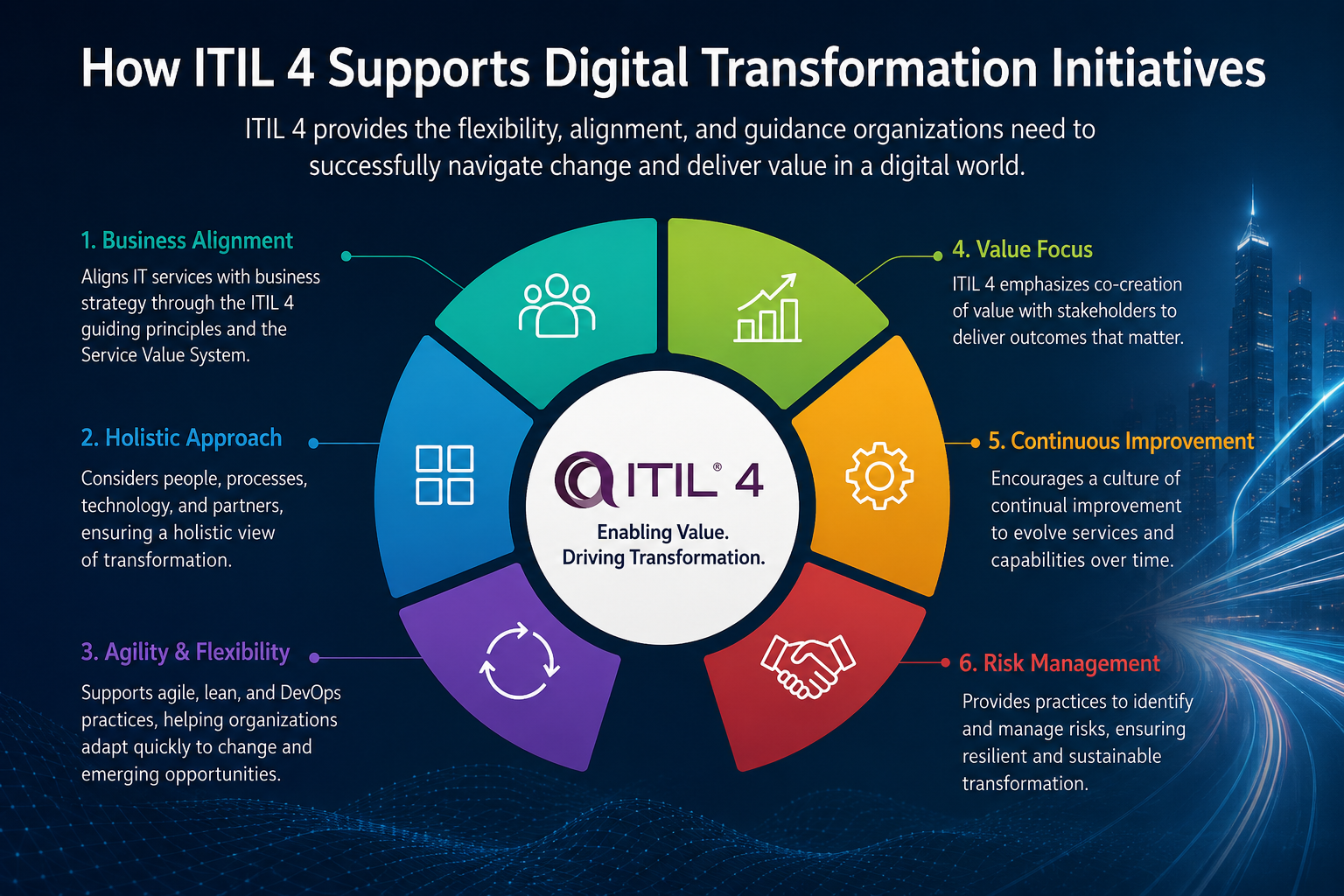
In the rapidly evolving landscape of technology, businesses are increasingly recognizing the importance of digital transformation. As organizations strive to enhance their efficiency and customer experience, frameworks like ITIL 4 are becoming essential. In this blog, we will explore how ITIL 4 supports digital transformation initiatives, focusing on its benefits, implementation strategies, and its role within an IT service management framework.
Understanding ITIL 4
ITIL, or Information Technology Infrastructure Library, is a set of practices for IT service management (ITSM) that focuses on aligning IT services with the needs of the business. ITIL 4, the latest version, introduces a more flexible and agile approach to IT service management, making it particularly suited for organizations undergoing digital transformation.
What is Digital Transformation?
Digital transformation refers to the integration of digital technology into all areas of a business, fundamentally changing how organizations operate and deliver value to customers. This transformation is not just about technology but also involves cultural change, requiring organizations to continually challenge the status quo, experiment, and get comfortable with failure.
The Role of ITIL 4 in Digital Transformation
ITIL 4 provides a comprehensive framework that supports organizations in their digital transformation journeys. Here are some of the key ways ITIL 4 contributes to successful digital transformation initiatives:
1. Flexibility and Adaptability
One of the primary benefits of ITIL 4 is its focus on flexibility. It allows organizations to adapt their IT service management practices to meet changing business needs. This adaptability is crucial for organizations undergoing digital transformation, as it enables them to respond quickly to market trends and customer demands.
2. Enhanced Collaboration
ITIL 4 emphasizes collaboration across different teams and departments. In a digital transformation strategy, collaboration is essential for breaking down silos and ensuring that all parts of the organization are aligned towards common goals. By fostering a culture of collaboration, ITIL 4 helps organizations leverage diverse skills and perspectives, driving innovation.
3. Focus on Value Creation
At the heart of ITIL 4 is the concept of value. It encourages organizations to prioritize value creation for customers and stakeholders. In digital transformation initiatives, focusing on value ensures that technology investments lead to tangible benefits, such as improved customer satisfaction and increased operational efficiency.
ITIL 4 Benefits for Digital Transformation
Implementing ITIL 4 can bring numerous benefits to organizations pursuing digital transformation:
1. Improved Service Delivery
With ITIL 4, organizations can streamline their IT service delivery processes. By adopting best practices, businesses can enhance service quality and reliability, which are critical for customer satisfaction in a digital world.
2. Better Risk Management
Digital transformation often involves significant risks, including data breaches and technology failures. ITIL 4 aids in identifying, assessing, and mitigating these risks, ensuring that organizations can navigate their transformation journeys with confidence.
3. Continuous Improvement
ITIL 4 promotes a culture of continuous improvement, encouraging organizations to regularly evaluate their processes and services. This iterative approach is vital in digital transformation, as it allows businesses to learn from their experiences and make necessary adjustments on the fly.
Implementing ITIL 4 for Digital Transformation
To leverage the benefits of ITIL 4 in digital transformation, organizations must consider the following implementation strategies:
1. Assess Current Capabilities
Before implementing ITIL 4, organizations should conduct a thorough assessment of their current IT services and processes. Understanding existing capabilities will help identify gaps and areas for improvement, setting the stage for a successful ITIL implementation.
2. Define Clear Objectives
Establishing clear objectives for the ITIL implementation is crucial. Organizations should align their ITIL goals with their overall digital transformation strategy to ensure that the framework contributes to broader business objectives.
3. Train and Engage Employees
For ITIL 4 to be effective, employees must be adequately trained and engaged. Providing training programs and fostering a culture of collaboration will empower teams to embrace the framework and contribute to digital transformation initiatives.
4. Utilize Technology
Leveraging technology is essential for successful ITIL implementation. Organizations should consider using ITSM tools that integrate with ITIL 4 practices, enabling automation and improving service delivery.
Common Challenges in ITIL Implementation
While implementing ITIL 4 can significantly enhance digital transformation efforts, organizations may face several challenges:
1. Resistance to Change
Change can be met with resistance, especially in established organizations. To overcome this, it’s vital to communicate the benefits of ITIL 4 and involve employees in the transformation process.
2. Lack of Executive Support
Successful ITIL implementation requires strong support from leadership. Without executive buy-in, organizations may struggle to allocate the necessary resources and prioritize ITIL initiatives.
3. Inadequate Training
Insufficient training can hinder the effective adoption of ITIL 4 practices. Organizations must invest in comprehensive training programs to equip employees with the knowledge and skills needed for successful implementation.
Frequently Asked Questions (FAQs)
1. What is the main purpose of ITIL 4?
The main purpose of ITIL 4 is to provide a framework for IT service management that aligns IT services with the needs of the business, focusing on value creation and continuous improvement.
2. How does ITIL 4 support digital transformation?
ITIL 4 supports digital transformation by providing a flexible framework that enhances collaboration, focuses on value creation, and promotes continuous improvement, enabling organizations to adapt to changing business environments.
3. What are the key benefits of implementing ITIL 4?
Key benefits of implementing ITIL 4 include improved service delivery, better risk management, enhanced collaboration, and a culture of continuous improvement.
4. How can organizations effectively implement ITIL 4?
Organizations can effectively implement ITIL 4 by assessing current capabilities, defining clear objectives, training employees, and utilizing appropriate technology to support ITIL practices.
Conclusion
In conclusion, ITIL 4 serves as a powerful ally for organizations embarking on their digital transformation journeys. By leveraging the benefits of the IT service management framework, businesses can improve service delivery, enhance collaboration, and create value for customers. As the digital landscape continues to evolve, embracing ITIL 4 will be essential for organizations seeking to thrive in this dynamic environment.
If your organization is ready to embark on a digital transformation journey and wants to harness the power of ITIL 4, contact us today! Our team of experts can guide you through the implementation process and help you achieve your digital transformation goals.




Leave a Comment