
 Quality Management



















 IT Service Management



 Project Management



 Agile Management



 Web Development



 Cloud Computing


In today’s competitive business environment, employee productivity is no longer just an HR metric — it has become one of the biggest drivers of business growth, operational efficiency, and customer satisfaction. Organizations across manufacturing, IT, healthcare, logistics, customer service, and service industries are constantly searching for ways to improve performance while reducing operational inefficiencies.
However, many businesses still struggle with common workplace challenges such as repetitive tasks, poor communication, workflow delays, employee burnout, excessive rework, and lack of process clarity. These inefficiencies not only reduce productivity but also increase operational costs and negatively impact customer experience.
This is where Lean Six Sigma becomes a game-changing approach.
Lean Six Sigma is a proven methodology that helps organizations improve processes, eliminate waste, reduce errors, and create a culture of continuous improvement. More importantly, it empowers employees to work smarter, faster, and more efficiently.
For companies aiming to achieve operational excellence, improve employee performance, and build scalable systems, Lean Six Sigma Training has become an essential investment.
At Haworth Solutions, organizations and professionals are trained to implement practical Lean Six Sigma methodologies that improve workplace productivity and drive measurable business results.
What is Lean Six Sigma?
Lean Six Sigma is a combination of two powerful business improvement methodologies:
Lean Methodology
Lean focuses on eliminating waste from processes. Waste can include:
- Unnecessary steps
- Delays
- Excess movement
- Repetitive work
- Overproduction
- Waiting time
- Poor resource utilization
The main goal of Lean is to improve speed, efficiency, and workflow management.
Six Sigma
Six Sigma focuses on reducing process variation and minimizing errors or defects through data-driven decision-making.
Its primary objective is to improve quality and consistency in operations.
Combined Power of Lean Six Sigma
When Lean and Six Sigma are combined, organizations achieve:
- Faster processes
- Improved quality
- Better employee productivity
- Reduced operational costs
- Higher customer satisfaction
- Stronger process management
This combined approach helps businesses create optimized workflows that allow employees to focus on high-value work rather than wasting time on inefficiencies.
Common Workplace Productivity Challenges
Many companies believe low productivity is caused by employees alone. In reality, poor systems and inefficient processes are often the biggest productivity killers.
Here are some common workplace productivity challenges organizations face:
1. Repetitive Manual Work
Employees often spend hours on repetitive tasks that could be automated or streamlined.
Examples include:
- Re-entering data
- Repeated approvals
- Duplicate reporting
- Manual tracking systems
This reduces employee motivation and wastes productive hours.
2. Lack of Process Clarity
When workflows are not clearly defined:
- Employees become confused
- Tasks get delayed
- Accountability decreases
- Errors increase
A lack of standardized operating procedures creates inconsistency across teams.
3. Communication Gaps
Poor communication between departments leads to:
- Project delays
- Misunderstandings
- Rework
- Missed deadlines
Communication inefficiencies are one of the biggest hidden productivity losses in organizations.
4. Delays and Rework
Employees often redo tasks because:
- Instructions are unclear
- Processes are inconsistent
- Quality checks are missing
Rework directly impacts productivity improvement efforts.
5. Time Wastage
Employees lose productive hours due to:
- Unnecessary meetings
- Waiting for approvals
- Searching for information
- Poor task prioritization
Without proper process optimization, time management becomes difficult.
6. Employee Burnout
Inefficient systems increase employee stress and workload, leading to:
- Reduced engagement
- Lower morale
- High attrition rates
- Poor performance
Burnout is often a process problem, not just a workload problem.
How Lean Six Sigma Improves Employee Productivity
Lean Six Sigma helps organizations create structured, efficient, and employee-friendly workflows. Here’s how it directly improves employee productivity.
1. Standardized Workflows
One of the biggest benefits of Lean Six Sigma in the workplace is workflow standardization.
Standardized workflows:
- Reduce confusion
- Improve consistency
- Minimize delays
- Increase accountability
Employees perform better when they clearly understand:
- What needs to be done
- How it should be done
- When it should be completed
This improves operational efficiency across teams.
2. Reduced Process Delays
Lean Six Sigma identifies bottlenecks that slow down operations.
For example:
- Delayed approvals
- Excessive documentation
- Multiple review stages
- Slow communication loops
By removing unnecessary steps, employees can complete tasks faster and focus on productive activities.
3. Better Task Management
Lean methodology improves task prioritization and workflow management.
Employees gain:
- Clear responsibilities
- Structured work processes
- Better coordination
- Reduced workload confusion
This helps teams manage time effectively and improve productivity in organizations.
4. Improved Communication
Lean Six Sigma encourages transparent communication systems.
Businesses implement:
- Visual management systems
- Daily stand-up meetings
- Standard reporting formats
- Cross-functional collaboration
Improved communication reduces misunderstandings and project delays.
5. Reduced Errors and Rework
Errors consume valuable employee time.
Six Sigma techniques help identify:
- Root causes of defects
- Process inconsistencies
- Quality gaps
When errors reduce:
- Employees work more confidently
- Productivity improves
- Stress levels decrease
This creates a more efficient work environment.
6. Better Employee Engagement
Employees become more engaged when they:
- Understand processes clearly
- Face fewer obstacles
- Feel involved in improvements
Lean Six Sigma promotes employee participation in process improvement initiatives, which boosts morale and ownership.
7. Faster Decision-Making
Data-driven decision-making is a core part of Six Sigma.
Instead of assumptions, businesses use:
- Process data
- Performance metrics
- Productivity reports
- Root cause analysis
This allows managers and employees to make faster and more effective decisions.
8. Improved Accountability
Lean Six Sigma defines process ownership clearly.
Employees know:
- Their responsibilities
- Expected outcomes
- Performance standards
Clear accountability improves discipline and performance management.
9. Time Optimization
Time is one of the most valuable workplace resources.
Lean Six Sigma helps eliminate:
- Waiting time
- Excess motion
- Unnecessary approvals
- Duplicate efforts
Employees can focus more on meaningful work rather than operational distractions.
10. Continuous Improvement Culture
One of the most powerful aspects of Lean Six Sigma is creating a continuous improvement culture.
Organizations encourage employees to:
- Identify inefficiencies
- Suggest improvements
- Solve operational problems
- Participate in innovation
This mindset creates long-term productivity improvement.
Practical Examples of Lean Six Sigma in Workplace
Manufacturing Industry
A manufacturing company faced frequent production delays due to machine downtime and poor workflow planning.
Using Lean Six Sigma:
- Production processes were mapped
- Machine maintenance schedules were optimized
- Bottlenecks were identified
Result:
- Faster production cycles
- Reduced downtime
- Higher employee efficiency
IT Companies
An IT company struggled with project delivery delays due to unclear communication between developers and testing teams.
Lean Six Sigma helped:
- Standardize workflows
- Improve task tracking
- Reduce duplicate work
Result:
- Faster project completion
- Improved team coordination
- Better employee productivity
Customer Support Teams
Customer support agents were handling repeated customer complaints due to unresolved issues.
Using root cause analysis:
- Recurring issues were identified
- SOPs were improved
- Escalation processes were simplified
Result:
- Faster ticket resolution
- Reduced employee stress
- Improved customer satisfaction
Healthcare Sector
Hospitals use Lean Six Sigma to improve patient flow and reduce waiting times.
By optimizing processes:
- Staff coordination improved
- Delays reduced
- Administrative workload decreased
This improves both employee efficiency and patient experience.
Logistics Industry
A logistics company faced shipment delays due to poor inventory management.
Lean tools helped:
- Improve warehouse organization
- Reduce unnecessary movement
- Optimize dispatch planning
Result:
- Faster deliveries
- Better workforce productivity
- Lower operational costs
Lean Six Sigma Tools That Improve Productivity
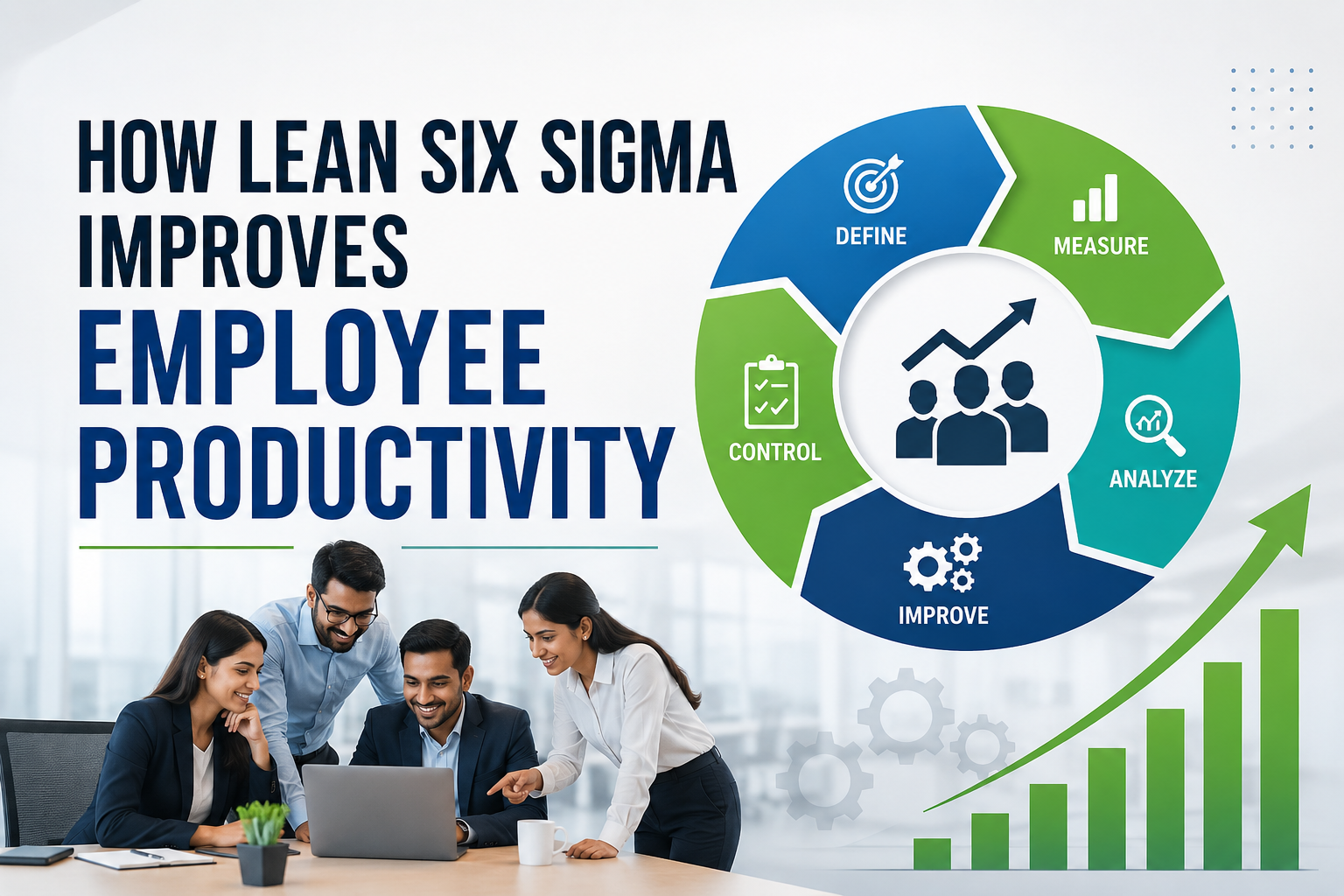
DMAIC Methodology
DMAIC stands for:
- Define
- Measure
- Analyze
- Improve
- Control
It is a structured problem-solving framework used for process improvement.
𝐷𝑀𝐴𝐼𝐶DMAIC
Businesses use DMAIC to identify inefficiencies and improve productivity systematically.
Kaizen
Kaizen focuses on continuous small improvements.
Instead of waiting for major changes, employees regularly improve processes through small actionable steps.
5S Methodology
5S improves workplace organization through:
- Sort
- Set in Order
- Shine
- Standardize
- Sustain
A clean and organized workplace reduces wasted time and improves efficiency.
Value Stream Mapping
This tool helps organizations visualize workflows and identify non-value-added activities.
It improves:
- Process transparency
- Workflow efficiency
- Time management
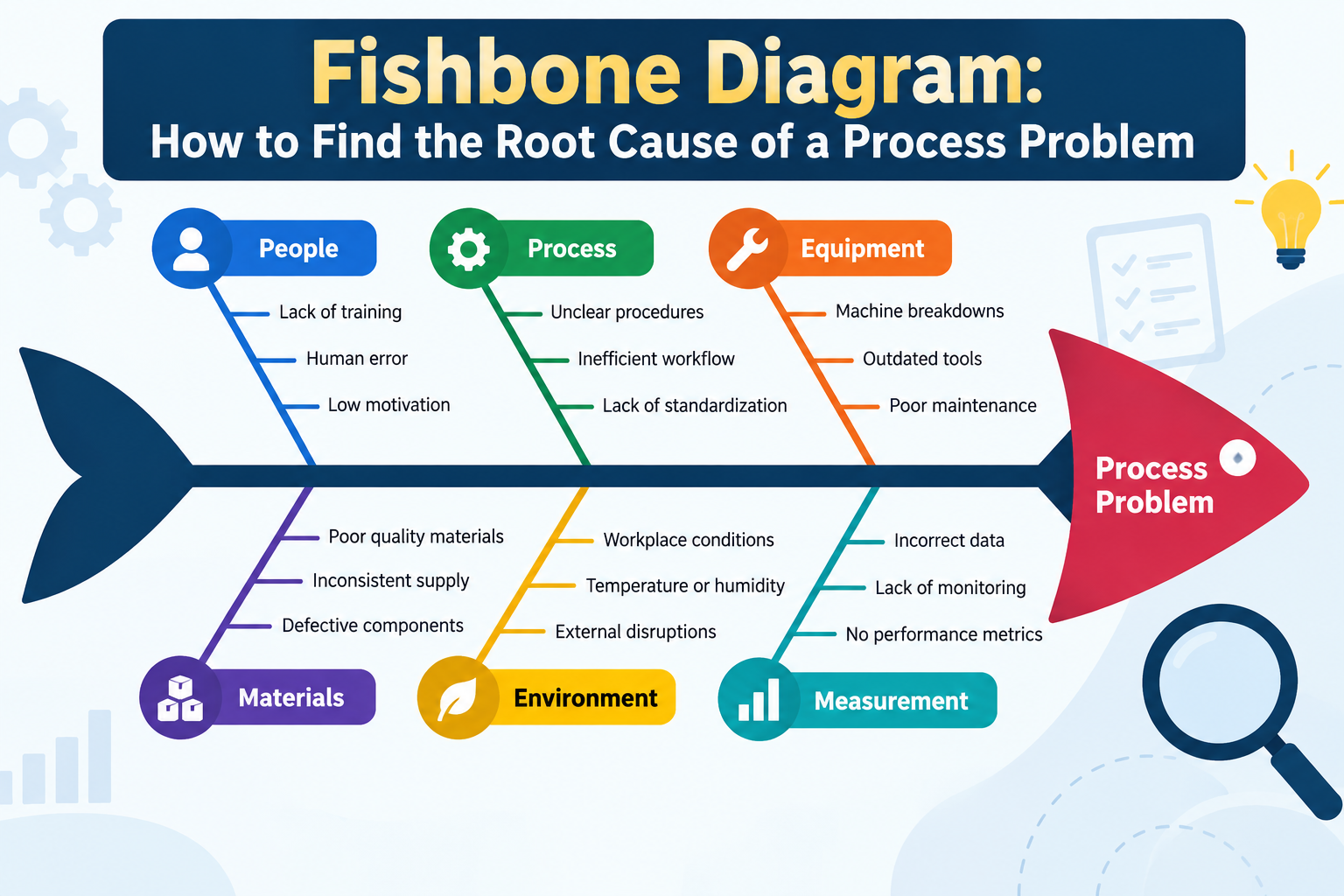
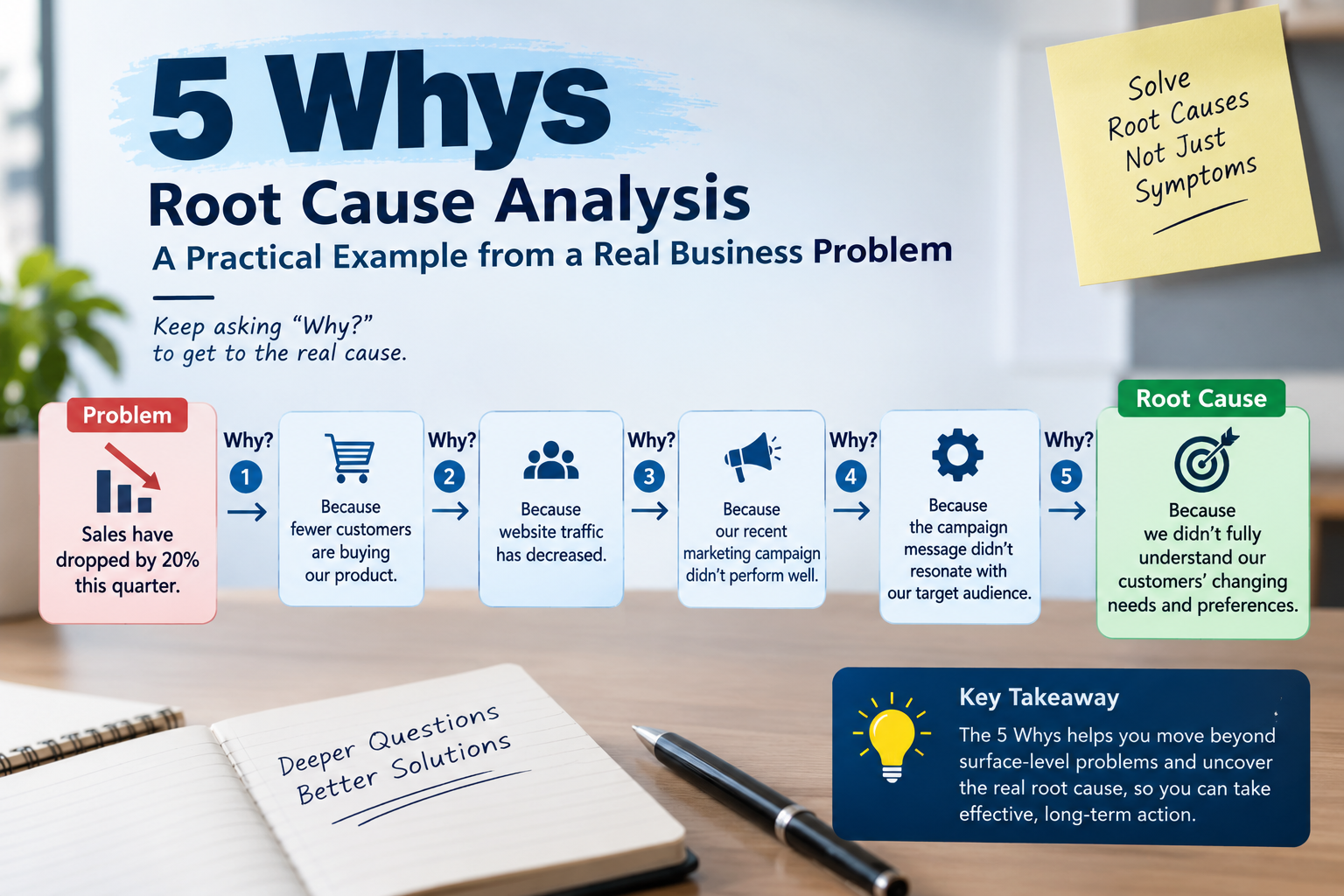
Root Cause Analysis
Instead of fixing symptoms, organizations identify the actual causes of problems.
This prevents repeated issues and improves long-term productivity.
SOP Standardization
Standard Operating Procedures help employees follow consistent processes.
This reduces:
- Confusion
- Errors
- Training time
- Performance variation
Benefits for Companies and Employees
Benefits for Employees
- Reduced stress
- Better clarity
- Improved work efficiency
- Skill enhancement
- Increased engagement
Benefits for Managers
- Better team performance
- Faster project completion
- Improved monitoring
- Data-driven decision-making
Benefits for HR Teams
- Higher employee satisfaction
- Reduced attrition
- Better performance management
- Stronger workplace culture
Benefits for Organizations
- Higher operational efficiency
- Reduced operational costs
- Improved customer satisfaction
- Better profitability
- Stronger competitive advantage
Benefits for Customers
- Faster service delivery
- Better product quality
- Improved customer experience
- Reduced complaints
Why Companies Are Investing in Lean Six Sigma Training
Organizations across industries are increasingly investing in Lean Six Sigma Training because modern businesses require efficient systems and highly productive teams.
Key reasons include:
Corporate Growth
Efficient operations support scalable business growth.
Process Excellence
Businesses achieve higher quality standards through process optimization.
Competitive Advantage
Organizations with optimized processes outperform competitors.
Employee Skill Enhancement
Lean Six Sigma Certification improves analytical and problem-solving skills.
Operational Cost Reduction
Reducing inefficiencies directly lowers operational expenses.
Professional corporate training programs help employees implement practical productivity improvement techniques in real workplace environments.
Future of Lean Six Sigma in Modern Businesses
The future of Lean Six Sigma is strongly connected with digital transformation and intelligent business operations.
AI and Automation
Businesses are integrating Lean Six Sigma with AI tools to automate repetitive tasks.
Data-Driven Operations
Organizations increasingly rely on analytics for decision-making and performance improvement.
Process Intelligence
Advanced technologies help companies monitor workflows in real time.
Digital Transformation
Lean Six Sigma supports organizations during digital process changes.
Future Workplace Productivity
Companies that combine technology with process excellence will achieve higher employee productivity and operational efficiency.
Employee productivity is not just about working harder — it is about working smarter through efficient systems, optimized workflows, and continuous improvement.
Lean Six Sigma provides organizations with a practical and structured approach to:
- Reduce workplace inefficiency
- Improve employee performance
- Enhance operational efficiency
- Create scalable business processes
From manufacturing plants to IT companies and service industries, Lean Six Sigma helps businesses improve productivity while creating a healthier and more efficient work environment for employees.
For professionals and organizations looking to improve process management, operational excellence, and workforce productivity, investing in Lean Six Sigma Training is a strategic decision.
Haworth Solutions offers industry-focused Lean Six Sigma Certification and Corporate Training programs designed to help businesses and professionals achieve measurable productivity improvement and long-term growth.


Leave a Comment