
 Quality Management



















 IT Service Management



 Project Management


 Agile Management



 Web Development


 Cloud Computing

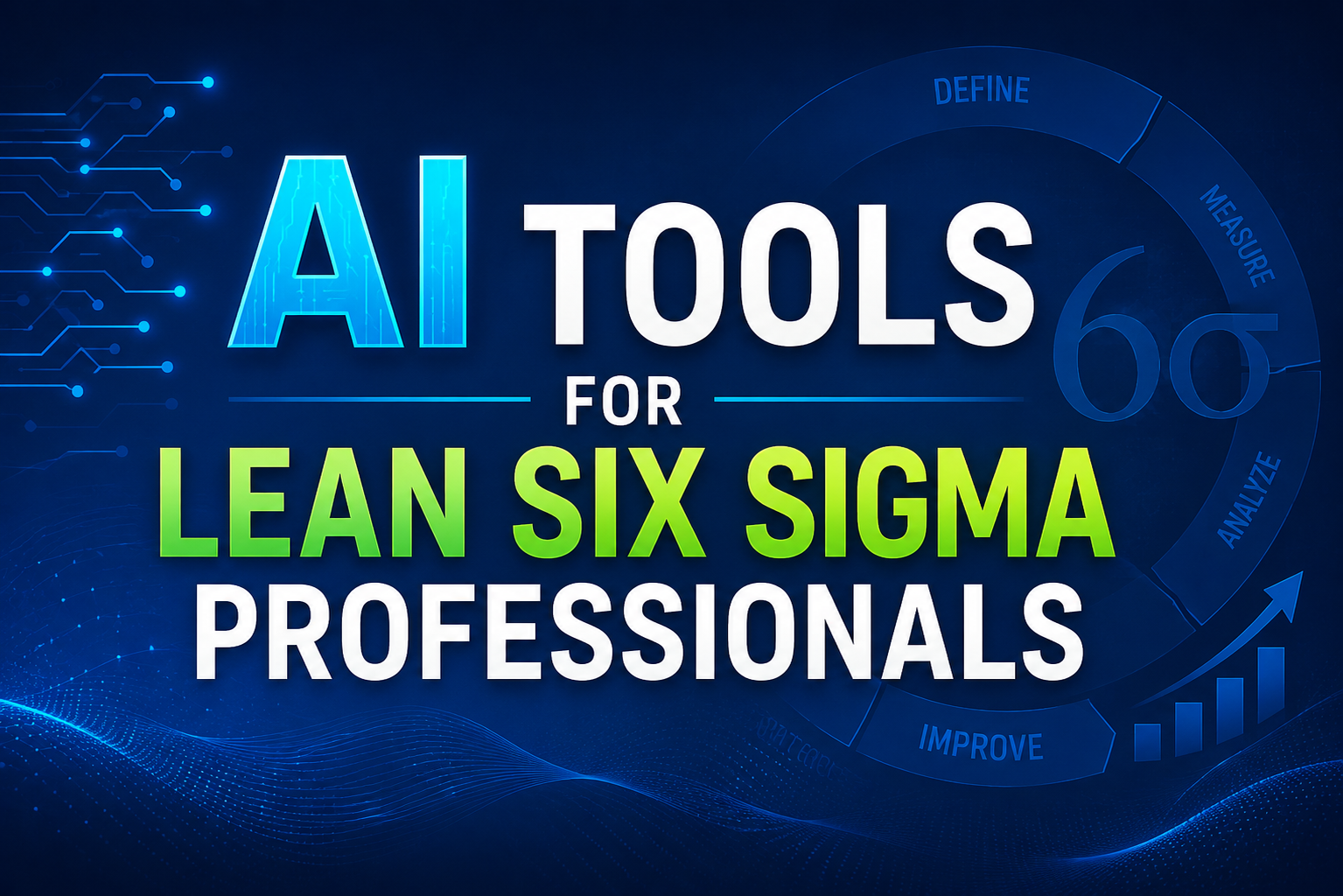
Artificial Intelligence (AI) is rapidly transforming how organizations improve processes, reduce defects, analyze data, and drive operational excellence. In today’s competitive business environment, Lean Six Sigma professionals are no longer relying only on traditional statistical tools and manual analysis. Instead, they are increasingly using AI tools for Lean Six Sigma to automate repetitive tasks, identify hidden process patterns, improve decision-making, and accelerate continuous improvement projects.
From predictive analytics and root cause analysis to process automation and intelligent dashboards, AI-powered Six Sigma tools are helping businesses improve efficiency faster than ever before.
Whether you are a Lean Six Sigma Green Belt, Black Belt, quality manager, operations leader, business analyst, or manufacturing professional, understanding the role of AI in Lean Six Sigma can give you a significant competitive advantage.
In this article, you will learn:
- How AI is transforming Lean Six Sigma
- Best AI tools for Six Sigma professionals
- AI tools used in DMAIC phases
- Real-world industry use cases
- Benefits and challenges of AI adoption
- Future trends in AI-driven process improvement
What is AI in Lean Six Sigma?
AI in Lean Six Sigma refers to the use of Artificial Intelligence, machine learning, predictive analytics, and automation technologies to improve business processes, reduce waste, optimize operations, and support data-driven decision-making.
Traditionally, Lean Six Sigma focused on:
- Statistical analysis
- Root cause analysis
- Process optimization
- Waste reduction
- Continuous improvement
Today, AI enhances these capabilities by:
- Automating data collection
- Predicting defects
- Identifying patterns instantly
- Improving forecasting accuracy
- Accelerating DMAIC projects
- Supporting intelligent process optimization
AI and Lean Six Sigma together create a smarter and faster approach to operational excellence.
Why AI Matters in Process Improvement
Modern organizations generate massive amounts of operational data every day. Manually analyzing this data can be time-consuming and error-prone.
AI helps Lean Six Sigma professionals:
- Analyze large datasets quickly
- Identify hidden root causes
- Predict failures before they occur
- Automate repetitive tasks
- Improve quality control
- Enhance customer experience
- Optimize workflows in real time
This combination of AI and continuous improvement enables organizations to achieve faster and more sustainable business results.
Relationship Between AI, Automation, and Continuous Improvement
AI, automation, and Lean Six Sigma work together to create intelligent business systems.
AI
AI helps businesses analyze data, predict outcomes, and support decision-making.
Automation
Automation eliminates repetitive manual tasks and improves process speed.
Continuous Improvement
Lean Six Sigma ensures processes are optimized and continuously refined.
Together, they enable:
- Smart manufacturing
- Predictive quality management
- Intelligent supply chains
- Automated reporting
- Data-driven DMAIC execution
This integration is becoming a key pillar of Industry 4.0 and digital transformation.
Top AI Tools for Lean Six Sigma Professionals
1. ChatGPT
Best For:
- Root cause brainstorming
- SOP drafting
- Project documentation
- DMAIC support
- Process improvement ideas
ChatGPT helps Lean Six Sigma professionals generate:
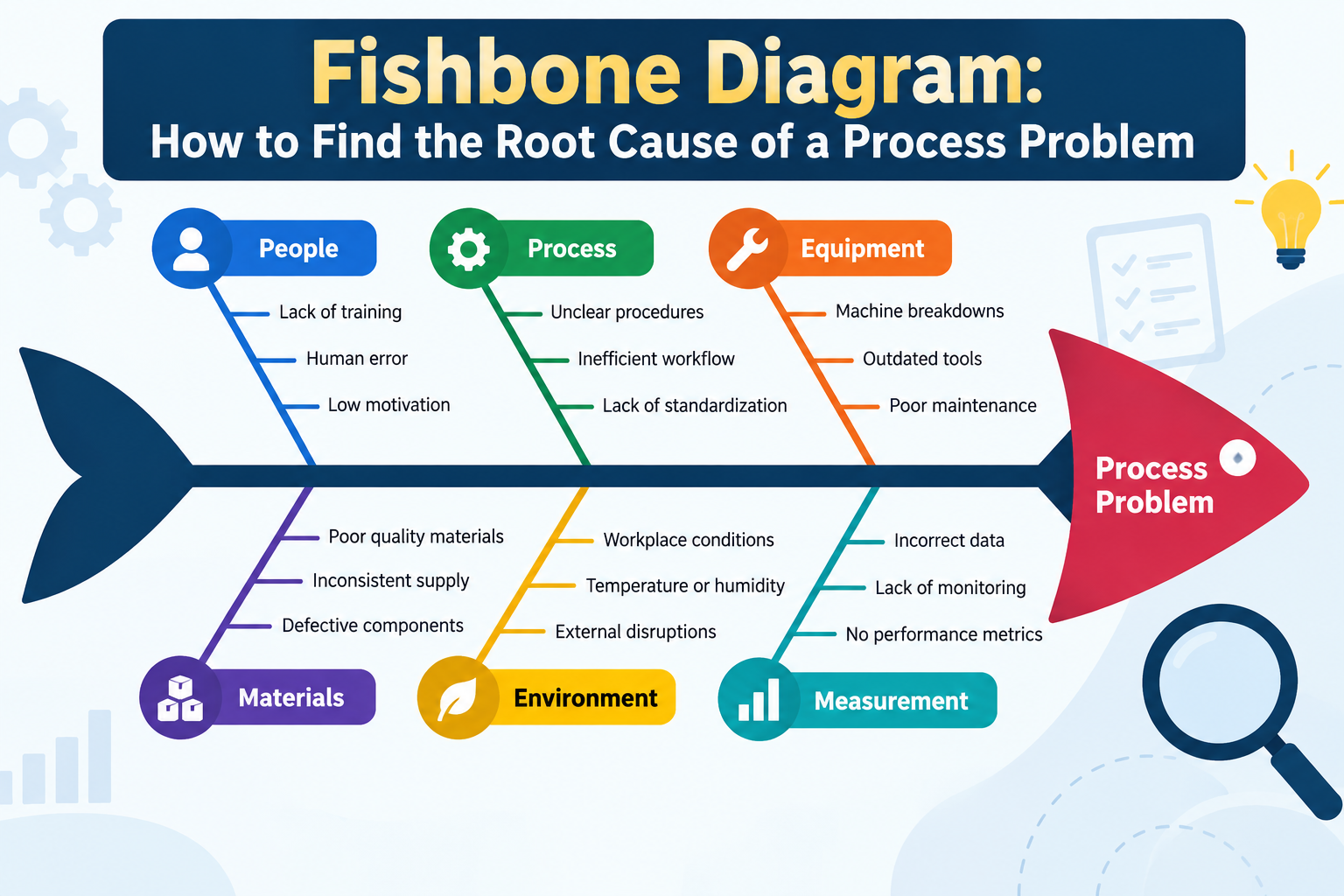
- Fishbone analysis ideas
- Improvement suggestions
- Project reports
- Training content
- Process mapping explanations
It acts as an intelligent assistant for continuous improvement teams.
2. Microsoft Copilot
Best For:
- Excel automation
- Data analysis
- PowerPoint reporting
- Workflow productivity
Microsoft Copilot improves productivity by automating:
- Data summaries
- KPI reports
- Dashboard insights
- Process analysis documentation
It is especially useful for project managers and operational leaders.
3. Power BI
Best For:
- AI-powered dashboards
- Real-time analytics
- KPI monitoring
- Operational reporting
Power BI helps organizations visualize:
- Defect trends
- Process capability
- Production performance
- Quality metrics
Its AI features provide predictive insights for operational excellence.
4. Tableau AI
Best For:
- Advanced data visualization
- Predictive analysis
- Interactive dashboards
Tableau AI helps Lean Six Sigma professionals identify patterns, anomalies, and trends faster through visual analytics.
5. Minitab
Best For:
- Statistical analysis
- Six Sigma calculations
- Process capability analysis
Minitab remains one of the most trusted AI-powered Six Sigma tools for:
- Hypothesis testing
- Regression analysis
- Control charts
- DOE (Design of Experiments)
Many Green Belt and Black Belt projects rely on Minitab.
6. JMP
Best For:
- Predictive analytics
- Manufacturing optimization
- Advanced statistical modeling
JMP helps organizations improve process optimization using machine learning and advanced analytics.
7. UiPath
Best For:
- Robotic Process Automation (RPA)
- Workflow automation
- Repetitive task elimination
UiPath automates:
- Invoice processing
- Data entry
- Reporting workflows
- Customer service tasks
This improves process efficiency and reduces operational waste.
8. Notion AI
Best For:
- SOP creation
- Knowledge management
- Project documentation
Lean Six Sigma teams use Notion AI for:
- Process documentation
- Standard operating procedures
- Continuous improvement tracking
9. Zapier AI
Best For:
- Workflow integration
- Automation between apps
Zapier AI connects systems automatically and reduces manual process delays.
10. Gemini
Best For:
- Research assistance
- Process analysis
- Workflow recommendations
Gemini helps process improvement teams accelerate project research and documentation.
11. Claude
Best For:
- Long-form analysis
- Documentation review
- Process optimization ideas
Claude is useful for analyzing detailed reports and generating operational insights.
12. AI-Based SPC Tools
Best For:
- Statistical Process Control
- Real-time quality monitoring
- Predictive defect prevention
AI-based SPC software identifies process variation before defects occur.
AI Tools Used in DMAIC Phases
Define Phase
AI helps:
- Analyze customer feedback
- Generate project charters
- Identify pain points
- Create SIPOC diagrams
Useful Tools
- ChatGPT
- Gemini
- Notion AI
Measure Phase
AI automates:
- Data collection
- KPI monitoring
- Process measurement
- Dashboard reporting
Useful Tools
- Power BI
- Tableau AI
- Minitab
Analyze Phase
AI identifies:
- Root causes
- Process bottlenecks
- Defect patterns
- Statistical correlations
Useful Tools
- Minitab
- JMP
- ChatGPT
Improve Phase
AI recommends:
- Process optimization ideas
- Automation opportunities
- Predictive improvements
Useful Tools
- UiPath
- Zapier AI
- Copilot
Control Phase
AI supports:
- Real-time monitoring
- Predictive alerts
- KPI dashboards
- Process control automation
Useful Tools
- Power BI
- AI-SPC systems
- Tableau AI
AI Use Cases in Different Industries
Manufacturing Industry
AI tools help manufacturers:
- Predict machine failures
- Reduce defects
- Optimize production
- Improve quality control
Example
A manufacturing plant uses AI-based SPC tools to reduce defect rates by 35%.
Healthcare Industry
Hospitals use AI in Lean Six Sigma for:
- Patient flow optimization
- Appointment scheduling
- Medical inventory management
Example
AI reduced emergency room waiting time by analyzing patient patterns.
IT & Software Industry
IT companies use AI to:
- Reduce software defects
- Improve deployment quality
- Automate testing
- Monitor incidents
Example
AI-powered analytics identified recurring application failures automatically.
Service Industry
Customer service organizations use AI to:
- Reduce complaint resolution time
- Improve workflow automation
- Analyze customer sentiment
Example
A call center reduced ticket response time using AI automation tools.
Benefits of AI in Lean Six Sigma
1. Faster Data Analysis
AI processes large datasets instantly and improves decision-making speed.
2. Better Root Cause Analysis
Machine learning identifies hidden patterns humans may miss.
3. Improved Quality Control
AI predicts defects before they happen.
4. Increased Productivity
Automation reduces repetitive manual work.
5. Enhanced Decision-Making
AI provides real-time operational insights.
6. Predictive Analytics
Businesses can forecast failures, demand, and risks accurately.
7. Improved Customer Satisfaction
Optimized processes lead to better customer experiences.
Challenges & Limitations of AI in Six Sigma
Despite its advantages, AI adoption also has challenges.
Common Challenges
- High implementation costs
- Poor data quality
- Resistance to change
- Lack of AI expertise
- Data privacy concerns
- Integration complexity
Organizations must combine AI tools with proper Lean Six Sigma strategies for successful implementation.
Future of AI in Lean Six Sigma
The future of AI in Lean Six Sigma is highly promising.
Emerging Trends
- Predictive quality management
- AI-powered DMAIC automation
- Smart factories
- Digital twins
- Autonomous process optimization
- AI-driven decision intelligence
As Industry 4.0 evolves, AI-powered process improvement tools will become essential for operational excellence.
Best Practices for AI Adoption
1. Start with Small Projects
Pilot AI tools in limited process improvement initiatives first.
2. Focus on Data Quality
Accurate data improves AI effectiveness.
3. Train Employees
Upskilling teams in AI and Lean Six Sigma is critical.
4. Combine AI with Human Expertise
AI supports decisions, but human judgment remains important.
5. Use AI Ethically
Ensure transparency, compliance, and data privacy.
Frequently Asked Questions (FAQs)
What are the best AI tools for Lean Six Sigma professionals?
ChatGPT, Minitab, Power BI, Tableau AI, UiPath, JMP, and Microsoft Copilot are among the best AI tools.
How does AI improve Six Sigma projects?
AI improves data analysis, root cause identification, predictive analytics, and process automation.
Can AI replace Lean Six Sigma professionals?
No. AI supports professionals by improving efficiency, but human expertise is still essential.
Which AI tools are used in DMAIC?
Tools like ChatGPT, Power BI, Minitab, Tableau AI, and UiPath are widely used across DMAIC phases.
What industries use AI in Lean Six Sigma?
Manufacturing, healthcare, IT, logistics, banking, retail, and customer service industries use AI-driven Six Sigma solutions.
Is AI important for Industry 4.0?
Yes. AI is a key technology driving Industry 4.0, smart manufacturing, and digital transformation.
AI is revolutionizing Lean Six Sigma by making process improvement faster, smarter, and more data-driven. From predictive analytics and intelligent dashboards to automated workflows and real-time quality monitoring, AI tools for Lean Six Sigma professionals are becoming essential in modern business operations.
Organizations that combine Artificial Intelligence with Lean Six Sigma methodologies can achieve:
- Better operational efficiency
- Reduced defects
- Faster decision-making
- Improved customer satisfaction
- Sustainable continuous improvement
Whether you are a Six Sigma Green Belt, Black Belt, quality manager, or business leader, learning how to use AI-powered Six Sigma tools can significantly improve your career and business performance.
As digital transformation and Industry 4.0 continue to evolve, AI in Lean Six Sigma will play a major role in shaping the future of operational excellence and smart process optimization.


Leave a Comment