 Quality Management


















 IT Service Management



 Project Management



 Agile Management




 Web Development



 Cloud Computing


In today’s competitive business environment, organizations continuously look for ways to improve quality, reduce operational costs, and enhance customer satisfaction. This is where Six Sigma plays an important role. From manufacturing companies to IT firms and healthcare organizations, businesses worldwide are adopting Lean Six Sigma methodologies to improve efficiency and achieve operational excellence.
If you are a student, working professional, entrepreneur, or business owner, earning a Six Sigma Certification can help you build valuable skills in quality management, process improvement, and business process optimization. It can also open doors to better career opportunities and leadership roles.
This guide explains what Six Sigma is, its importance, certification levels, benefits, and the complete process to get certified successfully.
What is Six Sigma?
Six Sigma is a data-driven methodology used to improve business processes by identifying defects, minimizing errors, and increasing efficiency. The primary goal of Six Sigma is to achieve near-perfect quality by reducing process variations and improving performance.
The methodology focuses on:
- Improving customer satisfaction
- Reducing waste
- Enhancing productivity
- Increasing profitability
- Strengthening quality assurance practices
The term “Sigma” refers to a statistical measurement used to measure process deviation. A process operating at Six Sigma quality produces extremely low defect rates.
Six Sigma is widely used in:
- Manufacturing
- Healthcare
- Information Technology
- Banking and Finance
- Logistics
- Retail
- Telecommunications
History and Importance of Six Sigma
Six Sigma was first introduced by Motorola in the 1980s to improve manufacturing quality and reduce defects. Later, companies like General Electric popularized the methodology globally.
Over time, Six Sigma evolved into a complete business improvement strategy used across multiple industries. Today, organizations use Lean Six Sigma to achieve continuous improvement and maintain competitive advantage.
Why Six Sigma is Important
Improved Quality
Six Sigma helps organizations reduce defects and improve product and service quality.
Cost Reduction
By eliminating waste and inefficiencies, companies can significantly reduce operational expenses.
Better Customer Satisfaction
High-quality products and services improve customer trust and loyalty.
Increased Productivity
Organizations achieve higher efficiency and better resource utilization.
Data-Driven Decisions
Six Sigma uses statistical analysis for accurate decision-making.
Key Principles of Six Sigma
Six Sigma focuses on several core principles that help businesses improve performance.
Customer Focus
The methodology prioritizes customer needs and expectations.
Process Improvement
Organizations identify weak areas and optimize workflows.
Data and Measurement
Decisions are based on measurable data rather than assumptions.
Defect Reduction
The goal is to reduce errors and improve consistency.
Continuous Improvement
Businesses continuously monitor and improve processes.
What is Lean Six Sigma?
Lean Six Sigma combines Lean Management principles with Six Sigma methodologies.
- Lean focuses on eliminating waste.
- Six Sigma focuses on reducing defects and variation.
Together, Lean Six Sigma helps organizations improve speed, quality, and efficiency simultaneously.
Benefits of Lean Six Sigma
- Faster operations
- Reduced waste
- Improved customer experience
- Better team productivity
- Higher profitability
- Stronger operational excellence
Many organizations prefer Lean Six Sigma Certification because it provides expertise in both efficiency and quality management techniques.
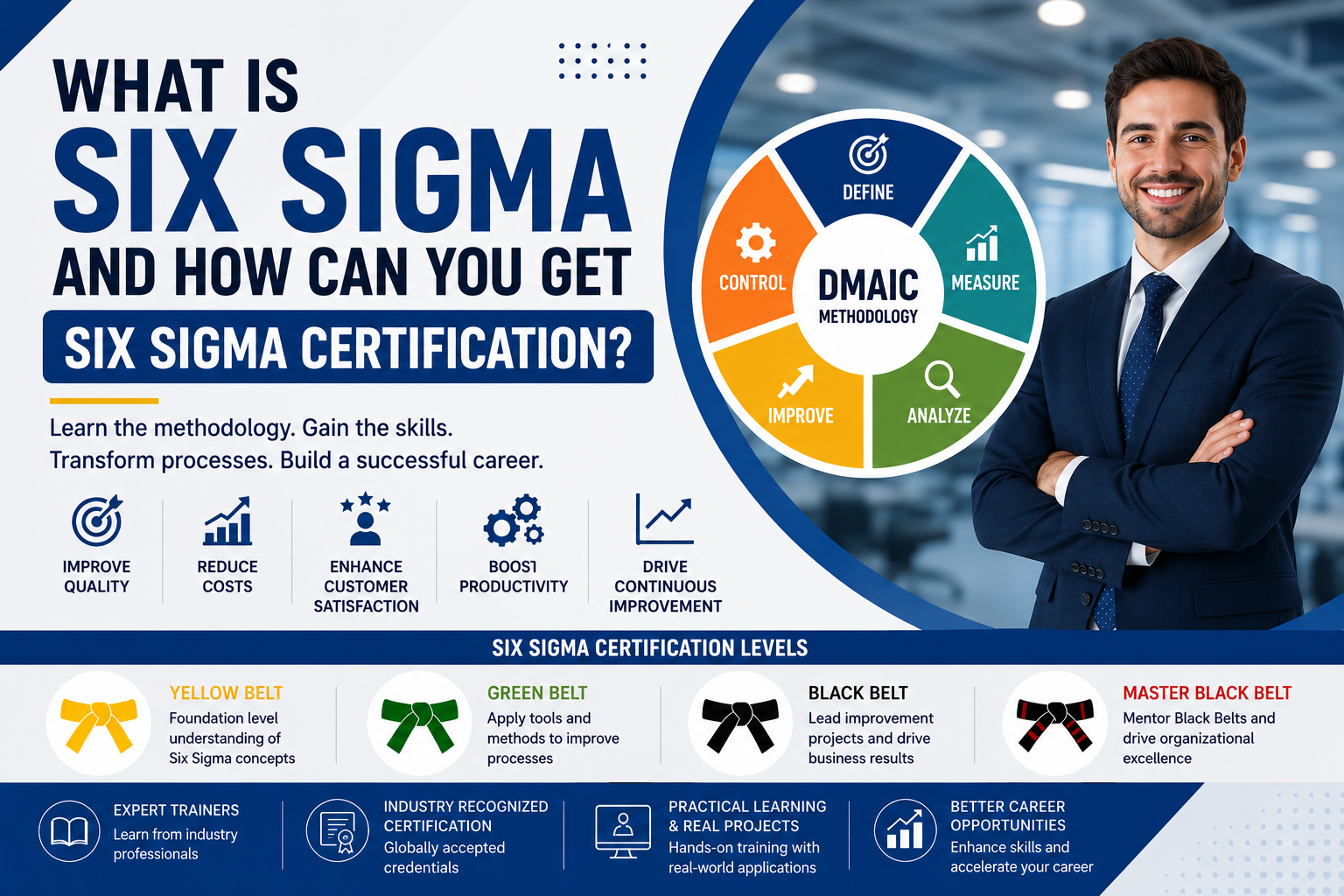
Different Levels of Six Sigma Certification
Six Sigma certifications are available at different levels depending on skills and experience.
Yellow Belt Certification
Yellow Belt is an entry-level Six Sigma course designed for beginners. It introduces basic Six Sigma concepts and tools.
Suitable For:
- Students
- Freshers
- Team members
- Beginners in quality management
Six Sigma Green Belt Certification
Six Sigma Green Belt professionals work on process improvement projects and data analysis.
Skills Covered:
- DMAIC methodology
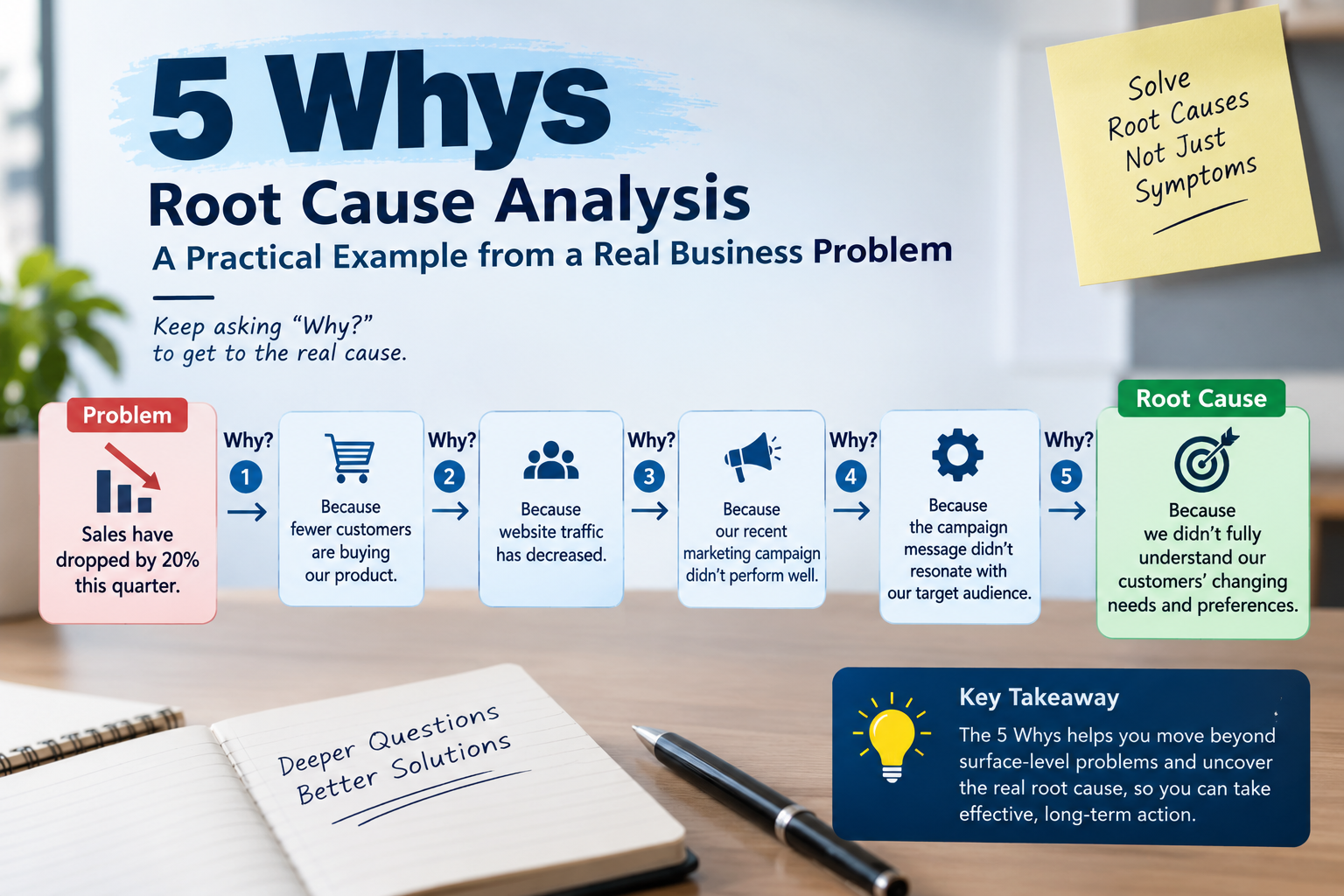
- Root cause analysis
- Process mapping
- Data interpretation
Suitable For:
- Working professionals
- Team leaders
- Supervisors
- Quality analysts
Six Sigma Black Belt Certification
Six Sigma Black Belt professionals lead large-scale improvement projects and mentor teams.
Skills Covered:
- Advanced statistical tools
- Leadership
- Project management
- Strategic process optimization
Suitable For:
- Managers
- Senior professionals
- Consultants
- Business leaders
Master Black Belt Certification
This is the highest level of Six Sigma expertise.
Responsibilities:
- Training Black Belts
- Managing enterprise-wide improvement strategies
- Leading organizational transformation
Benefits of Six Sigma Certification
Earning a Six Sigma Certification provides several professional and business benefits.
Career Growth
Certified professionals are highly valued across industries.
Higher Salary Opportunities
Six Sigma certified candidates often receive better salary packages and promotions.
Global Recognition
Lean Six Sigma Certification is recognized internationally.
Better Problem-Solving Skills
Professionals learn analytical and strategic thinking.
Leadership Development
Black Belt and Green Belt programs develop leadership capabilities.
Improved Business Performance
Organizations benefit from higher efficiency and reduced costs.
Industries Using Six Sigma
Six Sigma methodologies are widely adopted in various sectors.
Manufacturing
Improves product quality and production efficiency.
Healthcare
Enhances patient care and operational workflows.
IT and Software
Improves software quality and project delivery.
Banking and Finance
Reduces errors and improves customer service.
Logistics and Supply Chain
Enhances delivery performance and inventory management.
Retail and E-Commerce
Optimizes customer experience and operations.
How to Get Six Sigma Certification Step-by-Step
Step 1: Understand Your Career Goals
Choose the right certification level based on your experience and objectives.
- Beginners → Yellow Belt
- Professionals → Green Belt
- Managers → Black Belt
Step 2: Select a Professional Six Sigma Training Provider
Enroll in a trusted Six Sigma Training institute that provides:
- Practical learning
- Experienced trainers
- Industry-recognized certification
- Real-world case studies
Professional training improves your understanding of quality management and process improvement techniques.
Step 3: Learn DMAIC Methodology
DMAIC stands for:
DMAIC={Define,Measure,Analyze,Improve,Control}DMAIC = \{Define, Measure, Analyze, Improve, Control\}DMAIC={Define,Measure,Analyze,Improve,Control}
This is the core framework used in Six Sigma projects.
Define
Identify business problems and project goals.
Measure
Collect data and measure current performance.
Analyze
Identify root causes of defects.
Improve
Implement process improvements.
Control
Monitor processes for long-term success.
Step 4: Complete Training and Assignments
Attend training sessions, complete practical exercises, and work on case studies.
Step 5: Pass the Certification Exam
Most certification programs include:
- Objective questions
- Case-based assessments
- Practical project evaluations
Step 6: Work on Real Projects
Hands-on project experience strengthens your practical understanding of Lean Six Sigma methodologies.
Eligibility and Skills Required
The eligibility depends on certification level.
For Yellow Belt
No prior experience required.
For Green Belt
Basic understanding of business processes is beneficial.
For Black Belt
Experience in project management and process improvement is preferred.
Important Skills
- Analytical thinking
- Problem-solving
- Communication skills
- Leadership abilities
- Data interpretation
Career Opportunities After Six Sigma Certification
A career in Six Sigma offers excellent opportunities across industries.
Popular Job Roles
- Quality Analyst
- Process Improvement Manager
- Six Sigma Consultant
- Operations Manager
- Quality Assurance Specialist
- Project Manager
- Continuous Improvement Manager
Career Scope
Organizations worldwide are actively hiring professionals skilled in:
- Lean Management
- Operational Excellence
- Business Process Optimization
- Quality Assurance
- Process Improvement
Why Choose Professional Six Sigma Training
Professional Six Sigma Training provides practical exposure and industry-relevant learning.
Benefits of Professional Training
Expert Guidance
Learn from experienced mentors and industry experts.
Real-World Case Studies
Understand practical implementation strategies.
Certification Support
Get complete guidance for exams and projects.
Career Assistance
Improve employability and professional credibility.
Haworth Solutions Pvt Ltd. offers industry-focused Lean Six Sigma Certification programs designed to help professionals gain practical skills in quality management, operational excellence, and business process optimization.
Conclusion
Six Sigma is one of the most valuable methodologies for improving quality, efficiency, and business performance. Whether you are a student, professional, or business owner, earning a Lean Six Sigma Certification can help you build strong analytical, leadership, and process improvement skills.
From reducing defects to achieving operational excellence, Six Sigma methodologies are transforming businesses worldwide. Choosing the right Six Sigma Course and professional training provider can significantly improve your career growth and industry opportunities.
If you want to build expertise in process improvement, quality management, and continuous improvement, now is the right time to start your Six Sigma journey with Haworth Solutions Pvt Ltd..
Frequently Asked Questions (FAQs)
1. What is Six Sigma Certification?
Six Sigma Certification validates your skills in process improvement, quality management, and operational excellence methodologies.
2. Which Six Sigma Certification is best for beginners?
Yellow Belt certification is ideal for beginners and students.
3. What is the difference between Lean and Six Sigma?
Lean focuses on waste reduction, while Six Sigma focuses on reducing process variation and defects.
4. Is Six Sigma Certification useful for IT professionals?
Yes, IT companies widely use Lean Six Sigma for project management, software quality, and operational efficiency.
5. How long does it take to complete Six Sigma Training?
The duration depends on certification level, training mode, and practical project requirements.


Leave a Comment