
 Quality Management



















 IT Service Management



 Project Management



 Agile Management




 Web Development



 Cloud Computing


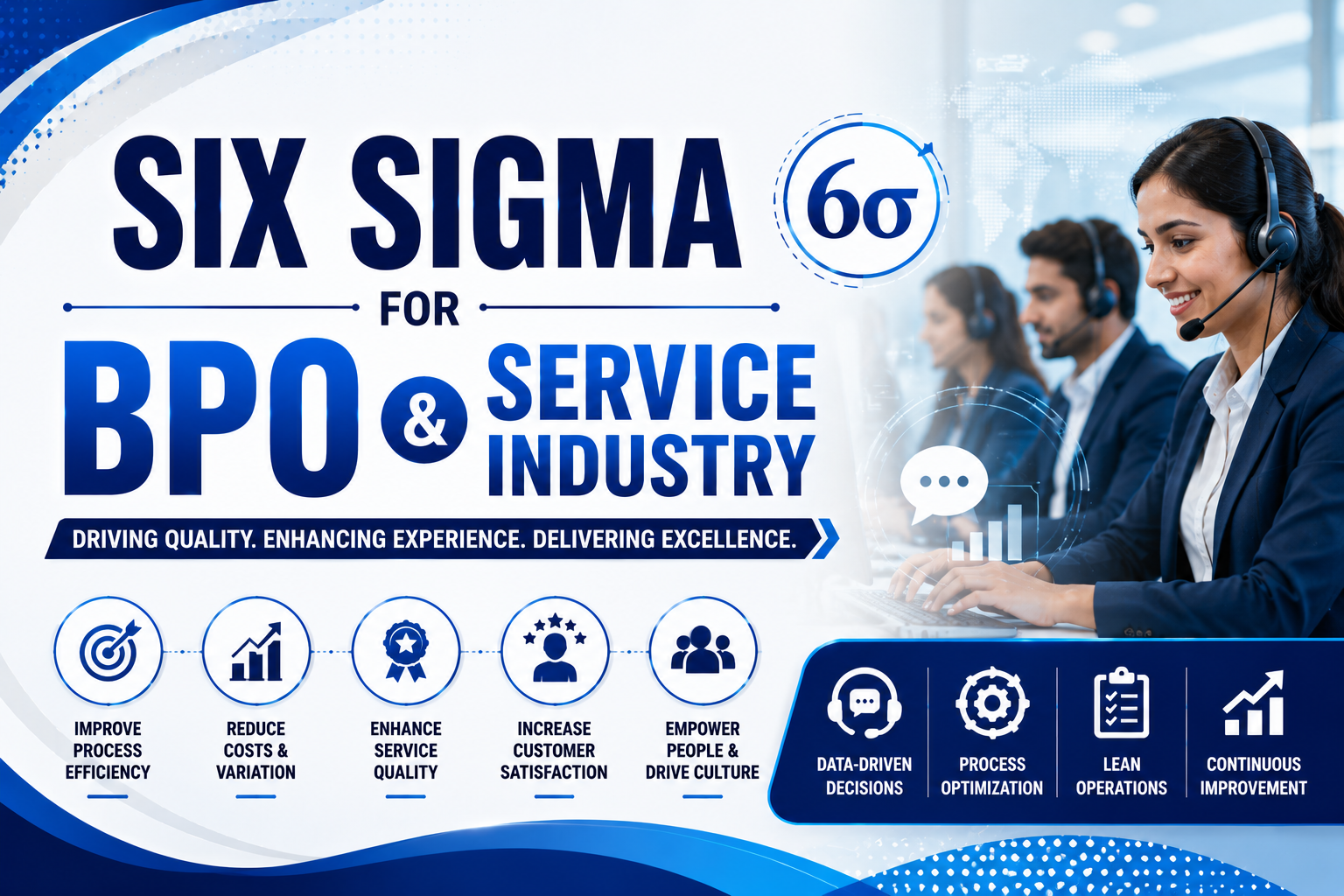
In today’s fast-paced business environment, organizations are constantly seeking solutions to enhance efficiency and quality. The Business Process Outsourcing (BPO) and service industry sectors are no exceptions. One of the most effective methodologies for achieving operational excellence in these sectors is Six Sigma in BPO. This blog will delve into how Six Sigma can transform your BPO operations, improve processes, and elevate quality management standards.
Understanding Six Sigma
Six Sigma is a data-driven methodology aimed at improving processes by identifying and eliminating defects and inefficiencies. Originating from the manufacturing sector, this approach has found relevance in various industries, including the BPO and service sectors. The core goal of Six Sigma is to achieve near perfection in process outputs, thereby enhancing customer satisfaction and operational efficiency.
The Importance of Six Sigma in BPO
In the BPO industry, where service delivery and customer satisfaction are paramount, implementing Six Sigma can lead to significant improvements. Here’s why Six Sigma is essential for the BPO sector:
- Enhanced Customer Satisfaction: By minimizing errors and improving service quality, organizations can deliver superior customer experiences.
- Cost Reduction: Six Sigma helps in identifying wasteful practices, leading to reduced operational costs and increased profitability.
- Streamlined Processes: The methodology focuses on process improvement, ensuring that workflows are efficient and effective.
- Data-Driven Decisions: Six Sigma relies heavily on data analysis, enabling businesses to make informed decisions backed by solid evidence.
Process Improvement in BPO Using Six Sigma
Process improvement is at the heart of Six Sigma, and its application in BPO can lead to transformative results. Here’s how organizations can implement process improvement in BPO using Six Sigma:
1. Define the Problem
The first step in the Six Sigma process is to clearly define the problem. This involves understanding customer complaints, service delivery issues, and any other areas where performance is lacking. In the BPO context, it can be related to call handling times, resolution rates, or customer feedback scores.
2. Measure Performance
Once the problem is defined, the next step is to measure current performance levels. This involves collecting data on relevant KPIs (Key Performance Indicators) to understand the baseline performance. For example, in a six sigma call center, metrics such as average handling time, first call resolution, and customer satisfaction scores can be analyzed.
3. Analyze Data
After measuring performance, the next step is to analyze the data to identify root causes of defects or inefficiencies. This could involve techniques like Pareto analysis, fishbone diagrams, or process mapping to visualize the workflow and pinpoint areas of improvement.
4. Improve Processes
With a clear understanding of the issues, BPO organizations can implement changes to improve processes. This might include redesigning workflows, introducing new technologies, or providing additional training to staff. The aim is to eliminate the root causes of defects and enhance overall service quality.
5. Control and Sustain Improvements
The final step in the Six Sigma process is to establish controls to ensure that improvements are sustained over time. This may involve regular monitoring of KPIs, conducting periodic audits, and engaging teams in continuous improvement initiatives. It’s crucial to foster a culture of quality management in BPO to ensure long-term success.
Quality Management in BPO
Quality management BPO is essential for delivering exceptional service and maintaining a competitive edge. Six Sigma plays a pivotal role in establishing quality management frameworks by providing tools and techniques that help organizations maintain high standards of service delivery. Here are some quality management practices that can be enhanced through Six Sigma:
- Continuous Training: Regular training sessions can ensure that employees are equipped with the necessary skills and knowledge to meet quality standards.
- Customer Feedback Loops: Implementing mechanisms to capture customer feedback allows organizations to make data-driven improvements.
- Process Audits: Regular audits of processes can help identify areas for improvement and ensure compliance with quality standards.
Operational Excellence in BPO with Six Sigma
Achieving operational excellence BPO is a goal for many organizations. Implementing Six Sigma principles can lead to significant advancements in operational efficiency. Here’s how:
1. Focus on Value Creation
Six Sigma encourages organizations to focus on what is valuable to the customer. This means aligning processes with customer needs and expectations, which can lead to higher satisfaction and loyalty.
2. Foster a Culture of Improvement
Creating a culture of continuous improvement is essential for operational excellence. By empowering employees to identify problems and suggest solutions, organizations can foster innovation and responsiveness.
3. Leverage Technology
Incorporating technology into BPO processes can enhance efficiency and accuracy. Automation, data analytics, and AI can support Six Sigma initiatives by providing real-time insights and facilitating process improvements.
FAQs About Six Sigma in BPO
What is Six Sigma in BPO?
Six Sigma in BPO refers to the application of Six Sigma methodologies to improve service quality, streamline processes, and enhance customer satisfaction within BPO organizations.
How can Six Sigma improve quality management in the BPO sector?
Six Sigma improves quality management in BPO by providing a structured approach to identify defects, streamline processes, and implement data-driven improvements, leading to enhanced service quality.
Is Six Sigma relevant for small BPO companies?
Yes, Six Sigma is relevant for BPO companies of all sizes. Small BPO companies can leverage Six Sigma principles to enhance operational efficiency and compete more effectively in the market.
What are the benefits of implementing Six Sigma in a call center?
Implementing Six Sigma in a call center can lead to reduced call handling times, improved first-call resolution rates, enhanced customer satisfaction, and overall operational efficiency.
Conclusion
Six Sigma provides a robust framework for driving process improvement in BPO and service industries. By focusing on quality management and operational excellence, organizations can not only enhance their service delivery but also achieve significant cost savings and increased customer satisfaction. Embracing Six Sigma is not just a strategic choice; it’s a necessity in today’s competitive landscape.
If you’re ready to transform your BPO operations and achieve operational excellence through Six Sigma, contact us today to learn more about our services and how we can assist you in your journey towards quality management and continuous improvement.



Leave a Comment