
 Quality Management



















 IT Service Management



 Project Management



 Agile Management




 Web Development



 Cloud Computing


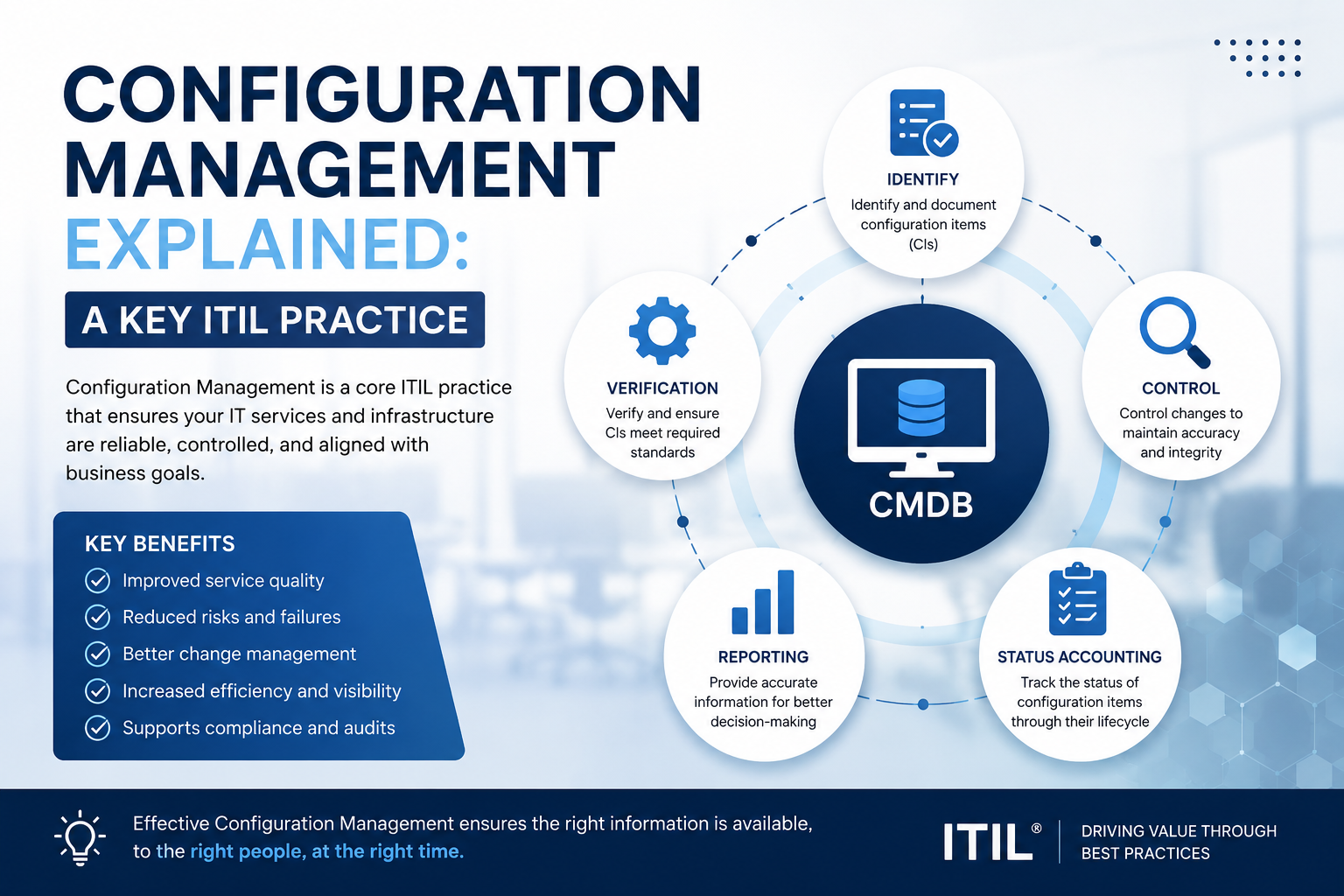
In the world of IT, where technology and business constantly evolve, the importance of effective management practices cannot be overstated. One such vital practice is configuration management. It plays an essential role in ensuring that IT services are delivered efficiently and effectively. In this blog, we will delve into the intricacies of configuration management, its components like the CMDB (Configuration Management Database), and how it fits within the broader framework of ITIL (Information Technology Infrastructure Library) practices.
What is Configuration Management?
Configuration management is a process that involves maintaining the integrity and consistency of a product’s performance and its functional and physical attributes throughout its lifecycle. In the IT context, it focuses on managing IT assets and services, ensuring that they are accurately documented, monitored, and controlled.
By maintaining a detailed record of all configurations and changes, organizations can enhance service delivery, minimize risks, and improve overall customer satisfaction. It’s not just about keeping tabs on hardware and software; it also includes managing relationships and dependencies between different components of the IT infrastructure.
The Importance of Configuration Management in ITIL
ITIL configuration management is a critical component of service management that specifically focuses on the configuration of assets in the IT environment. ITIL, a set of practices for IT service management, emphasizes the importance of aligning IT services with the needs of the business. Here’s why configuration management is essential within ITIL:
1. Enhanced Visibility of IT Assets
One of the primary benefits of configuration management is the visibility it provides into the IT infrastructure. By maintaining an up-to-date CMDB, organizations can track all assets, including hardware, software, and network components. This visibility enables better decision-making and resource allocation.
2. Improved Change Management
Change is inevitable in IT environments. Configuration management helps organizations manage changes systematically, ensuring that any modifications do not negatively impact service delivery. By understanding the relationships between configurations, teams can assess risks and make informed decisions.
3. Compliance and Risk Management
In today’s regulatory landscape, compliance is crucial. Configuration management aids organizations in adhering to various compliance requirements by maintaining accurate records of configurations and changes. This documentation can be invaluable during audits and assessments.
4. Enhanced Incident and Problem Management
When incidents occur, having a robust configuration management system in place allows IT teams to quickly identify the affected components, leading to faster resolution times. Understanding the configuration relationships helps in diagnosing problems more effectively.
Key Components of Configuration Management
To effectively implement configuration management, organizations should focus on several key components:
1. Configuration Management Database (CMDB)
The CMDB is the cornerstone of configuration management. It serves as a centralized repository that holds all configuration items (CIs) and their attributes. A well-maintained CMDB provides insights into the current state of the IT environment and supports other ITIL processes such as change management, incident management, and asset management.
2. Configuration Items (CIs)
CIs are the fundamental units of configuration management. These can include hardware, software, documentation, and even personnel involved in IT services. Each CI should have a unique identifier, detailed attributes, and relationships with other CIs.
3. Configuration Management Plan
A configuration management plan outlines the processes, tools, and resources required to implement configuration management effectively. This plan should include policies for maintaining the CMDB, managing changes, and ensuring compliance with best practices.
4. Configuration Control
Configuration control involves the processes and procedures for managing changes to the CIs. This includes tracking changes, assessing their impact, and ensuring that modifications are made systematically to maintain the integrity of the IT environment.
Asset Management vs. Configuration Management
While both asset management and configuration management deal with managing IT resources, they serve different purposes. Asset management focuses on tracking and managing the lifecycle of IT assets, including procurement, deployment, and retirement. In contrast, configuration management emphasizes maintaining the relationships and configurations of these assets.
In essence, asset management can be viewed as a subset of configuration management. A comprehensive configuration management strategy will include effective asset management practices to ensure that all components are accounted for and managed efficiently.
Implementing Configuration Management in Your Organization
Implementing configuration management can seem daunting, but with a structured approach, organizations can reap substantial benefits. Here are some steps to consider:
1. Define Objectives and Scope
Identify what you want to achieve with configuration management. Define the scope of your CMDB, including which CIs you will track and manage.
2. Choose the Right Tools
Select configuration management tools that align with your organization’s needs. Many tools offer integrated functionalities for configuration management, asset management, and change management.
3. Populate the CMDB
Gather data on existing CIs and populate your CMDB. Ensure that the information is accurate and regularly updated to maintain its integrity.
4. Establish Processes
Develop processes for change management, incident management, and configuration control. Ensure that these processes adhere to ITIL best practices.
5. Train Your Team
Invest in training for your team members to ensure they understand configuration management principles and how to use the tools effectively.
Conclusion
Configuration management is a fundamental practice in ITIL that plays a pivotal role in effective IT infrastructure management. By maintaining a comprehensive CMDB and understanding the relationships between various configuration items, organizations can significantly enhance their service delivery, compliance, and risk management efforts. As technology continues to evolve, embracing configuration management will be crucial for organizations aiming to thrive in a dynamic IT landscape.
FAQs
What is the primary purpose of configuration management?
The primary purpose of configuration management is to maintain the integrity and consistency of a product’s performance and its functional and physical attributes throughout its lifecycle.
How does configuration management relate to ITIL?
Configuration management is a key practice within ITIL that focuses on managing IT assets and services to ensure they align with business needs and deliver value.
What is a CMDB?
A CMDB (Configuration Management Database) is a centralized repository that holds all configuration items (CIs) and their attributes, providing insights into the current state of the IT environment.
Is asset management different from configuration management?
Yes, asset management focuses on tracking and managing the lifecycle of IT assets, while configuration management emphasizes maintaining relationships and configurations of those assets.
Call to Action
If you're looking to enhance your organization's IT service management practices, consider implementing configuration management today. Connect with us to learn more about how we can assist you in establishing an effective configuration management strategy tailored to your needs.




Leave a Comment