
 Quality Management



















 IT Service Management



 Project Management



 Agile Management




 Web Development



 Cloud Computing


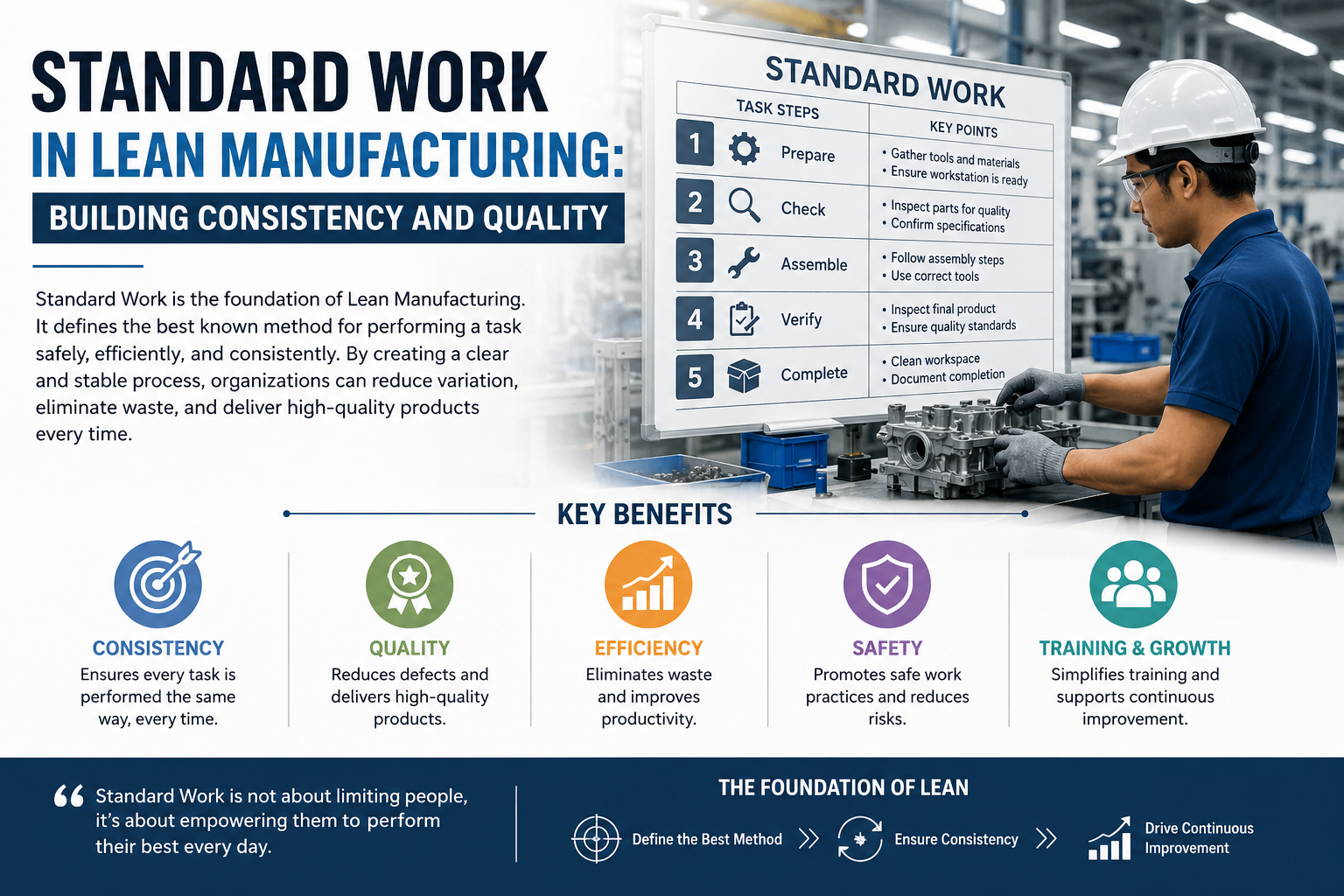
In the fast-paced world of manufacturing, especially in India, the need for operational efficiency and quality improvement has never been more critical. As manufacturers strive to meet customer demands, standard work emerges as a pivotal strategy within the framework of lean manufacturing standards. This blog delves into the importance of process standardization, its impact on operational consistency, and how it significantly contributes to quality improvement in manufacturing processes.
Understanding Standard Work in Lean Manufacturing
At its core, standard work refers to the establishment of precise, repeatable processes that outline the best practices for performing tasks. It encompasses three main components: the work sequence, the time taken for each task, and the required inventory at each stage. When effectively implemented within lean manufacturing standards, standard work provides a baseline for performance and a framework for continuous improvement.
The Role of Standard Work in Lean Manufacturing
Lean manufacturing focuses on maximizing value by eliminating waste, and standard work plays a crucial role in this endeavor. By documenting and standardizing processes, organizations can achieve:
- Operational Consistency: Standard work ensures that every employee performs tasks in the same way, reducing variability and enhancing reliability.
- Quality Improvement: With a standardized approach, the likelihood of errors diminishes, leading to higher-quality outputs and greater customer satisfaction.
- Training Efficiency: New employees can be trained more effectively when clear standards are in place, enabling them to reach desired performance levels quicker.
- Continuous Improvement: Standard work serves as a foundation for ongoing enhancements, allowing teams to identify areas for optimization and refine processes over time.
Key Components of Standard Work
To implement effective standard work, several components must be carefully considered:
1. Work Sequence
The work sequence defines the precise order in which tasks should be performed. This is crucial for ensuring that all steps are completed efficiently without unnecessary interruptions. A well-defined sequence minimizes waiting times and enhances flow.
2. Time Standards
Time standards are estimates of the time required to complete each task in the work sequence. Establishing accurate time standards helps in setting performance benchmarks and evaluating employee productivity. Additionally, it enables better scheduling and resource allocation.
3. Inventory Levels
Determining the required inventory at each stage of the process is essential for maintaining smooth operations. Standard work dictates how much inventory should be on hand, preventing overstocking or stockouts, which can halt production.
Benefits of Process Standardization in Manufacturing
Implementing process standardization through standard work offers numerous benefits to Indian manufacturers:
Enhanced Efficiency
Standard work reduces the time spent on figuring out how to perform tasks, as everyone follows the same guidelines. This streamlined approach enhances overall efficiency, allowing manufacturers to produce more in less time.
Improved Quality Control
With a consistent approach to tasks, the likelihood of defects and errors decreases. Quality control becomes more manageable, as deviations from the standard can be quickly identified and addressed.
Greater Employee Satisfaction
Clear expectations and standardized processes can lead to higher employee morale. Workers feel more confident in their roles when they know the standards and procedures, resulting in increased job satisfaction and productivity.
Facilitated Problem Solving
Standard work provides a baseline for measuring performance. When issues arise, it becomes easier to pinpoint the cause of the problem by comparing actual performance against the established standard.
Implementing Standard Work: A Step-by-Step Guide
Implementing standard work in your organization requires a structured approach:
1. Identify Key Processes
Begin by identifying the processes that most significantly impact your manufacturing operations. Focus on those that are critical for quality and efficiency.
2. Observe and Document
Observe the current work processes and document each step involved. Engage employees in this process to gain insights into the best practices and any challenges they face.
3. Develop Standard Work Instructions
Create clear, concise standard work instructions that outline the work sequence, time standards, and inventory requirements. Ensure these documents are accessible to all employees.
4. Train Employees
Conduct training sessions to familiarize employees with the new standards. Emphasize the importance of adherence to these standards for achieving operational consistency and quality improvement.
5. Monitor and Improve
Continuously monitor the performance against the established standards. Encourage feedback from employees and be open to making adjustments to improve the processes further.
Challenges in Implementing Standard Work
While the benefits of standard work are significant, challenges may arise during implementation:
Resistance to Change
Employees may resist new processes due to comfort with existing methods. Addressing concerns and involving them in the development of standard work can help mitigate this resistance.
Inadequate Training
Poor training can lead to misunderstandings and non-compliance. Investing in comprehensive training is vital for successful implementation.
Maintaining Standards
Over time, processes may evolve, and it’s essential to regularly review and update standard work to reflect these changes. Failing to do so can lead to inconsistencies.
Conclusion
In the competitive landscape of Indian manufacturing, embracing standard work as part of your lean manufacturing standards is not just beneficial; it’s essential for achieving operational consistency and driving quality improvement. By standardizing processes, manufacturers can enhance efficiency, improve quality, and foster a culture of continuous improvement. Start your journey towards operational excellence today by implementing standard work in your organization!
FAQs
What is the difference between standard work and work instructions?
Standard work defines the best practices for performing tasks, including work sequences and time standards, while work instructions provide detailed, step-by-step guidance on how to carry out those tasks.
How can standard work improve employee training?
Standard work offers clear guidelines, making it easier to train new employees. They can quickly learn the processes by following established standards, reducing the training time.
Is standard work applicable to all manufacturing sectors?
Yes, standard work can be adapted to various manufacturing sectors, regardless of size or complexity. It is a versatile approach that enhances efficiency and quality across different industries.
Call to Action
If you're ready to transform your manufacturing processes and achieve greater operational consistency and quality improvement, contact us today! Our team of experts can help you implement effective standard work practices tailored to your unique business needs.



Leave a Comment