
 Quality Management



















 IT Service Management



 Project Management



 Agile Management



 Web Development



 Cloud Computing


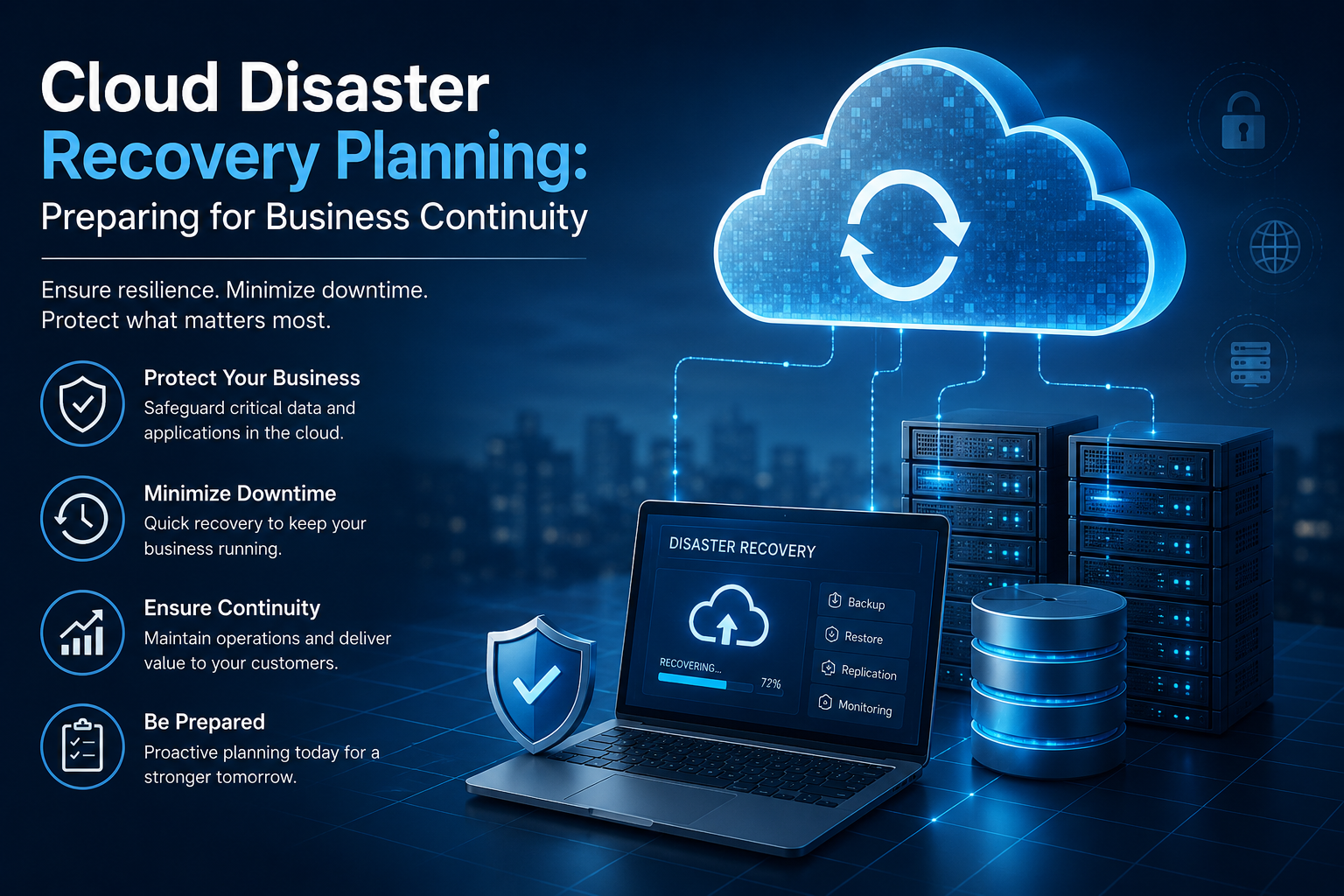
In today's digital landscape, businesses increasingly depend on cloud solutions for their operations. However, the reliance on technology also brings forth challenges, particularly when it comes to ensuring data integrity and service availability. This is where cloud disaster recovery comes into play. It’s not just an IT obligation; it’s a necessity for ensuring business continuity. In this blog, we will delve into the essentials of disaster recovery planning, explore various cloud backup solutions, and discuss how cloud resilience can safeguard your business against unforeseen disruptions.
Understanding Disaster Recovery Planning
Disaster recovery planning is a comprehensive strategy that encompasses the policies and procedures to recover and protect a business's IT infrastructure in the event of a disaster. The goal is to ensure that critical systems remain operational and data is preserved. In India, where the business landscape is rapidly evolving, having a robust disaster recovery strategy is vital for maintaining a competitive edge.
The Importance of Cloud Disaster Recovery
Cloud disaster recovery is a subset of disaster recovery planning that leverages cloud computing resources and services to protect and recover data. Here are several reasons why it’s crucial for businesses in India:
- Cost-Effectiveness: Traditional disaster recovery solutions can be expensive, requiring significant investment in hardware and maintenance. Cloud solutions offer scalable options that can reduce costs.
- Scalability: As your business grows, your disaster recovery needs will evolve. Cloud solutions can easily scale to accommodate larger data volumes and more complex recovery requirements.
- Accessibility: Cloud disaster recovery allows for data access from various locations, ensuring that your team can respond quickly to disasters, regardless of their physical location.
- Adequate Testing: Many cloud providers offer testing environments, allowing businesses to regularly test their recovery plans without affecting live operations.
Key Components of a Cloud Disaster Recovery Plan
Creating an effective cloud disaster recovery plan involves several critical components:
1. Risk Assessment
Identify potential risks that could disrupt your business operations, such as natural disasters, cyberattacks, or hardware failures. Understanding these risks will help you tailor your recovery strategies accordingly.
2. Business Impact Analysis (BIA)
Conduct a BIA to determine which business functions are critical and the impact of downtime on these functions. This analysis will guide your prioritization during the recovery process.
3. Recovery Time Objective (RTO) and Recovery Point Objective (RPO)
Define your RTO and RPO. RTO is the maximum acceptable time that your applications can be down after a disaster, while RPO refers to the maximum acceptable amount of data loss measured in time. These metrics are crucial for determining the necessary cloud backup solutions.
4. Cloud Backup Solutions
Choose appropriate cloud backup solutions that align with your RTO and RPO. Options may include full backups, incremental backups, and differential backups. Ensure that the solution you select can handle the specific needs of your business.
5. Implementation Plan
Develop a detailed implementation plan that outlines the steps required to execute your disaster recovery strategy. This plan should include roles and responsibilities, communication protocols, and recovery procedures.
6. Regular Testing and Updates
Disaster recovery plans should not be static. Regular testing is essential to ensure that your plan works as intended. Furthermore, as your business evolves, your plan should be updated to reflect changes in technology, personnel, or business processes.
Choosing the Right Cloud Backup Solutions
When selecting cloud backup solutions, consider the following factors:
- Compliance: Ensure that your chosen solution complies with local regulations and data protection laws in India, such as the Information Technology Act.
- Security: Look for providers that offer robust security measures, including encryption and multi-factor authentication, to protect your data.
- Support: Opt for solutions that provide comprehensive customer support, allowing you to resolve issues quickly.
- Integration: Choose solutions that easily integrate with your existing IT infrastructure and applications.
Building Cloud Resilience
Cloud resilience refers to the ability of cloud services to withstand and recover from disruptions. To achieve cloud resilience:
- Multi-Cloud Strategy: Consider deploying a multi-cloud strategy to avoid vendor lock-in and enhance resilience. Utilizing multiple cloud services can provide redundancy and improve service availability.
- Regular Updates: Keep your cloud infrastructure updated with the latest software and security patches to mitigate vulnerabilities.
- Employee Training: Regularly train employees on disaster recovery procedures and the importance of data protection.
FAQs About Cloud Disaster Recovery Planning
1. What is the difference between disaster recovery and business continuity?
Disaster recovery focuses specifically on restoring IT systems and data after a disruption, while business continuity encompasses the broader strategy of maintaining critical business operations during and after a disaster.
2. How often should I test my disaster recovery plan?
It is recommended to test your disaster recovery plan at least twice a year. However, more frequent testing may be necessary depending on the complexity of your IT environment.
3. Can small businesses benefit from cloud disaster recovery?
Absolutely! Cloud disaster recovery solutions can be particularly beneficial for small businesses due to their cost-effectiveness, scalability, and ease of use.
4. What are the common types of cloud backup solutions?
Common types include full backups, incremental backups, differential backups, and continuous data protection (CDP). The choice depends on your specific needs and RTO/RPO requirements.
5. How do I ensure my data is secure in the cloud?
To ensure data security, choose cloud providers that offer strong encryption, multi-factor authentication, and regular security audits. Additionally, regularly review your security practices.
Conclusion
In conclusion, cloud disaster recovery is an essential aspect of disaster recovery planning that empowers businesses to maintain business continuity amidst unforeseen disruptions. By understanding the components of an effective disaster recovery plan and investing in reliable cloud backup solutions, organizations can enhance their cloud resilience and safeguard their operations. Don’t wait for a disaster to strike; start planning today!
Call to Action: If you need assistance in developing a cloud disaster recovery plan tailored to your business, reach out to us today! Our team of experts is ready to help you ensure your business continuity and resilience.




Leave a Comment