
 Quality Management



















 IT Service Management



 Project Management



 Agile Management




 Web Development



 Cloud Computing


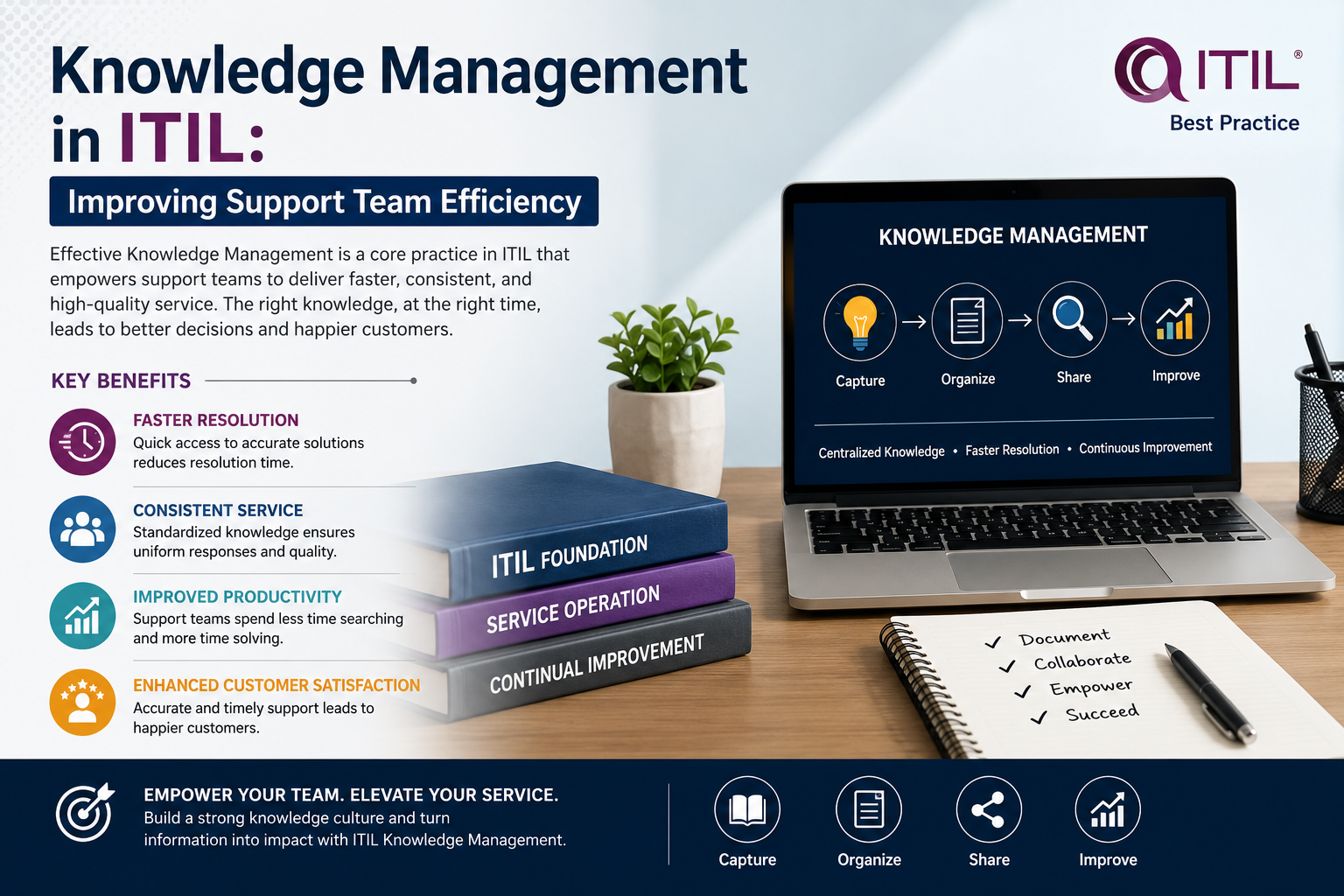
In today’s fast-paced digital landscape, organizations across India are increasingly relying on Information Technology (IT) to drive their business objectives. However, with the rise in technology complexity, the need for efficient IT support has never been greater. This is where ITIL knowledge management plays a pivotal role. By effectively managing knowledge, organizations can enhance their IT support efficiency, streamline processes, and ultimately improve service delivery.
Understanding ITIL Knowledge Management
ITIL (Information Technology Infrastructure Library) is a set of best practices designed to align IT services with business needs. One of its core components is knowledge management, which is essential for improving the performance of IT support teams. Knowledge base management involves capturing, storing, and sharing knowledge to facilitate better decision-making and quicker issue resolution.
The Importance of Knowledge Management in ITIL
Knowledge management in ITIL serves several key purposes:
- Enhanced Decision-Making: By having access to a centralized knowledge base, IT support teams can make informed decisions quickly, leading to faster resolution of issues.
- Reduced Redundancy: Implementing effective knowledge management practices minimizes the chances of repeated work and helps avoid redundant problem-solving efforts.
- Improved Service Desk Efficiency: A well-maintained knowledge base allows service desk teams to efficiently handle requests and incidents, leading to reduced wait times for users.
- Continuous Learning: Knowledge management fosters a culture of continuous improvement, encouraging teams to learn from past incidents and enhance their skills.
Implementing Knowledge Base Management
For Indian organizations looking to enhance IT support efficiency, implementing a robust knowledge base is crucial. Here are the steps to follow:
1. Identify Key Knowledge Areas
Start by identifying the key areas where knowledge is essential. This could include troubleshooting guides, known errors, and best practices for common IT issues. Collaborate with your support team to gather insights on frequent queries and challenges.
2. Create a Centralized Knowledge Repository
Develop a centralized platform where all the knowledge can be stored and accessed easily. This could be a dedicated software tool or an intranet page. Ensure that it is user-friendly, searchable, and accessible to all support team members.
3. Standardize Documentation
Standardization is key to effective knowledge base management. Create templates for documentation to ensure consistency in how information is presented. This will make it easier for team members to find and use the information.
4. Encourage Contributions
Encourage all team members to contribute to the knowledge base. Recognize and reward those who actively share valuable insights and experiences. This will create a culture of knowledge sharing within your organization.
5. Regularly Update the Knowledge Base
Knowledge is constantly evolving, especially in the field of IT. Regularly review and update your knowledge base to ensure that it remains relevant and accurate. Set a schedule for periodic reviews and solicit feedback from the support team on areas that need improvement.
Leveraging ITIL Practices for Effective Knowledge Management
To maximize the benefits of knowledge management, organizations should integrate it with other ITIL practices. Here are a few ways to do this:
1. Incident Management
Link your knowledge base to the incident management process. When a new incident is reported, encourage support agents to search the knowledge base before escalating the issue. This can significantly reduce resolution times and improve customer satisfaction.
2. Problem Management
Utilize knowledge management during problem management to document the root causes of recurring issues. By analyzing past incidents and solutions, your team can develop permanent fixes and update the knowledge base accordingly.
3. Change Management
When implementing changes to IT services, incorporate knowledge management to document the potential impacts and required procedures. This will help support teams understand the changes and how to handle related incidents effectively.
Benefits of Knowledge Management in IT Support
Implementing knowledge management practices in ITIL offers numerous benefits:
- Enhanced Efficiency: Support teams can resolve issues faster, reducing downtime and improving productivity.
- Improved Customer Satisfaction: Quick resolutions lead to higher user satisfaction and trust in IT services.
- Cost Savings: Reducing the time spent on resolving issues translates to cost savings for the organization.
- Employee Empowerment: Providing support staff with the tools and knowledge they need boosts their confidence and job satisfaction.
Common Challenges in Knowledge Management
While the benefits of knowledge management in ITIL are clear, there are also challenges that organizations might face:
1. Resistance to Change
Team members may be resistant to adopting new practices. It’s essential to communicate the benefits of knowledge management effectively and provide adequate training.
2. Information Overload
Without proper categorization and search functionalities, users may find it overwhelming to navigate a large knowledge base. Implement intuitive search features and ensure that content is well-organized.
3. Maintaining Accuracy
As mentioned earlier, knowledge must be regularly updated to remain relevant. Assign responsibilities for maintaining different sections of the knowledge base to ensure accuracy.
FAQs about Knowledge Management in ITIL
What is ITIL knowledge management?
ITIL knowledge management is the process of capturing, storing, and sharing knowledge within an organization to improve IT service delivery and support team efficiency.
How does knowledge base management improve IT support efficiency?
By providing quick access to information and solutions, knowledge base management helps support teams resolve issues faster, reducing downtime and enhancing user satisfaction.
What are the key components of a knowledge management strategy?
A successful knowledge management strategy includes identifying key knowledge areas, creating a centralized repository, standardizing documentation, encouraging contributions, and regularly updating the content.
How can organizations ensure the accuracy of their knowledge base?
Regularly review and update the knowledge base, assign responsibilities for specific sections, and solicit feedback from team members to maintain accuracy.
Conclusion
Incorporating knowledge management in ITIL is a powerful way to enhance IT support efficiency. By effectively managing knowledge, organizations can streamline processes, improve service delivery, and ultimately achieve greater business success. As the IT landscape continues to evolve, prioritizing knowledge management will be essential for organizations looking to stay competitive.
Ready to transform your IT support efficiency? Start implementing effective knowledge management strategies today!
For more insights and tailored solutions, feel free to contact our team of experts!




Leave a Comment