
 Quality Management



















 IT Service Management



 Project Management



 Agile Management




 Web Development



 Cloud Computing


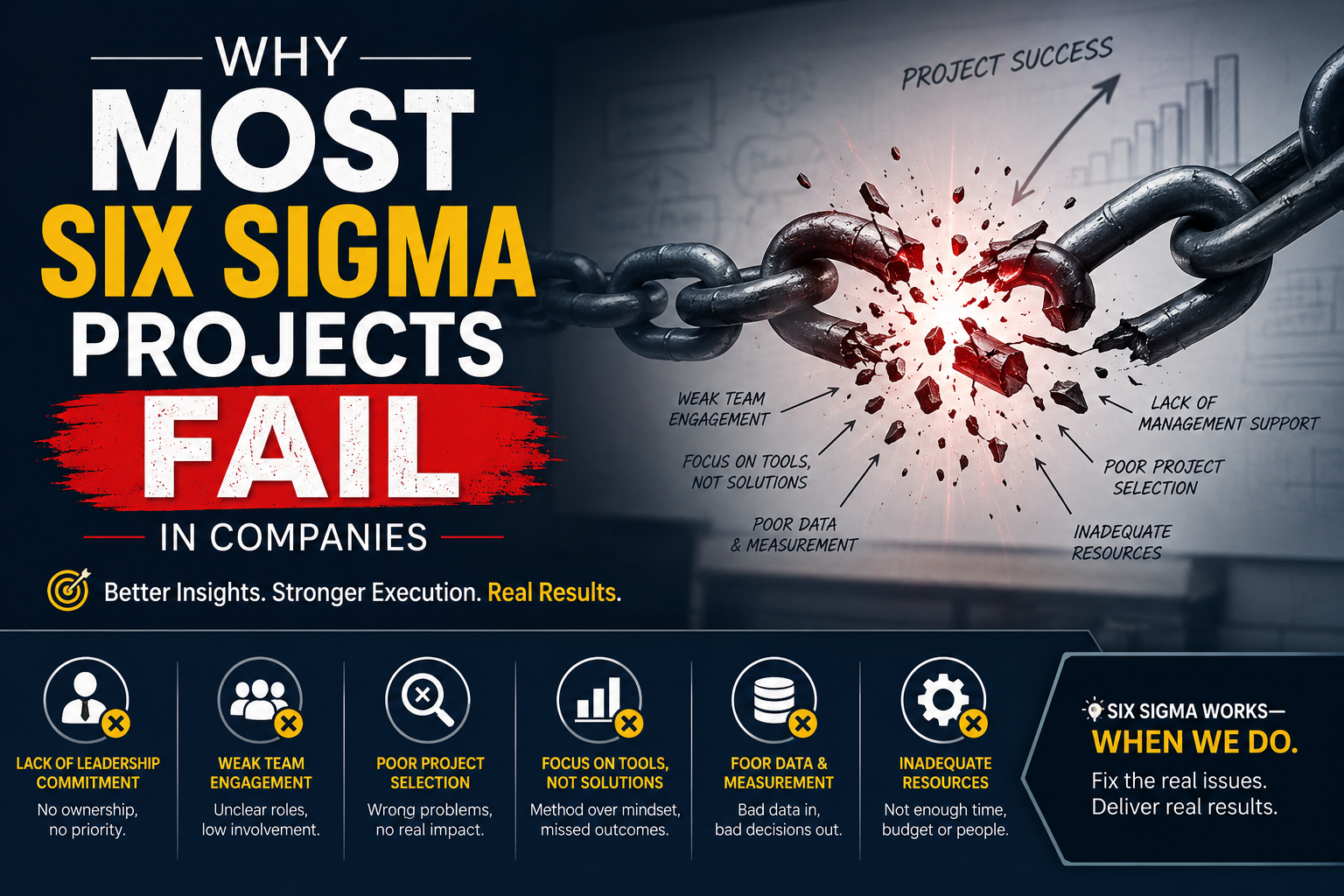
In the dynamic landscape of Indian industries, the implementation of Six Sigma methodologies has become a popular strategy for improving quality and operational efficiency. However, despite its numerous benefits, many Six Sigma projects end in failure. Understanding the Six Sigma project failure reasons can help organizations avoid common pitfalls and enhance their chances of success.
Understanding Six Sigma
Before we delve into the reasons for failure, it’s essential to understand what Six Sigma is. Developed by Motorola in the 1980s, Six Sigma is a set of techniques and tools for process improvement. It focuses on identifying and eliminating defects in manufacturing and service-related processes. The methodology is data-driven and aims for near perfection, targeting a maximum of 3.4 defects per million opportunities.
The Importance of Six Sigma in Indian Industries
With India's booming economy and competitive market dynamics, companies are increasingly adopting Six Sigma practices. From IT and manufacturing to healthcare and services, organizations are leveraging Six Sigma to enhance customer satisfaction and reduce costs. However, the journey is not without challenges.
Common Six Sigma Project Failure Reasons
Now, let’s explore the primary Six Sigma project failure reasons that can hinder the success of these initiatives in Indian companies.
1. Lack of Management Support
One of the most significant reasons for Six Sigma project failure is the lack of support from top management. Successful Six Sigma initiatives require a commitment from leadership to allocate resources, provide training, and foster a culture of continuous improvement. If management is not engaged, teams may lack the motivation and resources needed to drive projects effectively.
2. Insufficient Training and Skills
Six Sigma projects demand a specific skill set, including data analysis, process mapping, and problem-solving. Many organizations fail to invest in adequate training for their employees. When team members do not possess the necessary skills, the likelihood of project failure increases significantly. A well-trained team is crucial for driving Six Sigma initiatives forward.
3. Poor Project Selection
Not every project is suitable for Six Sigma methodologies. Companies often choose projects without properly assessing their impact on the business. Focusing on low-impact projects can lead to wasted time and resources. It's essential to select projects that align with strategic business objectives and can produce measurable improvements.
4. Ineffective Communication
Effective communication is vital for the success of any project. In many cases, teams fail to communicate their goals, progress, and challenges effectively. This lack of transparency can lead to misunderstandings, misaligned objectives, and ultimately project failure. Establishing clear communication channels and regular updates is crucial for keeping everyone on the same page.
5. Resistance to Change
Change is often met with resistance, especially in established organizations. Employees may be accustomed to certain processes and may resist adopting new methodologies. This resistance can hinder the progress of Six Sigma projects, making it imperative for leaders to manage change effectively and ensure that employees understand the benefits of Six Sigma.
6. Inadequate Data Collection and Analysis
Six Sigma is rooted in data-driven decision-making. However, many organizations fail to collect relevant data or analyze it effectively. Poor data quality can lead to incorrect conclusions and ineffective solutions. Companies must prioritize data integrity and invest in tools and systems that facilitate accurate data collection and analysis.
7. Lack of Focus on the Customer
Ultimately, the goal of Six Sigma is to improve customer satisfaction. However, some projects become too focused on internal processes and lose sight of customer needs. Companies should consistently seek customer feedback and ensure that projects are aligned with delivering value to the customer.
8. Overlooking the Cultural Aspect
The cultural environment within an organization plays a crucial role in the success of Six Sigma projects. If the culture does not support continuous improvement and quality management, projects are likely to fail. Organizations must foster a culture that encourages innovation, accountability, and collaboration.
Strategies to Mitigate Six Sigma Project Failure
Understanding the reasons for Six Sigma project failure is only the first step. Companies must implement strategies to mitigate these risks and improve their chances of success.
1. Secure Management Commitment
To ensure the success of Six Sigma projects, top management must be fully committed. This includes providing necessary resources, setting clear expectations, and actively participating in the initiatives. Leadership buy-in is crucial for driving change and motivating teams.
2. Invest in Training and Development
Organizations should prioritize training for employees involved in Six Sigma projects. Investing in training programs helps build the necessary skills and competencies, empowering teams to tackle problems effectively. Consider certifications, workshops, and on-the-job training to enhance skill sets.
3. Choose the Right Projects
Conduct thorough assessments to identify the right projects for Six Sigma. Focus on projects that align with business objectives and have the potential to deliver significant returns. This strategic approach ensures that resources are utilized efficiently and effectively.
4. Foster Open Communication
Encourage open communication among team members and stakeholders. Regular updates, meetings, and feedback sessions can help keep everyone informed and engaged. Create a culture where employees feel comfortable sharing their thoughts and concerns.
5. Manage Change Effectively
Implement change management strategies to address resistance. Clearly communicate the reasons for changes and the benefits of Six Sigma. Involve employees in the process to foster ownership and acceptance of new methodologies.
6. Focus on Data Integrity
Ensure that data collection and analysis are prioritized in Six Sigma projects. Invest in technology and tools that facilitate accurate data management. Regularly validate data to maintain its quality and relevance.
7. Keep the Customer in Mind
Always align Six Sigma projects with customer needs and expectations. Solicit feedback from customers and incorporate it into project goals. This customer-centric approach enhances the likelihood of successful outcomes.
8. Build a Supportive Culture
Finally, cultivate a culture that embraces continuous improvement and quality management. Encourage collaboration, innovation, and accountability among employees. A supportive culture fosters an environment where Six Sigma can thrive.
Conclusion
While Six Sigma offers tremendous potential for enhancing quality and efficiency, many projects fail due to common pitfalls. By understanding the Six Sigma project failure reasons and implementing appropriate strategies, Indian companies can significantly improve their chances of success. Remember, the journey to excellence requires commitment, training, and a culture that values continuous improvement.
FAQs
What is Six Sigma?
Six Sigma is a data-driven methodology aimed at improving processes by identifying and eliminating defects. It focuses on achieving near perfection in quality and efficiency.
Why do Six Sigma projects fail?
Common reasons for Six Sigma project failure include lack of management support, insufficient training, poor project selection, ineffective communication, resistance to change, inadequate data analysis, lack of customer focus, and an unsupportive culture.
How can companies improve their Six Sigma initiatives?
Companies can improve their Six Sigma initiatives by securing management commitment, investing in training, selecting the right projects, fostering open communication, managing change effectively, ensuring data integrity, focusing on customer needs, and building a supportive culture.
Call to Action
If you want to learn more about how to implement successful Six Sigma projects in your organization, reach out to us today! Our experts can guide you through the process, ensuring you avoid the common pitfalls and achieve your business goals.





Leave a Comment