
 Quality Management



















 IT Service Management



 Project Management



 Agile Management




 Web Development



 Cloud Computing


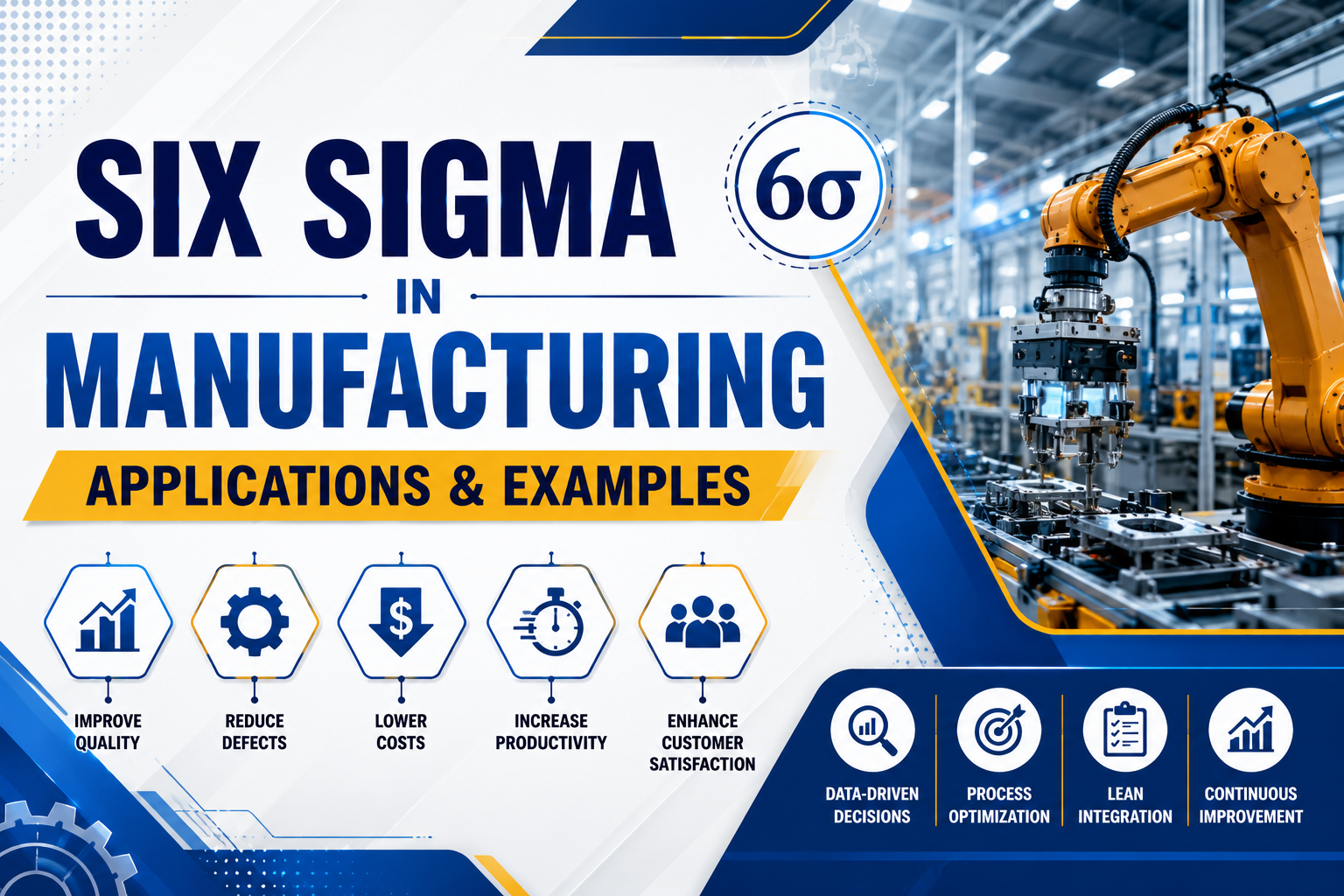
In today's competitive manufacturing landscape, organizations are continuously seeking ways to improve efficiency, reduce waste, and enhance product quality. One methodology that has gained immense popularity in this realm is Six Sigma manufacturing. This comprehensive approach focuses on process improvement and defect reduction. In this blog, we will explore the applications of Six Sigma in manufacturing, its relationship with lean manufacturing, and provide real-world examples to illustrate its effectiveness.
What is Six Sigma?
Six Sigma is a data-driven methodology that aims to improve the quality of a process by identifying and removing the causes of defects. It uses statistical tools and techniques to measure and analyze the performance of manufacturing processes. The ultimate goal is to achieve near-perfection in product quality, which is defined as no more than 3.4 defects per million opportunities.
Six Sigma in Manufacturing: Key Principles
At its core, Six Sigma rests on five key principles, often referred to as the DMAIC framework:
1. Define
In this initial phase, teams identify the problem, project goals, and customer requirements. Understanding what constitutes a defect from the customer's perspective is crucial for any manufacturing process optimization.
2. Measure
During the measurement phase, organizations collect data on current processes to establish baselines and identify areas for improvement. This data-driven approach is essential for effective manufacturing defect reduction methods.
3. Analyze
Analysis involves using statistical tools to identify root causes of defects and inefficiencies. This phase helps teams understand why defects occur and how they can be eliminated.
4. Improve
In the improvement phase, teams develop and implement solutions to address the root causes identified. This may involve redesigning processes, introducing new technologies, or enhancing employee training.
5. Control
The control phase ensures that improvements made are sustainable. This involves monitoring processes, establishing control charts, and implementing feedback mechanisms to maintain performance levels.
Integrating Six Sigma with Lean Manufacturing
While Six Sigma focuses on quality improvement and defect reduction, lean manufacturing emphasizes waste reduction and efficiency. Both methodologies complement each other, creating a powerful synergy that can drive significant improvements in manufacturing processes.
By integrating Six Sigma with lean principles, organizations can not only enhance quality but also streamline operations, leading to reduced lead times and increased customer satisfaction. This holistic approach ensures that manufacturers can achieve optimal performance and profitability.
Applications of Six Sigma in Manufacturing
1. Quality Improvement
One of the primary applications of Six Sigma in manufacturing is quality improvement. By identifying sources of variability and defects, organizations can implement quality control measures that lead to consistent product standards. For instance, a textile manufacturer in India implemented Six Sigma practices to reduce fabric defects, resulting in a significant drop in return rates and increased customer satisfaction.
2. Process Optimization
Six Sigma methodologies enable manufacturers to optimize their processes. A case study involving an automotive parts manufacturer highlights how they used Six Sigma to streamline their assembly line. By analyzing workflow and eliminating bottlenecks, they reduced production time by 30%, leading to increased output and lower operational costs.
3. Cost Reduction
Implementing Six Sigma can lead to substantial cost savings by reducing waste and improving efficiency. A renowned electronics manufacturer in India adopted Six Sigma strategies to minimize excess inventory and decrease material waste. This initiative not only slashed costs but also enhanced overall profitability.
4. Supply Chain Management
Incorporating Six Sigma into supply chain management can improve delivery times and reliability. An Indian food processing company utilized Six Sigma techniques to analyze supplier performance and streamline their logistics. As a result, they achieved a 25% improvement in on-time deliveries, enhancing customer satisfaction and loyalty.
5. Employee Engagement
Six Sigma fosters a culture of continuous improvement, which can significantly boost employee morale and engagement. When employees are involved in identifying and solving problems, it creates a sense of ownership and accountability. A pharmaceutical manufacturing plant in India saw improved employee satisfaction rates after implementing Six Sigma initiatives that encouraged staff participation in improvement projects.
Real-World Examples: Six Sigma Case Studies in Manufacturing
Case Study 1: Hindustan Aeronautics Limited (HAL)
Hindustan Aeronautics Limited, a major player in the Indian aerospace sector, adopted Six Sigma to enhance its manufacturing processes. By focusing on process optimization and quality improvement, HAL was able to reduce defects in aircraft components by over 40%. This not only improved product quality but also reduced rework costs significantly.
Case Study 2: Godrej
Godrej, a leading consumer goods company in India, implemented Six Sigma practices to streamline its manufacturing operations. By analyzing production data and identifying inefficiencies, Godrej achieved a reduction in production cycle time by 20%. This allowed them to respond more swiftly to market demands, ultimately enhancing their competitive edge.
Frequently Asked Questions (FAQs)
What is the primary goal of Six Sigma in manufacturing?
The primary goal of Six Sigma in manufacturing is to improve product quality by reducing defects and variability in processes, ultimately leading to enhanced customer satisfaction.
How does Six Sigma differ from lean manufacturing?
While Six Sigma focuses on reducing defects and improving quality, lean manufacturing emphasizes eliminating waste and improving efficiency. Both methodologies can be effectively integrated for maximum impact.
Can small manufacturers benefit from Six Sigma?
Absolutely! Small manufacturers can leverage Six Sigma principles to optimize their processes, reduce costs, and improve product quality, leading to increased competitiveness in the market.
What industries can benefit from Six Sigma?
Six Sigma is applicable across various industries, including automotive, aerospace, electronics, pharmaceuticals, and food processing, among others.
Conclusion
Six Sigma has revolutionized the way manufacturers approach quality improvement and process optimization. By implementing Six Sigma methodologies, organizations can achieve significant reductions in defects, enhance operational efficiency, and ultimately deliver higher quality products to customers. As demonstrated by various case studies, the integration of Six Sigma within the manufacturing sector, especially in India, has proven to be a game-changer.
Are you ready to transform your manufacturing processes with Six Sigma? Start your journey today and unlock the potential for quality improvement and operational excellence!
Call to Action
If you found this blog helpful and want to learn more about Six Sigma and its applications in manufacturing, subscribe to our newsletter for more insights and updates. Let’s work together to achieve excellence in your manufacturing processes!



Leave a Comment