
 Quality Management



















 IT Service Management



 Project Management



 Agile Management



 Web Development



 Cloud Computing


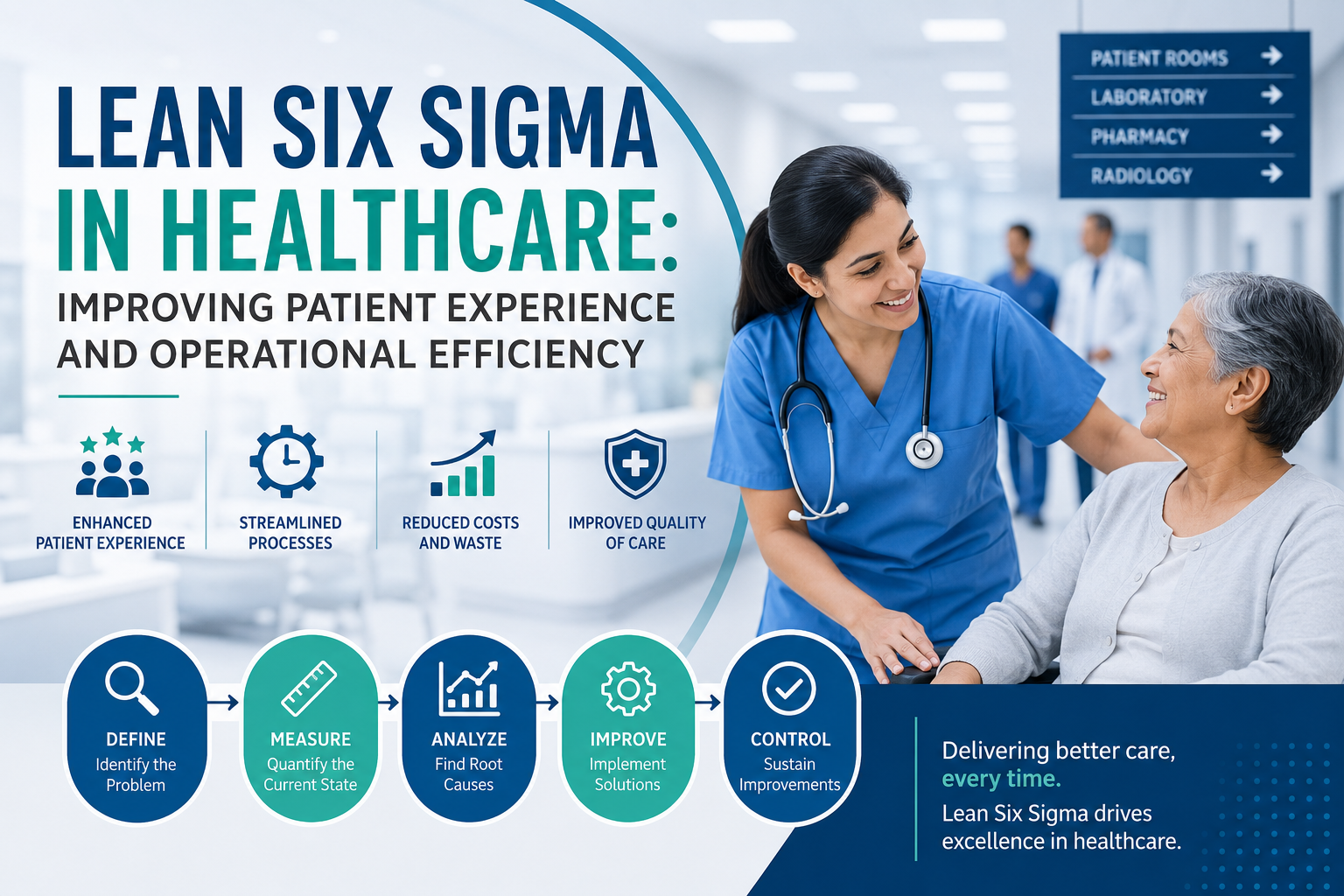
In the fast-evolving healthcare landscape of India, the need for quality management and operational efficiency has never been more critical. Hospitals and healthcare providers are increasingly turning to Lean Six Sigma in healthcare as a strategic approach to enhance patient experiences and streamline processes. This comprehensive guide explores the principles of Lean Six Sigma, its implementation in the Indian healthcare sector, and how it drives healthcare process improvement.
Understanding Lean Six Sigma in Healthcare
At its core, Lean Six Sigma is a methodology that combines two powerful concepts: Lean management and Six Sigma. Lean focuses on eliminating waste and optimizing processes, while Six Sigma emphasizes reducing variability and improving quality. When applied to healthcare, this methodology aims to create a seamless experience for patients while ensuring that operational efficiencies are achieved.
Key Principles of Lean Six Sigma
- Value Stream Mapping: Identifying every step in a process to determine which steps add value and which do not.
- Waste Reduction: Eliminating any non-value-adding activities that waste time and resources.
- Continuous Improvement: Emphasizing a culture of ongoing analysis and improvement.
- Data-Driven Decision Making: Using statistical methods to guide decisions and improvements.
Importance of Lean Six Sigma in Indian Healthcare
The Indian healthcare system faces numerous challenges, including overcrowding in hospitals, long patient wait times, and varying quality of care. By adopting Lean Six Sigma principles, healthcare providers can significantly enhance hospital quality management and operational efficiency.
1. Enhancing Patient Experience
One of the foremost goals of implementing Lean Six Sigma in healthcare is to improve the patient experience. By analyzing and refining processes, hospitals can reduce wait times, enhance service delivery, and ensure patients receive the highest quality of care.
2. Streamlining Processes
Lean Six Sigma helps healthcare organizations identify bottlenecks in their processes. For instance, by mapping out the patient journey from admission to discharge, hospitals can pinpoint delays and inefficiencies. This leads to a smoother patient flow and a more organized environment.
3. Improving Staff Efficiency
Healthcare professionals are often overburdened with tasks that do not add value to patient care. By applying Lean principles, hospitals can streamline administrative processes, allowing staff to focus more on patient care rather than paperwork. This not only boosts staff morale but also enhances the quality of care provided.
4. Reducing Costs
Operational inefficiencies often lead to increased costs in healthcare. Lean Six Sigma aids in identifying wasteful practices and reducing unnecessary expenditures. This financial relief can be redirected towards improving facilities, technology, and patient care initiatives.
Real-World Applications of Lean Six Sigma in Indian Hospitals
Several hospitals across India have successfully implemented Lean Six Sigma methodologies to improve their operations. Here are some notable examples:
1. Apollo Hospitals
Apollo Hospitals has integrated Lean Six Sigma into its operational framework, leading to reduced patient wait times and improved service delivery. By focusing on process optimization, they have enhanced overall patient satisfaction.
2. Fortis Healthcare
Fortis Healthcare has utilized Lean Six Sigma tools to streamline its surgical processes, resulting in quicker turnaround times and better resource management. This has allowed them to provide more timely interventions for patients.
3. Max Healthcare
Max Healthcare has employed Lean Six Sigma methodologies to revamp its billing and discharge processes. This has not only improved patient satisfaction but has also reduced billing errors significantly.
Implementing Lean Six Sigma in Your Healthcare Facility
For healthcare providers looking to implement Lean Six Sigma, the following steps can serve as a guide:
1. Assess Current Processes
Conduct a thorough evaluation of existing processes and identify areas for improvement. Engage staff at all levels to gather insights on inefficiencies.
2. Train Staff
Provide training on Lean Six Sigma principles and tools. Ensuring that your team understands the methodology is crucial for successful implementation.
3. Set Clear Goals
Establish specific, measurable goals for your Lean Six Sigma initiatives. This could include reducing patient wait times by a certain percentage or decreasing the rate of errors in medication administration.
4. Monitor Progress
Regularly track your progress against the established goals. Use data analytics to identify trends and areas for further improvement.
5. Foster a Culture of Continuous Improvement
Encourage a culture of continuous improvement within your organization. Celebrate successes and learn from failures to foster an environment that embraces change.
Challenges in Implementing Lean Six Sigma in Healthcare
While the benefits of Lean Six Sigma are clear, healthcare providers may face challenges during implementation:
1. Resistance to Change
Staff may be hesitant to adopt new processes, especially if they are accustomed to traditional methods. Effective communication and training are vital in overcoming this resistance.
2. Lack of Data
Data is crucial for Lean Six Sigma success. Hospitals must ensure they have robust data collection and analysis systems in place to support decision-making.
3. Resource Constraints
Implementing Lean Six Sigma requires time and resources, which may be limited in some healthcare settings. Prioritizing initiatives and starting with small projects can help manage these constraints.
FAQs About Lean Six Sigma in Healthcare
Q1: What is Lean Six Sigma in healthcare?
A: Lean Six Sigma in healthcare is a methodology that combines Lean management and Six Sigma principles to improve patient care and operational efficiency by eliminating waste and reducing variability.
Q2: How can Lean Six Sigma improve patient experience?
A: By streamlining processes, reducing wait times, and enhancing service delivery, Lean Six Sigma can significantly improve the overall patient experience in healthcare settings.
Q3: What are the key benefits of implementing Lean Six Sigma?
A: Key benefits include improved patient satisfaction, reduced costs, streamlined processes, and enhanced staff efficiency in healthcare organizations.
Q4: Are there any challenges in implementing Lean Six Sigma?
A: Yes, challenges can include resistance to change, lack of data, and resource constraints. However, these can be overcome with effective training and communication.
Conclusion: Embrace Lean Six Sigma for a Better Healthcare Future
In the dynamic healthcare environment of India, adopting Lean Six Sigma principles can be a game-changer for hospitals and healthcare providers. By focusing on healthcare process improvement, organizations can enhance patient experiences, improve operational efficiency, and ultimately deliver higher quality care. Now is the time to embrace Lean Six Sigma methodologies and commit to a future of continuous improvement.
If you're ready to transform your healthcare facility and enhance your operational efficiency, contact us today to learn more about how Lean Six Sigma can make a difference for you!




Leave a Comment