 Quality Management



















 IT Service Management



 Project Management



 Agile Management



 Web Development



 Cloud Computing


In today's competitive business landscape, organizations constantly seek ways to enhance efficiency and improve quality. Two prominent methodologies that have emerged in the realm of process improvement are DMAIC and DMADV, both integral parts of Six Sigma. While they share a common foundation centered around quality management, they serve distinct purposes and are utilized in different contexts. In this blog, we will explore the nuances of DMAIC vs DMADV, helping you determine which methodology best fits your organizational needs.
What is Six Sigma?
Before diving into the specifics of DMAIC and DMADV, it’s essential to understand the overarching concept of Six Sigma. Six Sigma is a data-driven approach aimed at eliminating defects in any process, whether in manufacturing, service, or any other sector. The goal is to achieve near perfection by reducing process variation and improving quality. Six Sigma employs various tools and techniques, including Lean Six Sigma methods, which combine the waste-reducing principles of Lean with the quality measurement techniques of Six Sigma.
Understanding DMAIC and DMADV
What is DMAIC?
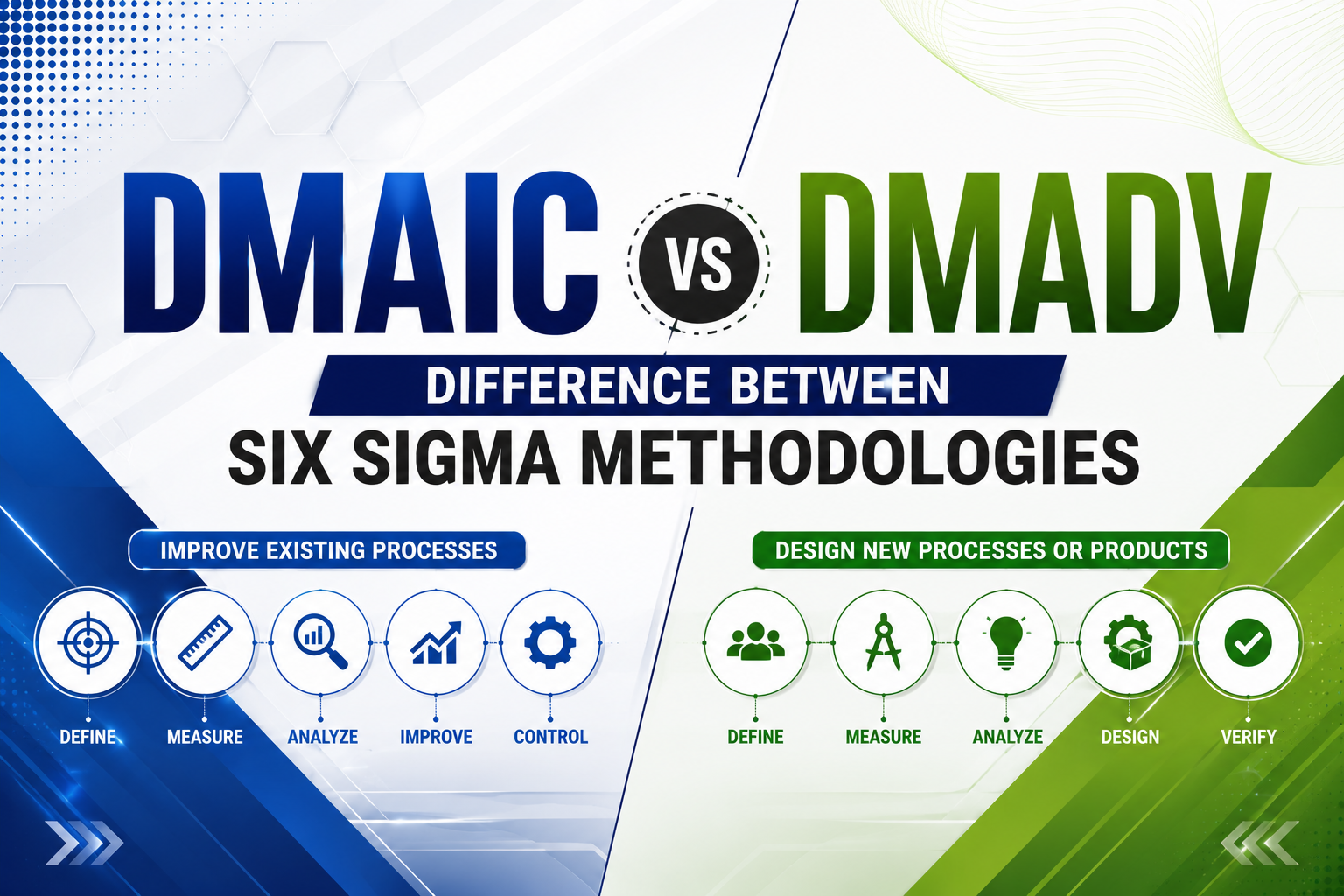
DMAIC stands for Define, Measure, Analyze, Improve, and Control. This methodology is primarily used for improving existing processes that are not performing adequately. DMAIC is structured around five key phases:
- Define: Identify the problem, project goals, and customer requirements.
- Measure: Collect data to understand current performance and identify gaps.
- Analyze: Examine data to identify root causes of defects or issues.
- Improve: Develop and implement solutions to address the identified problems.
- Control: Monitor the improvements to sustain the gains achieved.
What is DMADV?
DMADV, on the other hand, stands for Define, Measure, Analyze, Design, and Verify. This methodology is used primarily for creating new processes or products that meet customer specifications and quality standards from the outset. Like DMAIC, DMADV has five structured phases:
- Define: Determine project goals and customer needs.
- Measure: Identify critical quality characteristics and gather relevant data.
- Analyze: Develop design alternatives and evaluate them against customer requirements.
- Design: Create detailed designs and specifications for the new process/product.
- Verify: Test the design to ensure it meets the specifications and requirements.
Key Differences Between DMAIC and DMADV
Purpose
The primary difference between DMAIC and DMADV lies in their purpose. DMAIC is focused on improving existing processes that are underperforming, whereas DMADV is geared towards designing new processes or products that meet specific quality standards. When considering DMAIC vs DMADV, it’s crucial to identify whether your goal is to enhance an existing process or to develop a new one.
Application Context
DMAIC is often applied in situations where processes are already in place but require refinement to eliminate defects and improve quality. In contrast, DMADV is suitable for projects that involve creating new products or processes where no existing framework exists. In the context of Six Sigma DMAIC DMADV methodology, understanding the application context is vital for successful implementation.
Project Phases
While both methodologies consist of five phases, the focus and activities within each phase differ significantly. DMAIC emphasizes problem-solving and control of existing processes, while DMADV is about designing a process or product that meets predefined specifications. When exploring the six sigma project phases, it’s essential to recognize that DMAIC is a reactive approach, whereas DMADV is proactive in nature.
Outcome Orientation
DMAIC aims for consistent improvements and quality control of existing processes, ultimately leading to a reduction in defects and increased efficiency. On the other hand, DMADV strives for innovation and the successful launch of new products that align with customer needs and expectations. This fundamental difference in outcome orientation is a key consideration in the DFSS vs DMAIC debate.
Choosing Between DMAIC and DMADV
When deciding between DMAIC and DMADV, organizations must assess their specific needs and project goals. Here are some guiding questions to help you choose the right methodology:
- Are you looking to improve an existing process or develop a new one?
- What is the current state of your process, and what data do you have to support either approach?
- What are the customer requirements, and do they necessitate a redesign of the process or product?
By evaluating these factors, organizations can effectively choose the right Six Sigma approach that aligns with their objectives.
Conclusion
In summary, both DMAIC and DMADV are invaluable tools within the Six Sigma framework, each serving unique purposes tailored to specific project requirements. Understanding the differences between these methodologies is crucial for organizations aiming to enhance quality and efficiency in their operations. Whether you choose DMAIC for process improvement or DMADV for new product design, leveraging these methodologies can lead to substantial gains in productivity and customer satisfaction.
FAQs
1. Can DMAIC be used for new processes?
No, DMAIC is specifically designed for improving existing processes. For new processes, DMADV is the appropriate methodology.
2. Are DMAIC and DMADV the only methodologies in Six Sigma?
No, there are other methodologies and tools within the Six Sigma framework, but DMAIC and DMADV are the most widely recognized.
3. How long does a DMAIC or DMADV project typically take?
The duration of a DMAIC or DMADV project can vary significantly based on the complexity of the process or product, but they usually range from a few weeks to several months.
4. Do I need Six Sigma certification to implement DMAIC or DMADV?
While certification can provide valuable knowledge and skills, it is not mandatory to implement DMAIC or DMADV. Understanding the principles and having a structured approach is key.
Call to Action
If you’re ready to take your organization’s process improvement efforts to the next level, consider implementing either DMAIC or DMADV methodologies. Stay ahead of the competition and enhance your quality management practices today. Contact us for expert guidance on Six Sigma methodologies tailored to your specific business needs!




Leave a Comment