
 Quality Management



















 IT Service Management



 Project Management



 Agile Management




 Web Development



 Cloud Computing


In today’s competitive business environment, organizations are constantly looking for ways to improve efficiency, reduce defects, and enhance customer satisfaction. This is where Six Sigma certification plays a crucial role. Six Sigma is a data-driven methodology focused on process improvement and quality management, widely adopted across industries like manufacturing, IT, healthcare, and finance.
For professionals, enrolling in a Six Sigma course can be a game-changer. It not only enhances analytical and problem-solving skills but also significantly boosts career growth and earning potential. Whether you are a fresher, engineer, or a working professional, Lean Six Sigma certification equips you with tools to deliver measurable business impact.
In this blog, we’ll explore the benefits of Six Sigma certification, different certification levels, cost, and a step-by-step guide on how to get Six Sigma certification.
What is Six Sigma Certification?
Six Sigma certification validates your expertise in process improvement methodologies and your ability to reduce variability in business processes.
At its core lies the DMAIC methodology:
- Define – Identify the problem
- Measure – Collect relevant data
- Analyze – Find root causes
- Improve – Implement solutions
- Control – Sustain improvements
This structured approach helps organizations achieve operational excellence and consistent quality.
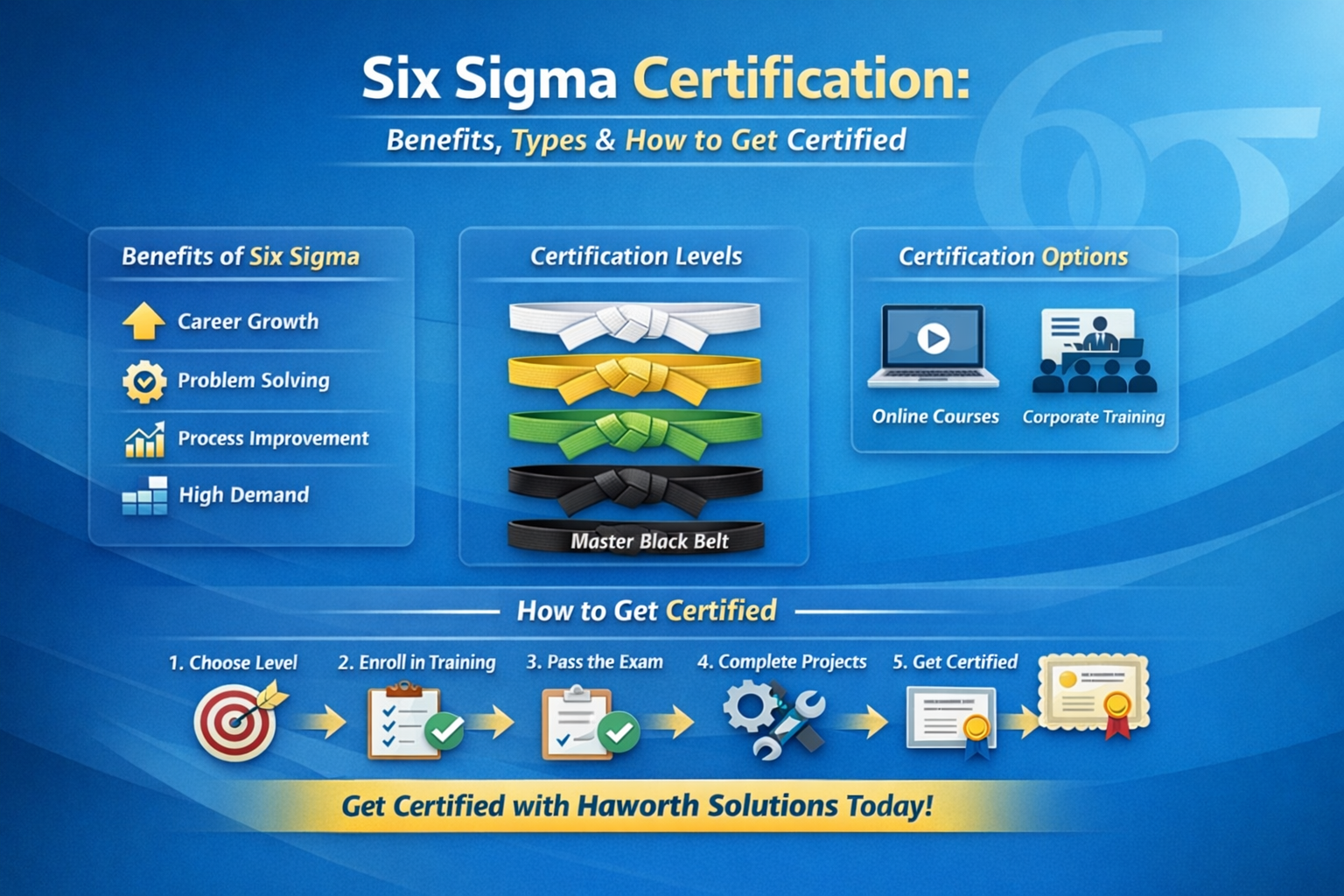
Benefits of Six Sigma Certification
1. Career Growth & Salary Boost
- Certified professionals are highly valued across industries
- Higher earning potential compared to non-certified peers
2. High Industry Demand
- востребовано in manufacturing, IT, logistics, healthcare, and more
- Organizations prefer candidates with Six Sigma training
3. Strong Problem-Solving Skills
- Learn data-driven decision-making
- Improve analytical thinking and efficiency
4. Organizational Impact
- Reduce operational costs
- Improve process quality
- Enhance customer satisfaction
Types of Six Sigma Certifications
White Belt
- Basic understanding of Six Sigma concepts
- Ideal for beginners
Yellow Belt
- Supports improvement projects
- Entry-level participation
Green Belt
- Works on projects with moderate complexity
- Popular among professionals
- Includes Six Sigma Green Belt certification
Black Belt
- Leads complex projects
- Advanced analytical and leadership skills
- Known as Six Sigma Black Belt certification
Master Black Belt
- Strategic role
- Trains and mentors others
Six Sigma Certification Options
1. Online vs Offline Training
- Six Sigma certification online: Flexible and cost-effective
- Classroom training: Interactive and structured
2. Self-Paced vs Instructor-Led
- Self-paced: Learn at your convenience
- Instructor-led: Guided learning with expert support
3. Corporate Training Programs
- Customized training for teams
- Focus on real business challenges
Six Sigma Certification Cost
The Six Sigma certification cost varies depending on multiple factors:
General Cost Range
- White/Yellow Belt: ₹5,000 – ₹15,000
- Green Belt: ₹15,000 – ₹40,000
- Black Belt: ₹40,000 – ₹1,00,000+
Factors Affecting Cost
- Training provider reputation
- Course format (online/offline)
- Certification body
- Project support and mentorship
Return on Investment (ROI)
- Higher salary packages
- Better job opportunities
- Long-term career growth
How to Get Six Sigma Certification (Step-by-Step)
Step 1: Choose the Right Certification Level
Select based on your experience and career goals
Step 2: Select a Trusted Training Provider
Look for industry-recognized providers like Haworth Solutions
Step 3: Complete Your Training
Enroll in a Six Sigma course and gain practical knowledge
Step 4: Pass the Certification Exam
Clear the required exam to earn certification
Step 5: Work on Real-World Projects
Apply concepts to real business problems
Why Choose Haworth Solutions for Six Sigma Training
Haworth Solutions is a trusted name in Six Sigma training and certification, offering industry-relevant programs designed for real-world success.
Key Advantages:
- Industry Expertise: Years of experience in corporate training
- Certified Trainers: Learn from industry professionals
- Practical Approach: Hands-on projects and case studies
- Career Support: Guidance for job opportunities
- Corporate Training Experience: Trusted by organizations
Explore our Six Sigma Training Programs and Corporate Training Solutions
Who Should Do Six Sigma Certification?
Six Sigma is ideal for:
- Working professionals looking for career growth
- Engineers and technical professionals
- Managers and team leaders
- Fresh graduates seeking job opportunities
- Quality assurance and operations professionals
Investing in a Six Sigma certification is one of the smartest decisions for professionals aiming to excel in process improvement and operational excellence. With increasing demand across industries, certified professionals have a significant competitive advantage.
Whether you’re looking to enroll in a Six Sigma course, understand the Six Sigma certification cost, or explore Six Sigma certification online, the right training provider makes all the difference.
Get Certified with Haworth Solutions Today
Upgrade your skills, boost your career, and become a certified Six Sigma professional with expert-led training programs.
FAQs
1. What is the best Six Sigma certification to start with?
Beginners can start with Yellow Belt or Green Belt, depending on their career goals.
2. How long does it take to complete Six Sigma certification?
It typically takes 2–6 weeks for Green Belt and 1–3 months for Black Belt.
3. Is Six Sigma certification worth it?
Yes, it offers strong career growth, better salary prospects, and high industry demand.
4. Can I do Six Sigma certification online?
Yes, many institutes offer Six Sigma certification online with flexible learning options.
5. What is the cost of Six Sigma certification?
The cost varies from ₹5,000 to ₹1,00,000+, depending on the level and provider.



Leave a Comment