
 Quality Management



















 IT Service Management



 Project Management



 Agile Management



 Web Development



 Cloud Computing


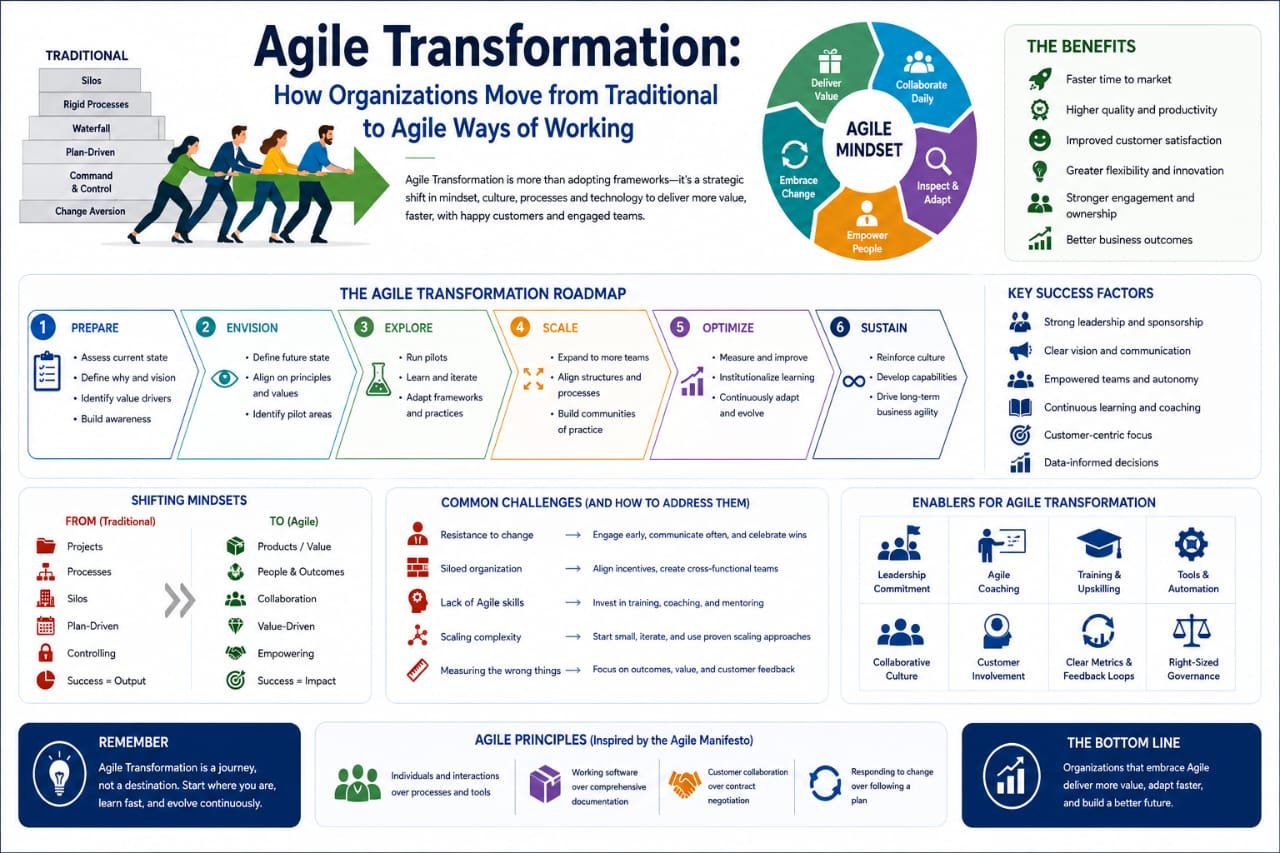
The business landscape is evolving rapidly, and organizations need to adapt to stay competitive. Agile transformation has become a buzzword in the corporate world, especially in India, as companies strive to enhance their responsiveness and efficiency. But what does agile transformation mean, and how can organizations successfully transition from traditional methods to agile ways of working? In this blog, we'll explore the fundamentals of agile adoption, delve into agile methodologies, and discuss the steps to cultivate organizational agility.
Understanding Agile Transformation
Agile transformation is the process of shifting an organization’s culture, processes, and mindset to embrace agility. It involves implementing agile methodologies to improve project delivery, foster collaboration, and increase customer satisfaction. Unlike traditional project management, which often relies on rigid structures and lengthy timelines, agile methodologies focus on flexibility and iterative progress.
What is Agile Methodology?
At its core, agile methodology is a framework that promotes adaptive planning, evolutionary development, early delivery, and continual improvement. The primary goal is to deliver high-quality products that meet customer needs while adjusting to changes quickly. Popular agile methodologies include Scrum, Kanban, and Lean, each with its unique set of principles and practices.
The Need for Agile Adoption in India
As the Indian market becomes increasingly competitive, businesses are recognizing the need for agility. The traditional command-and-control management style is giving way to more collaborative and responsive approaches. Here are a few reasons why agile adoption is essential for organizations in India:
- Rapid Market Changes: The pace of change in consumer preferences and technological advancements necessitates a quick response. Agile methodologies enable organizations to pivot quickly and adapt to changing market conditions.
- Enhanced Customer Satisfaction: Agile focuses on customer collaboration, allowing organizations to receive feedback early and adjust their products accordingly. This results in higher customer satisfaction and loyalty.
- Increased Efficiency: Agile practices promote continuous improvement and optimize resource utilization, leading to higher productivity and reduced time-to-market.
Steps for Successful Agile Transformation
Transitioning to an agile way of working is not an overnight process. It requires a strategic approach and commitment from all levels of the organization. Here are the key steps for successful agile implementation:
1. Assess Current State
The first step in agile transformation is to assess the current state of the organization. This involves evaluating existing processes, team structures, and cultural attitudes towards change. Conduct surveys or workshops to gather insights from employees about their experiences with traditional methods.
2. Define Agile Goals
Once the current state is understood, organizations should define clear goals for their agile transformation. These goals should align with the overall business strategy and articulate what success looks like in terms of customer satisfaction, team performance, and product delivery.
3. Build Cross-Functional Teams
Agile thrives on collaboration, so building cross-functional teams is crucial. These teams should include members from different departments who can work together to achieve common goals. Empowering teams to make decisions enhances ownership and accountability.
4. Invest in Training and Coaching
For successful agile adoption, it’s essential to invest in training and coaching for employees. This can involve workshops, online courses, or hiring agile coaches who can guide teams through the transition. Understanding agile principles and practices is vital for effective implementation.
5. Start Small and Scale Gradually
Organizations should start their agile transformation with pilot projects. This allows teams to experiment with agile practices in a controlled environment and learn from their experiences. Once they gain confidence and see results, they can scale agile practices across the organization.
6. Foster a Culture of Continuous Improvement
Agile transformation is not a one-time event but an ongoing journey. Organizations should foster a culture of continuous improvement by encouraging teams to reflect on their processes regularly. Retrospectives are a crucial part of agile practices, allowing teams to discuss what went well and what could be improved.
Challenges in Agile Transformation
While agile transformation offers numerous benefits, it also comes with its set of challenges. Here are some common hurdles organizations may face:
- Resistance to Change: Employees accustomed to traditional methods may resist the shift to agile. Effective communication and involvement in the transformation process can help mitigate this resistance.
- Misunderstanding Agile Principles: Misconceptions about agile practices can lead to poor implementation. Organizations must ensure a thorough understanding of agile values and principles among all employees.
- Lack of Leadership Support: Successful agile transformation requires strong support from leadership. Leaders must champion the agile mindset and provide the necessary resources for implementation.
FAQs About Agile Transformation
What is the main goal of agile transformation?
The main goal of agile transformation is to enhance an organization's ability to respond to change quickly and efficiently while delivering high-quality products that meet customer needs.
How long does it take to implement agile transformation?
The timeline for agile transformation varies by organization and can range from a few months to several years, depending on the complexity of the organization and the scope of the transformation.
Can agile transformation be achieved in any industry?
Yes, agile transformation can be applied in various industries, including IT, manufacturing, healthcare, and finance. The key is to adapt agile principles to fit the specific context of the industry.
What is the role of leadership in agile transformation?
Leadership plays a crucial role in agile transformation by providing vision, support, and resources. Leaders must model agile behaviors, encourage collaboration, and empower teams to make decisions.
Conclusion
Agile transformation is not just a trend; it's a necessity for organizations looking to thrive in today's fast-paced business environment. By embracing agile methodologies, companies can enhance their responsiveness, improve customer satisfaction, and foster a culture of continuous improvement. As organizations in India embark on their agile journeys, the commitment to change must come from the top down, ensuring that everyone is aligned with the organization's goals.
If your organization is ready to embrace agile transformation, now is the perfect time to start. Invest in training, foster collaboration, and take the first step towards becoming an agile organization. Need help with your agile transformation journey? Contact us today for expert guidance and support!




Leave a Comment