
 Quality Management



















 IT Service Management



 Project Management



 Agile Management




 Web Development



 Cloud Computing


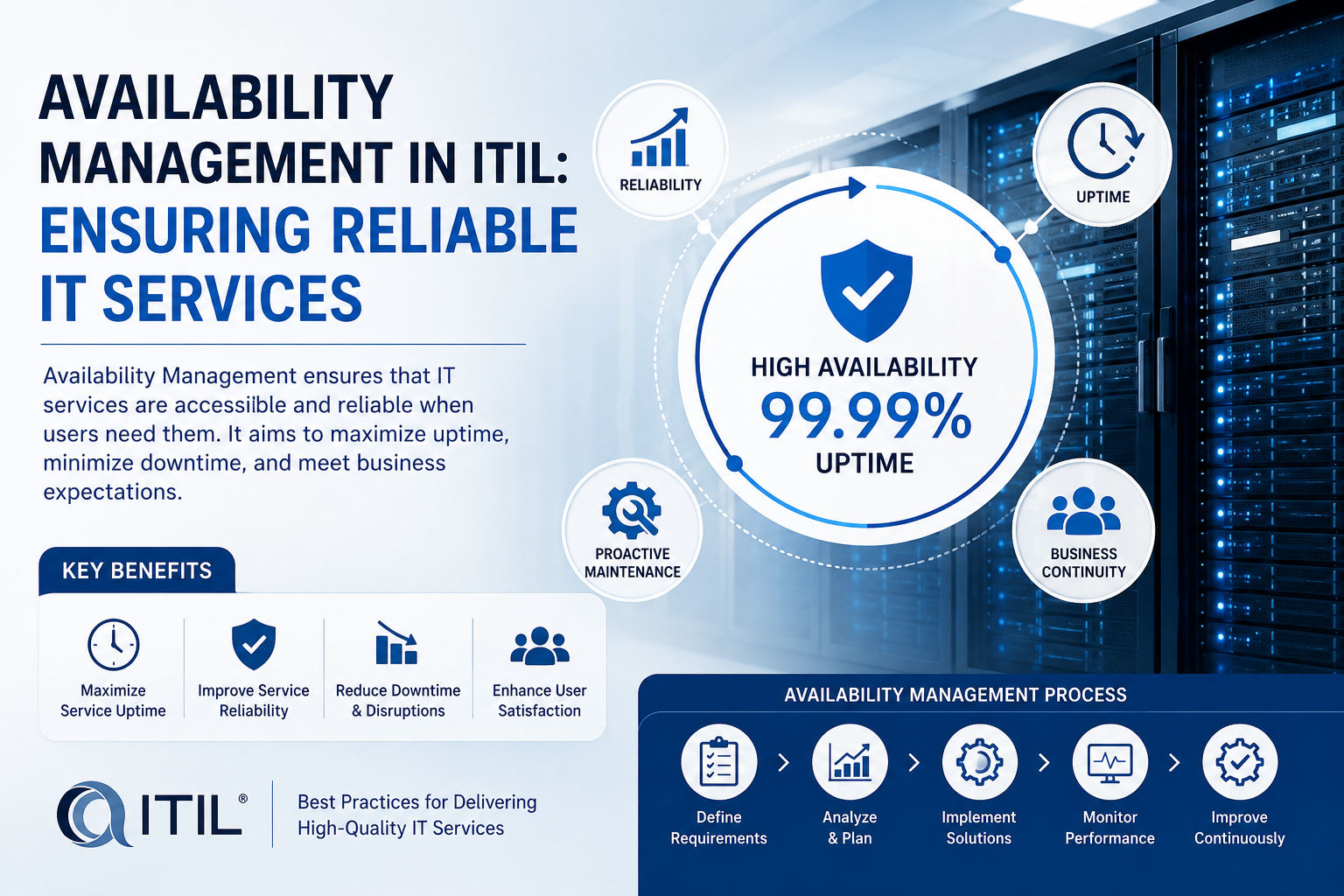
In today’s fast-paced digital landscape, the availability of IT services is crucial for businesses across various sectors. With the increasing reliance on technology, organizations are expected to provide uninterrupted access to their IT services. This is where availability management comes into play. In this blog, we'll explore the significance of ITIL availability management, its processes, and how it can enhance IT service availability for effective IT operations and robust IT infrastructure management.
Understanding Availability Management
Availability management is a critical component of IT service management (ITSM) that ensures IT services are available as per agreed-upon service levels. It aims to minimize downtime and maximize uptime, ensuring that users and customers have access to the IT services they need when they need them. This process is especially vital for organizations operating in highly competitive markets like India, where customer satisfaction can significantly impact business success.
The Role of ITIL in Availability Management
The Information Technology Infrastructure Library (ITIL) provides a structured framework for IT service management best practices. One of the key objectives of ITIL is to enhance the quality of IT services while minimizing risks and costs. ITIL availability management focuses on:
- Ensuring IT service availability aligns with business requirements.
- Identifying and managing risks that could lead to service interruptions.
- Implementing processes to monitor and report on service availability.
- Continuously improving availability through feedback and analysis.
Key Components of ITIL Availability Management
ITIL availability management can be broken down into several essential components:
1. Availability Planning
Availability planning involves defining the required availability levels for each IT service based on business needs. This includes identifying critical services and determining acceptable downtime.
2. Availability Design
This phase focuses on designing IT services to meet the required availability levels. It includes implementing redundancy, failover mechanisms, and other strategies to ensure services remain operational during unforeseen incidents.
3. Availability Monitoring
Continuous monitoring of IT services is crucial to ensure they remain available. Availability management tools can help track performance metrics and identify potential issues before they impact users.
4. Availability Reporting
Regular reporting on service availability helps stakeholders understand how well the IT services are performing. It can also highlight areas for improvement, allowing teams to take proactive measures.
5. Continuous Improvement
Availability management is not a one-time effort. Organizations must continuously assess and improve their availability strategies based on feedback, incidents, and changing business requirements.
Benefits of Effective Availability Management
Implementing effective availability management practices can yield numerous benefits for organizations, especially in the Indian context:
- Increased Customer Satisfaction: Higher availability translates into better user experiences, leading to increased customer satisfaction and loyalty.
- Reduced Downtime: Proactive availability management helps minimize downtime, reducing the financial impact of service interruptions.
- Enhanced Competitive Edge: Organizations that ensure high service availability can differentiate themselves from competitors, gaining a significant advantage in the market.
- Improved Efficiency: Streamlined IT operations and effective infrastructure management lead to better resource utilization and operational efficiency.
Challenges in Availability Management
While the benefits of availability management are clear, organizations may face several challenges in implementing effective strategies:
- Complex IT Environments: Modern IT infrastructures are often complex and dynamic, making it challenging to monitor and manage availability effectively.
- Lack of Awareness: Many organizations may not fully understand the importance of availability management, leading to inadequate resource allocation.
- Integration with Other Processes: Availability management must be integrated with other ITSM processes, such as incident management and change management, which can be logistically challenging.
Best Practices for Implementing Availability Management
To overcome these challenges and ensure effective availability management, organizations should consider the following best practices:
1. Define Clear Availability Objectives
Establish clear objectives for service availability based on business needs. Ensure that these objectives are communicated across the organization.
2. Leverage Automation Tools
Use automation tools to monitor service availability and identify issues in real-time. Automation can help reduce the manual workload on IT teams.
3. Conduct Regular Reviews
Regularly review availability performance and assess whether the established objectives are being met. Use these reviews to inform continuous improvement efforts.
4. Foster a Culture of Collaboration
Encourage collaboration between IT teams and business units to ensure that availability management aligns with broader organizational goals.
5. Invest in Training
Provide training for IT staff on best practices in availability management. This investment will enhance the team's capability to manage service availability effectively.
FAQs about Availability Management in ITIL
1. What is the primary goal of availability management?
The primary goal of availability management is to ensure that IT services are available to users as per agreed-upon service levels, minimizing downtime and maximizing uptime.
2. How does ITIL improve availability management?
ITIL provides a structured framework that includes best practices for availability management, enabling organizations to align IT services with business needs and improve overall service quality.
3. What are some tools used in availability management?
Common tools used in availability management include monitoring solutions like Nagios, SolarWinds, and ServiceNow, which help track service performance and identify issues.
4. How can organizations measure service availability?
Service availability can be measured using metrics such as uptime percentage, mean time to recovery (MTTR), and service level agreement (SLA) compliance rates.
5. Why is continuous improvement essential in availability management?
Continuous improvement is essential to adapt to changing business needs, technological advancements, and emerging risks, ensuring that availability management strategies remain effective.
Conclusion
In the realm of IT service management, availability management stands out as a vital process for ensuring reliable IT services. By adopting ITIL availability management practices, organizations can significantly improve their IT service availability, enhance IT operations, and streamline IT infrastructure management. As businesses in India continue to evolve in the digital age, focusing on availability management will be key to maintaining a competitive edge and ensuring customer satisfaction.
Call to Action
If you're looking to enhance your organization's IT service availability and implement best practices in availability management, contact us today. Our expert team can guide you through the process, ensuring you achieve reliable IT services that meet your business needs.





Leave a Comment