
 Quality Management



















 IT Service Management



 Project Management



 Agile Management



 Web Development



 Cloud Computing


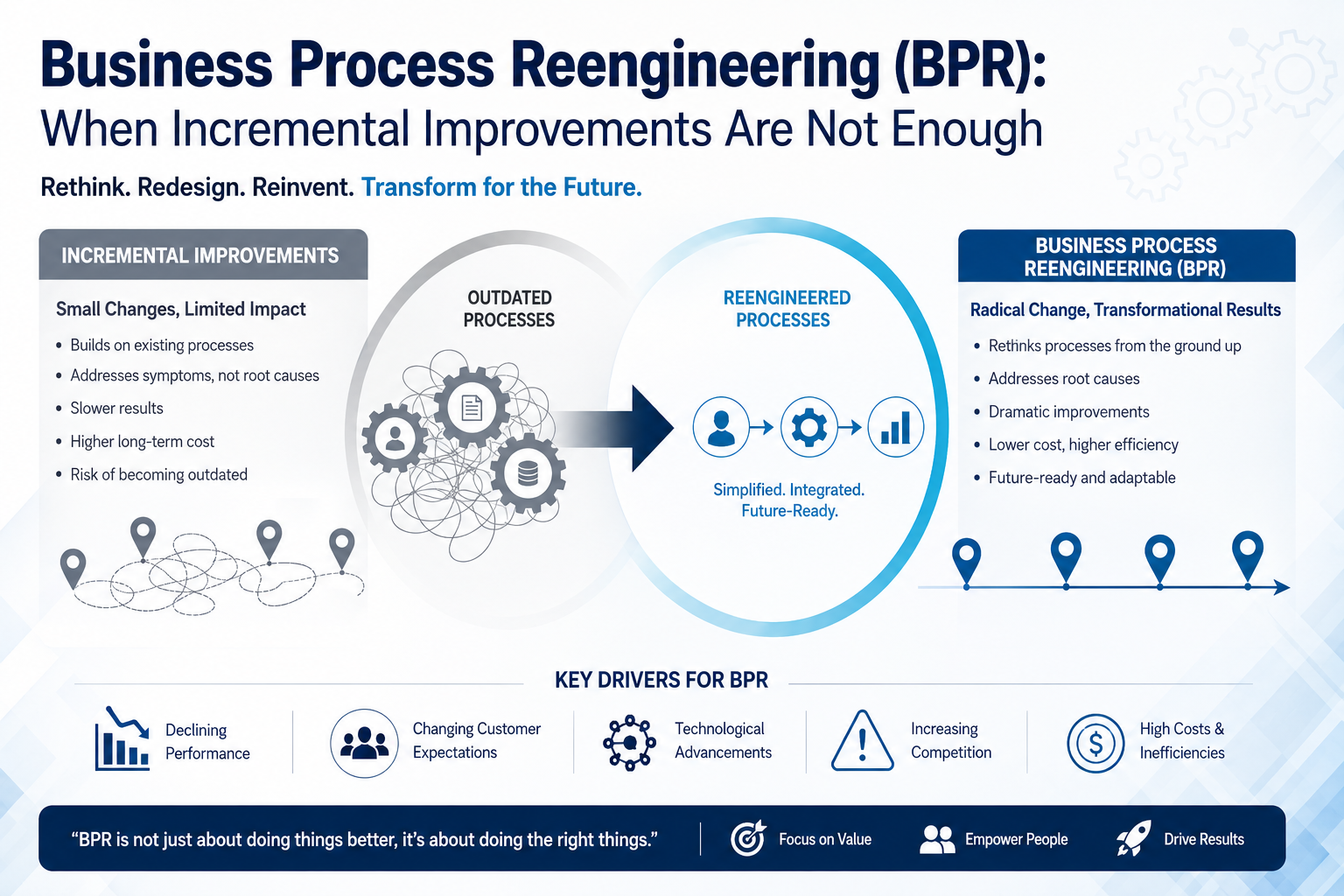
In the fast-paced world of business, organizations are constantly looking for ways to enhance their operations and improve their bottom line. While incremental improvements can be effective, there are times when they simply aren’t sufficient. This is where Business Process Reengineering (BPR) comes into play. In this article, we’ll explore the essence of BPR, its methodology, and how it can lead to significant business transformation and operational efficiency.
What is Business Process Reengineering?
Business Process Reengineering (BPR) is a strategic approach aimed at improving an organization's efficiency and performance through radical redesign of its core processes. Unlike continuous improvement strategies that focus on making small changes, BPR advocates for a complete overhaul of processes to achieve dramatic improvements. This methodology encourages organizations to rethink how they do their work and to explore innovative ways to deliver value to customers.
The Need for BPR in Today’s Business Environment
In the Indian business landscape, companies are facing intense competition, rapid technological advancements, and changing customer expectations. Incremental improvements may no longer suffice in such an environment. Businesses must be agile and willing to embrace transformation. Here are some reasons why BPR is essential:
- Globalization: As markets become more interconnected, businesses must adapt quickly to remain competitive.
- Technological Advances: New technologies can disrupt existing processes, necessitating a complete redesign to leverage these innovations.
- Customer Expectations: Customers now demand quicker, more personalized services, pushing businesses to rethink their processes.
- Cost Reduction: In an effort to maintain profitability, organizations must find ways to cut costs without sacrificing quality.
Understanding the BPR Methodology
The BPR methodology encompasses several steps that organizations should follow to successfully implement business process reengineering:
1. Identify the Need for Change
The first step in the BPR process is recognizing the need for change. This could stem from declining performance metrics, customer complaints, or inefficiencies in current processes. Leaders should analyze existing operations and pinpoint areas that require radical change.
2. Define Objectives and Goals
Once the need for change is established, it’s crucial to define clear objectives and goals. What does the organization hope to achieve through BPR? Common goals include enhancing customer satisfaction, reducing operational costs, and improving turnaround times.
3. Map Current Processes
Understanding current processes is vital before redesigning them. This involves creating detailed flowcharts or diagrams that illustrate how work currently flows through the organization. Mapping current processes helps identify bottlenecks and inefficiencies that need addressing.
4. Redesign Processes
With a clear understanding of existing workflows, organizations can begin the process redesign phase. This is where creativity and innovation come into play. Teams should explore alternative approaches to work and consider leveraging technology to enhance efficiency. It’s essential to keep the customer in mind during this stage to ensure that the redesign aligns with their needs.
5. Implement the New Processes
Once the new processes are designed, it’s time to implement them. This may involve training employees, investing in new technologies, or even restructuring teams. Effective communication is critical during this phase to ensure everyone understands the changes and their roles in the new processes.
6. Monitor and Adjust
After implementation, organizations must continuously monitor the new processes to ensure they are delivering the desired outcomes. KPIs (Key Performance Indicators) should be established to measure success. If any issues arise, teams should be prepared to make adjustments to optimize the processes further.
Benefits of Business Process Reengineering
When executed effectively, BPR can lead to numerous benefits for organizations:
- Increased Operational Efficiency: By eliminating unnecessary steps and redundancies, organizations can streamline operations and reduce costs.
- Enhanced Customer Satisfaction: Redesigned processes often lead to faster service delivery and improved product quality, which can boost customer loyalty.
- Improved Collaboration: BPR encourages cross-departmental collaboration, breaking down silos and fostering a culture of teamwork.
- Greater Agility: Organizations that embrace BPR are often more adaptable to changes in the market, allowing them to pivot quickly when necessary.
Challenges in Implementing BPR
While the benefits of BPR can be significant, organizations may face challenges during implementation:
- Resistance to Change: Employees may be hesitant to adopt new processes, especially if they feel their jobs are at risk.
- Lack of Clear Vision: Without a well-defined strategy and objectives, BPR efforts can become fragmented and ineffective.
- Inadequate Resources: Successful BPR initiatives require sufficient time, budget, and skilled personnel.
- Failure to Engage Stakeholders: Involving key stakeholders early on is essential to garnering support and ensuring a smooth transition.
FAQs about Business Process Reengineering
What is the primary goal of Business Process Reengineering?
The primary goal of BPR is to significantly improve organizational performance by radically redesigning core business processes to enhance efficiency and customer satisfaction.
How does BPR differ from continuous improvement?
While continuous improvement focuses on making small, incremental changes over time, BPR involves a complete overhaul of processes to achieve dramatic enhancements.
Can BPR be applied to any industry?
Yes, BPR can be applied across various industries, including manufacturing, healthcare, finance, and education, as all sectors benefit from improved efficiency and customer service.
What are some examples of successful BPR implementations?
Many organizations have successfully implemented BPR, including Ford Motor Company, which reengineered its manufacturing processes, and IBM, which transformed its customer service operations. These changes led to significant cost savings and improved service delivery.
Conclusion
Business Process Reengineering is a powerful tool for organizations seeking to transform their operations and achieve substantial improvements in efficiency and customer satisfaction. While it requires a willingness to embrace change and a commitment to innovation, the rewards can be significant. In a rapidly evolving business environment, BPR may be the key to staying ahead of the competition.
If your organization is considering BPR, it’s crucial to approach it with a clear strategy, engage stakeholders, and remain adaptable throughout the process. Ready to take the leap into business transformation? Contact us today to learn how we can help you implement BPR successfully!




Leave a Comment