
 Quality Management



















 IT Service Management



 Project Management



 Agile Management




 Web Development



 Cloud Computing


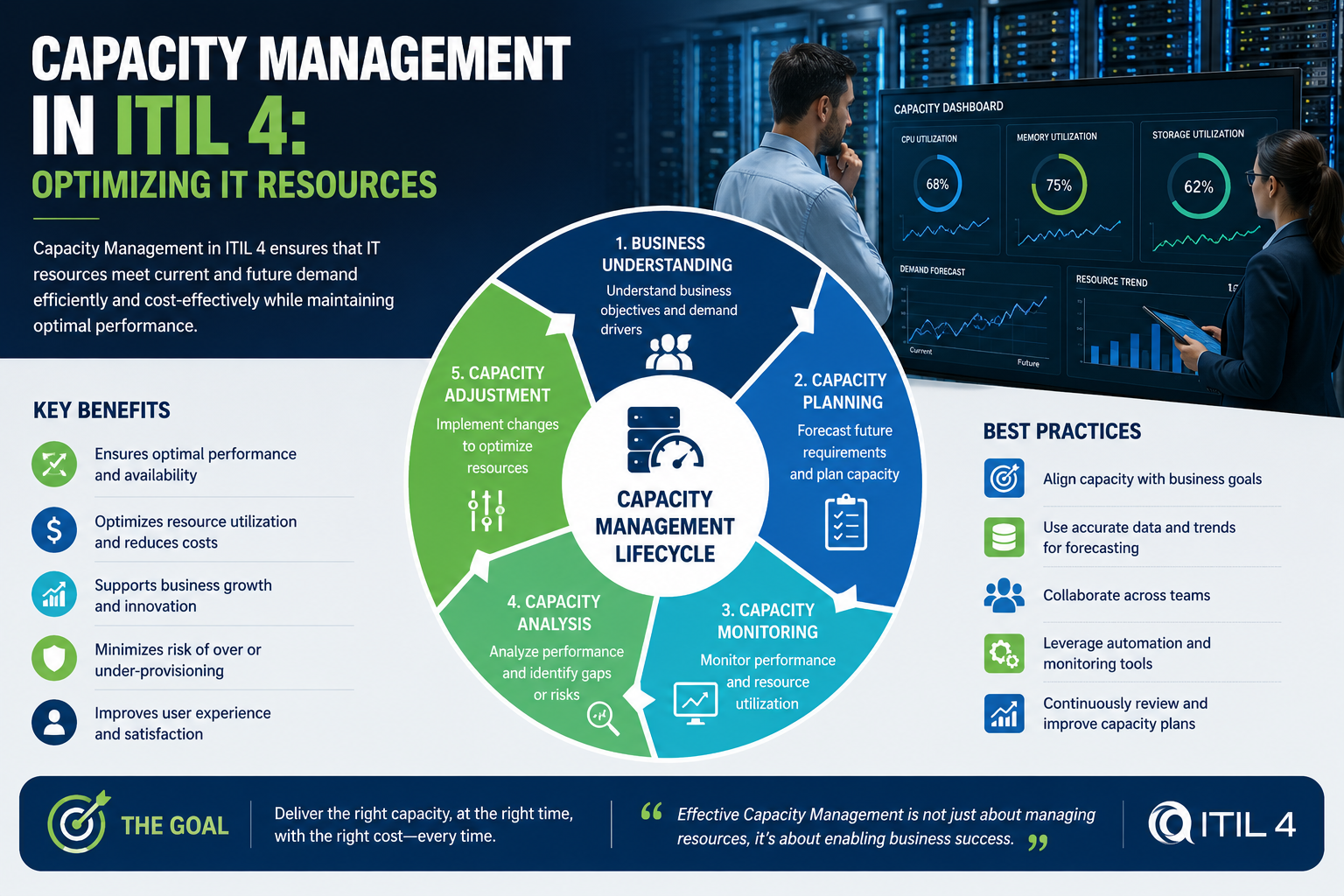
In the fast-paced world of IT, effective resource management is crucial for ensuring that organizations can deliver high-quality services to their users. One of the key components of this resource management is capacity management, especially within the framework of ITIL 4 capacity management. This blog will delve into the intricacies of capacity management, its significance in IT service optimization, and how organizations in India can leverage it to enhance their IT resource planning.
Understanding Capacity Management
Capacity management is the process of ensuring that an organization’s IT resources are used efficiently and effectively to meet current and future demands. This involves predicting future needs and identifying the necessary resources to meet those needs without unnecessary expenditure. In the context of ITIL 4 capacity management, it encompasses three core elements: business capacity, service capacity, and component capacity.
1. Business Capacity
Business capacity refers to the overall capacity required to support the business objectives. This involves understanding the demand for services and how these services align with the organization’s goals.
2. Service Capacity
Service capacity focuses on the performance and availability of specific services. It ensures that the services offered to users can handle the anticipated workload without performance degradation.
3. Component Capacity
Component capacity deals with the individual components that make up the IT infrastructure, such as servers, databases, and networks. It is essential to monitor these components to ensure they can support the required service capacity.
Importance of Capacity Management in ITIL 4
Implementing effective capacity management is vital for several reasons:
- Cost Efficiency: By optimizing IT resources, organizations can reduce waste and avoid unnecessary costs.
- Improved Performance: Proper capacity planning ensures that services run smoothly and can handle peak loads without performance issues.
- Enhanced User Satisfaction: When services meet user demands consistently, it leads to higher satisfaction and trust in IT services.
- Strategic Planning: Understanding capacity needs helps organizations forecast future demands and plan accordingly.
Steps for Effective IT Resource Planning
To optimize IT resources through IT resource planning, organizations can follow these essential steps:
1. Assess Current Capacity
Evaluate the existing infrastructure, applications, and services to understand current capacity and performance metrics. This assessment forms the basis for any future planning.
2. Analyze Demand Patterns
Study historical data to identify demand trends over time. Understanding peak usage times and overall demand patterns is crucial for effective capacity management.
3. Forecast Future Needs
Utilize predictive analytics to forecast future capacity requirements based on business growth, new projects, or service expansions. This proactive approach ensures that resources are available when needed.
4. Implement Capacity Monitoring Tools
Adopt monitoring tools that provide real-time insights into resource usage and performance. These tools can help identify bottlenecks and areas for improvement.
5. Optimize Resource Allocation
Based on the insights gathered, optimize the allocation of IT resources to ensure maximum efficiency. This may involve reallocating resources, scaling up or down, or even investing in new technologies.
Challenges in Capacity Management
While capacity management is essential, organizations may face several challenges:
- Dynamic Environments: The fast-paced nature of IT can make it difficult to predict capacity needs accurately.
- Data Overload: With vast amounts of data available, filtering out relevant information for effective decision-making can be overwhelming.
- Integration Issues: Aligning capacity management with other ITIL processes can pose challenges, especially in organizations with siloed departments.
Best Practices for ITIL 4 Capacity Management
Implementing best practices can help organizations overcome challenges and make the most of their capacity management efforts:
1. Establish Clear Metrics
Define clear metrics for measuring capacity and performance. This can include response times, resource utilization, and service availability.
2. Foster Collaboration
Encourage collaboration between different IT teams to ensure that everyone is aligned on capacity management goals and practices.
3. Regular Reviews
Conduct regular reviews of capacity management processes to identify areas for improvement and adapt to changing business needs.
4. Invest in Training
Provide training for staff to ensure they understand the importance of capacity management and how to implement best practices effectively.
Conclusion
Capacity management is a critical aspect of IT service optimization that helps organizations in India effectively utilize their IT resources. By understanding the principles of ITIL 4 capacity management and implementing strategic planning practices, businesses can enhance performance, improve user satisfaction, and achieve cost efficiencies. As the IT landscape continues to evolve, organizations must remain agile and proactive in their capacity management to thrive in a competitive environment.
FAQs
1. What is the primary goal of capacity management in ITIL 4?
The primary goal of capacity management in ITIL 4 is to ensure that IT services are delivered at the right time, in the right quantity, and at the right cost, meeting the current and future demands of the business.
2. How often should capacity planning be conducted?
Capacity planning should be an ongoing process, with regular reviews and assessments conducted at least quarterly or whenever there are significant changes in business operations.
3. What tools are available for capacity management?
Various tools are available for capacity management, including monitoring solutions like SolarWinds, Nagios, and Microsoft System Center, which provide insights into resource utilization and performance.
4. How can businesses in India benefit from effective capacity management?
Businesses in India can benefit from effective capacity management by reducing operational costs, improving service delivery, enhancing user satisfaction, and enabling better strategic planning.
Call to Action
Are you ready to optimize your IT resources and enhance your service delivery? Contact our team of experts today to learn how we can help you implement effective capacity management strategies tailored to your business needs.



Leave a Comment