
 Quality Management



















 IT Service Management



 Project Management



 Agile Management




 Web Development



 Cloud Computing

As businesses in India increasingly recognize the advantages of cloud adoption, many are embarking on the journey of cloud migration. However, transitioning from traditional on-premises infrastructure to a cloud environment is not without its challenges. In this blog, we will explore the common challenges associated with cloud migration and provide actionable insights on how to navigate these hurdles effectively.
Understanding Cloud Migration
Before delving into the challenges, it’s essential to have a clear understanding of what cloud migration entails. It refers to the process of moving data, applications, and other business elements from on-premises infrastructure to the cloud. This transition can take various forms, including:
- Rehosting: Moving applications without changes (lift-and-shift).
- Refactoring: Modifying applications to optimize for the cloud.
- Rebuilding: Redesigning applications from the ground up.
- Replacing: Switching to cloud-native applications.
Having a comprehensive cloud migration strategy is crucial for ensuring a smooth transition.
Common Cloud Migration Challenges
1. Lack of a Clear Cloud Migration Strategy
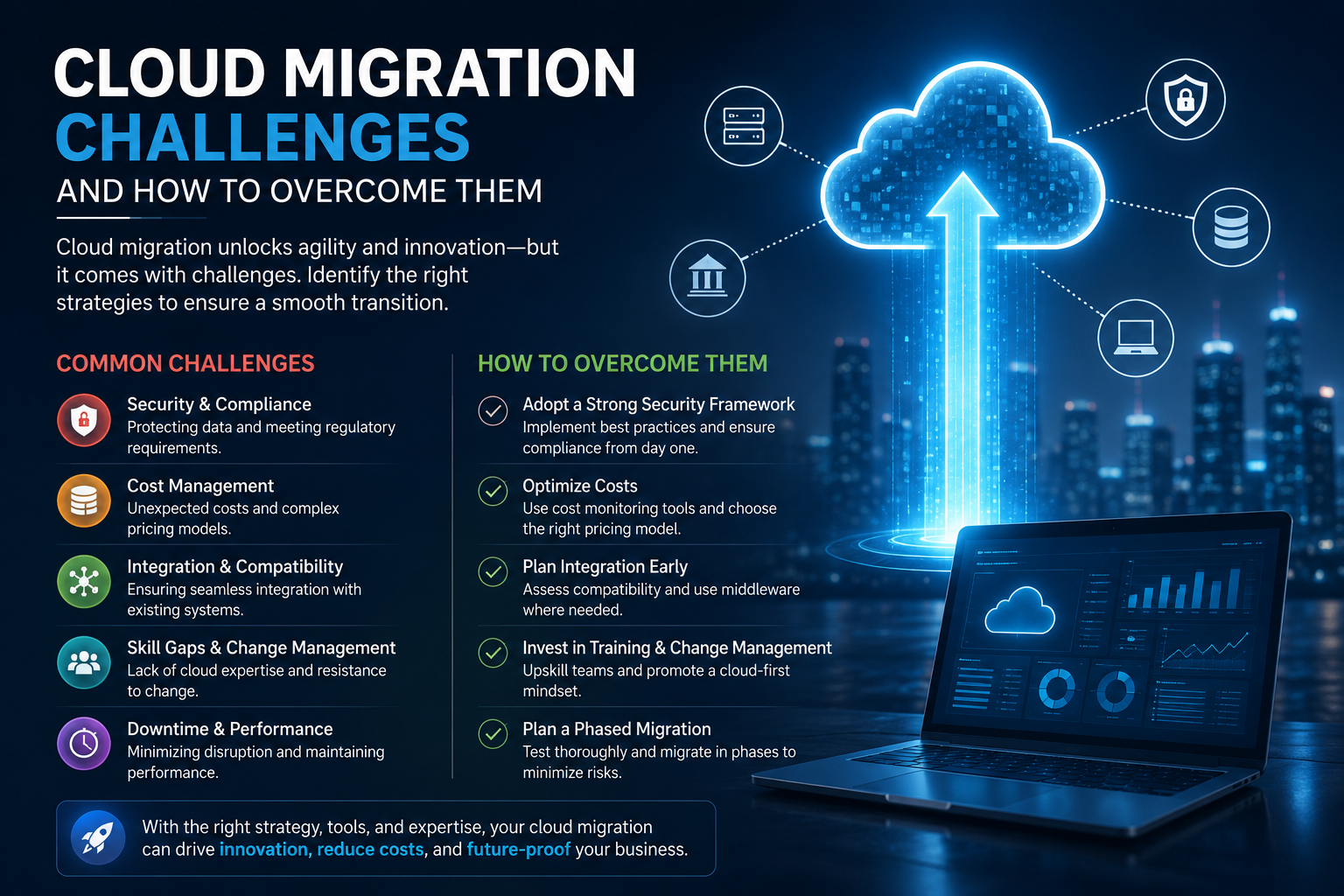
A well-defined cloud migration strategy is the foundation of successful cloud adoption. Many organizations struggle to outline their goals, timelines, and resource requirements, which can lead to confusion and delays. Companies often jump into migration without a thorough understanding of their existing architecture and workflows, resulting in unforeseen complications.
2. Data Security Concerns
Data security is a top priority for businesses during cloud transformation. Concerns about data breaches, compliance with regulations (such as GDPR and Indian data protection laws), and loss of control over sensitive information can hinder cloud adoption. Organizations must ensure they have robust security measures in place when migrating to the cloud.
3. Downtime and Disruption
For many businesses, downtime during migration can result in significant losses. Ensuring minimal disruption to ongoing operations is crucial. Companies often face challenges in scheduling migrations to avoid impacting their customers or internal teams.
4. Inadequate Skills and Expertise
Cloud implementation requires specific skills and knowledge that may not be readily available within an organization. The skills gap can lead to operational inefficiencies and hinder effective migration. Investing in training or hiring experienced professionals can mitigate this challenge.
5. Integration Issues
Seamless integration of existing systems with new cloud services can be complex. Organizations may face compatibility issues between legacy systems and cloud applications, complicating the migration process. Proper planning and testing are essential to ensure that all systems work together harmoniously.
6. Cost Management
While cloud services can offer cost savings in the long run, unexpected expenses during migration can arise. Companies often underestimate the total cost of ownership when planning their cloud migration strategy. It’s crucial to analyze all potential costs, including data transfer fees, storage, and ongoing operational expenses.
Overcoming Cloud Migration Challenges
1. Develop a Comprehensive Cloud Migration Strategy
To tackle the challenges of cloud migration, organizations should start with a well-defined strategy. This strategy should include:
- Assessment of existing infrastructure and applications.
- Identification of business goals and success metrics.
- A timeline for the migration process.
- Resource allocation, including budget and personnel.
A thorough planning phase can significantly reduce the risk of complications during the migration process.
2. Prioritize Data Security
Implementing robust security measures is non-negotiable during the cloud migration process. Organizations should:
- Encrypt sensitive data before migration.
- Utilize advanced security tools and protocols.
- Ensure compliance with relevant regulations and standards.
Working with reputable cloud service providers that prioritize security can also enhance data protection during and after migration.
3. Plan for Downtime and Disruption
To minimize downtime, companies should:
- Schedule migrations during off-peak hours.
- Conduct thorough testing in a sandbox environment before the actual migration.
- Communicate with stakeholders about expected disruptions.
Having a rollback plan can also help in case of unexpected issues during the migration.
4. Invest in Skills Development
Bridging the skills gap is essential for successful cloud implementation. Organizations should consider:
- Providing training programs for existing employees.
- Hiring cloud specialists or consultants.
- Encouraging team members to obtain cloud certifications.
Investing in skill development not only aids in migration but also enhances overall operational efficiency.
5. Ensure Seamless Integration
To avoid integration issues, businesses should:
- Conduct compatibility testing between legacy systems and cloud applications.
- Utilize middleware solutions to facilitate integration.
- Involve IT teams early in the planning process to address potential issues.
A proactive approach to integration can save time and resources during migration.
6. Monitor and Manage Costs
Effective cost management is critical during cloud migration. Organizations can:
- Utilize cost calculators provided by cloud service providers to estimate expenses.
- Implement a cloud cost management tool for ongoing monitoring.
- Review cloud usage regularly to identify and eliminate unnecessary expenses.
Being vigilant about costs can help organizations maximize their return on investment in the cloud.
FAQs about Cloud Migration
What is cloud migration?
Cloud migration refers to the process of moving data, applications, and other business elements from on-premises infrastructure to a cloud-based environment.
What are the key benefits of cloud adoption?
Benefits of cloud adoption include cost savings, scalability, flexibility, enhanced collaboration, improved security, and access to advanced technologies.
How can organizations ensure data security during cloud migration?
Organizations can ensure data security by encrypting sensitive data, using secure protocols, and working with reputable cloud service providers that adhere to compliance standards.
How can businesses manage costs during cloud migration?
Businesses can manage costs by using cost calculators, monitoring cloud usage, and implementing a cloud cost management tool to track expenses effectively.
Conclusion
While cloud migration presents several challenges, a well-planned approach can help organizations in India navigate these hurdles successfully. By developing a comprehensive cloud migration strategy, prioritizing data security, investing in skills development, and effectively managing costs, businesses can reap the full benefits of cloud adoption.
If your organization is considering cloud migration, start today by assessing your needs and developing a tailored strategy. For assistance in crafting your cloud transformation plan, contact us now!
Call to Action
Ready to embark on your cloud migration journey? Contact us today for expert guidance and tailored solutions that will help you overcome challenges and achieve a successful cloud transformation!



Leave a Comment