
 Quality Management



















 IT Service Management



 Project Management



 Agile Management



 Web Development



 Cloud Computing

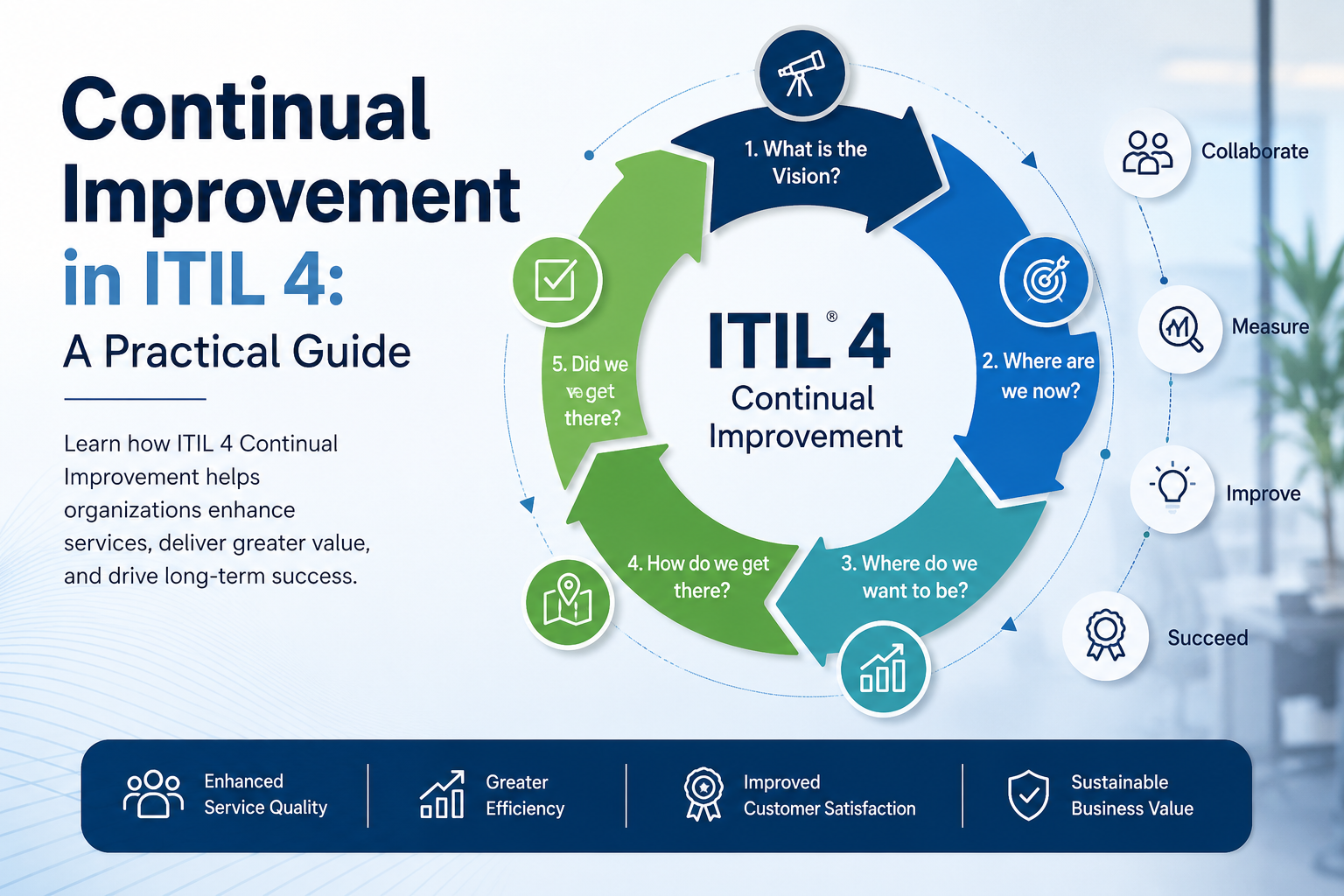
In today's fast-paced digital world, organizations must constantly evolve to meet changing demands and enhance service delivery. The ITIL 4 framework offers a robust approach to continual improvement in IT service management. This guide will explore the ITIL improvement model, discuss IT service improvement practices, and provide valuable insights into service optimization for Indian businesses.
Understanding Continual Improvement in ITIL 4
Continual improvement is a foundational aspect of ITIL 4, emphasizing the need for organizations to regularly assess and enhance their services and processes. The ITIL improvement model provides a structured approach to identifying opportunities for improvement, implementing changes, and measuring outcomes.
The Importance of Continual Improvement
In an Indian context, where technology adoption is rapidly increasing across industries, continual improvement ensures that IT services remain relevant and efficient. It helps organizations:
- Align services with business goals
- Enhance customer satisfaction
- Reduce costs through optimized processes
- Foster a culture of innovation and agility
The ITIL Improvement Model: A Step-by-Step Approach
The ITIL improvement model comprises several stages that guide organizations through their improvement journey. Let's break down each stage:
1. Identify Improvement Opportunities
The first step is to identify areas where improvements can be made. This can be achieved through:
- Service level agreements (SLAs) analysis
- Customer feedback surveys
- Performance metrics review
- Regular audits and assessments
2. Define a Vision for Improvement
Once opportunities are identified, organizations should create a clear vision for what improvement looks like. This involves setting specific, measurable goals aligned with the overall business strategy.
3. Analyze the Current State
Understanding the current state of services and processes is crucial. This can be done through:
- Process mapping
- Stakeholder interviews
- Data analysis
4. Develop an Improvement Plan
With a clear vision and understanding of the current state, organizations can develop a comprehensive improvement plan. This plan should outline:
- Specific actions for improvement
- Resources required
- Timelines for implementation
- Key performance indicators (KPIs) to measure success
5. Implement the Improvement Plan
Implementation is where the rubber meets the road. Organizations should ensure clear communication and training for all stakeholders involved. Utilizing agile methodologies can facilitate a smoother implementation process.
6. Measure and Evaluate
After implementation, it’s essential to measure the impact of the changes. This involves:
- Monitoring KPIs
- Collecting feedback from users
- Adjusting the plan based on results
7. Review and Iterate
Improvement is an ongoing process. Regular reviews and iterations ensure that the organization remains responsive to changes in the environment and can continue to enhance its services.
ITIL Practices for Service Improvement
ITIL 4 introduces several practices that support IT service improvement. Here are some key practices to consider:
1. Continual Improvement Practice
This practice focuses specifically on aligning improvements with the organization’s goals and objectives. It provides tools and techniques for managing the improvement process effectively.
2. Incident Management
Effective incident management not only resolves issues swiftly but also provides valuable data for identifying systemic problems and areas for improvement.
3. Change Control
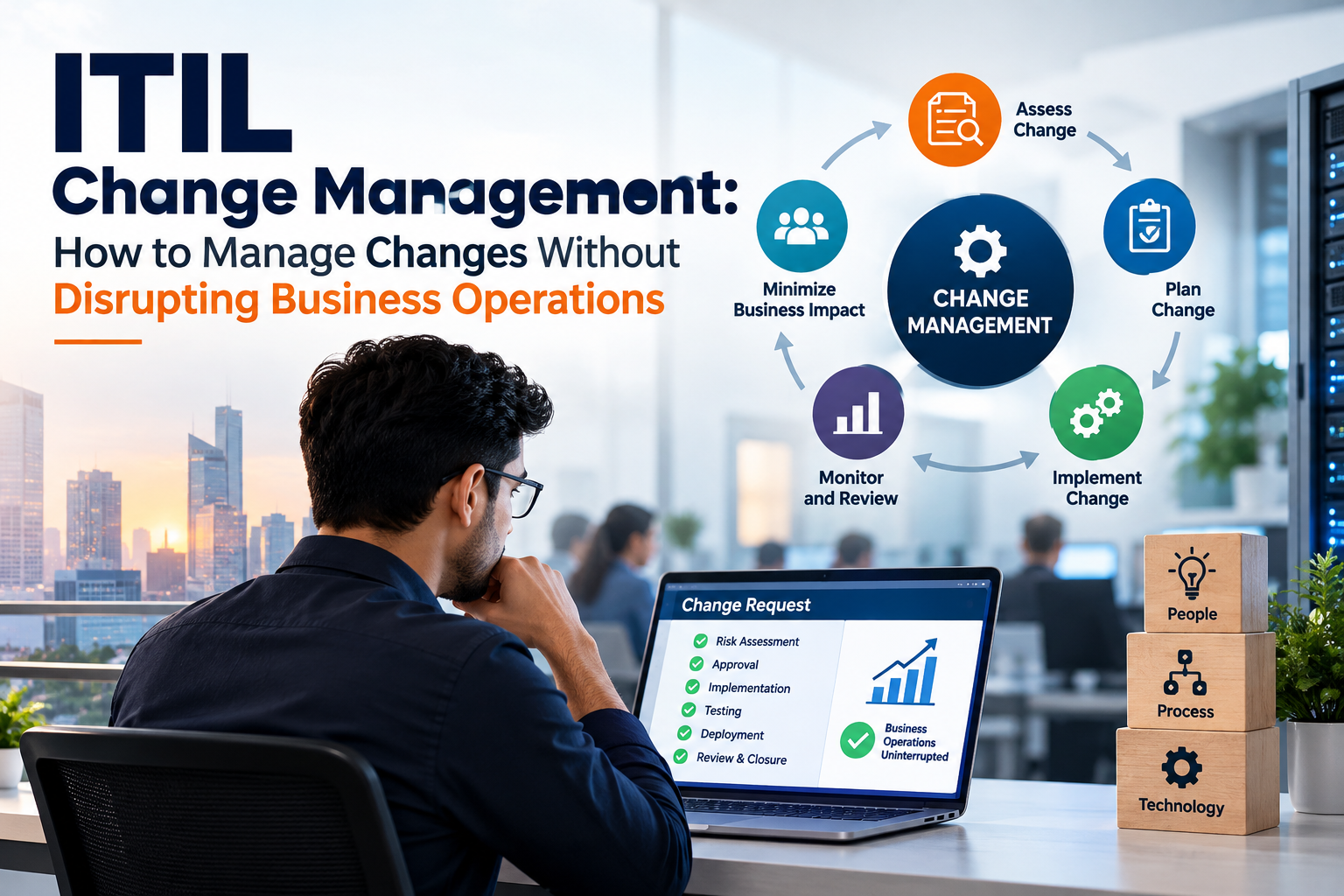
A well-defined change control process minimizes disruptions while allowing for necessary improvements to be implemented. It ensures that changes are made thoughtfully and that their impacts are assessed.
4. Service Level Management
This practice focuses on defining and managing service level agreements (SLAs) to ensure that services meet customer expectations. Regular reviews of SLAs can highlight areas for improvement.
Service Optimization: Maximizing Value
Service optimization is about maximizing the value derived from IT services. This can be achieved through:
1. Efficient Resource Utilization
Optimizing the use of resources—be it human, technological, or financial—can lead to significant improvements in service delivery and cost reduction.
2. Automation
Leveraging automation tools can enhance efficiency, reduce errors, and free up staff to focus on higher-value tasks.
3. Regular Training and Development
Investing in the training and development of IT staff ensures that they are equipped with the latest skills and knowledge, which is crucial for driving improvement initiatives.
Common Challenges in Continual Improvement
While the road to continual improvement is beneficial, organizations may face several challenges, including:
1. Resistance to Change
Employees may resist changes due to fear of the unknown. It is crucial to foster a culture that embraces change and innovation.
2. Lack of Resources
Improvement initiatives require time and investment. Organizations must allocate adequate resources to support their efforts.
3. Insufficient Data
Without accurate data, it becomes challenging to identify improvement opportunities. Organizations should invest in data collection and analysis tools.
FAQs
What is continual improvement in ITIL?
Continual improvement in ITIL refers to an ongoing effort to enhance services, processes, and practices to align with business objectives and improve efficiency.
How does the ITIL improvement model work?
The ITIL improvement model involves identifying opportunities, defining a vision, analyzing the current state, developing and implementing a plan, measuring outcomes, and reviewing for further improvement.
Why is service optimization important?
Service optimization maximizes the value of IT services, enhances efficiency, reduces costs, and improves overall service delivery, which is vital in today’s competitive landscape.
Conclusion
Continual improvement is not just a concept—it's a practice that organizations must integrate into their culture and operations. By following the ITIL improvement model and leveraging ITIL practices, businesses in India can enhance their IT service improvement efforts effectively. Embracing a mindset of continual improvement will not only benefit service delivery but also position organizations for long-term success in a dynamic environment.
For more insights on implementing continual improvement in your organization, subscribe to our newsletter or contact us today!



Leave a Comment