 Quality Management



















 IT Service Management



 Project Management


 Agile Management



 Web Development


 Cloud Computing

In the ever-evolving landscape of project management, the debate between agile vs traditional project management continues to captivate professionals. With businesses in India increasingly adopting various methodologies, the integration of agile project planning and traditional approaches has emerged as a viable solution. In this blog, we will explore how these two methodologies can coexist and complement each other, creating a robust framework for successful project delivery.
Understanding Project Management Methodologies
Before delving into the synergy between agile and traditional project management, it's essential to understand what these methodologies entail.
Traditional Project Management
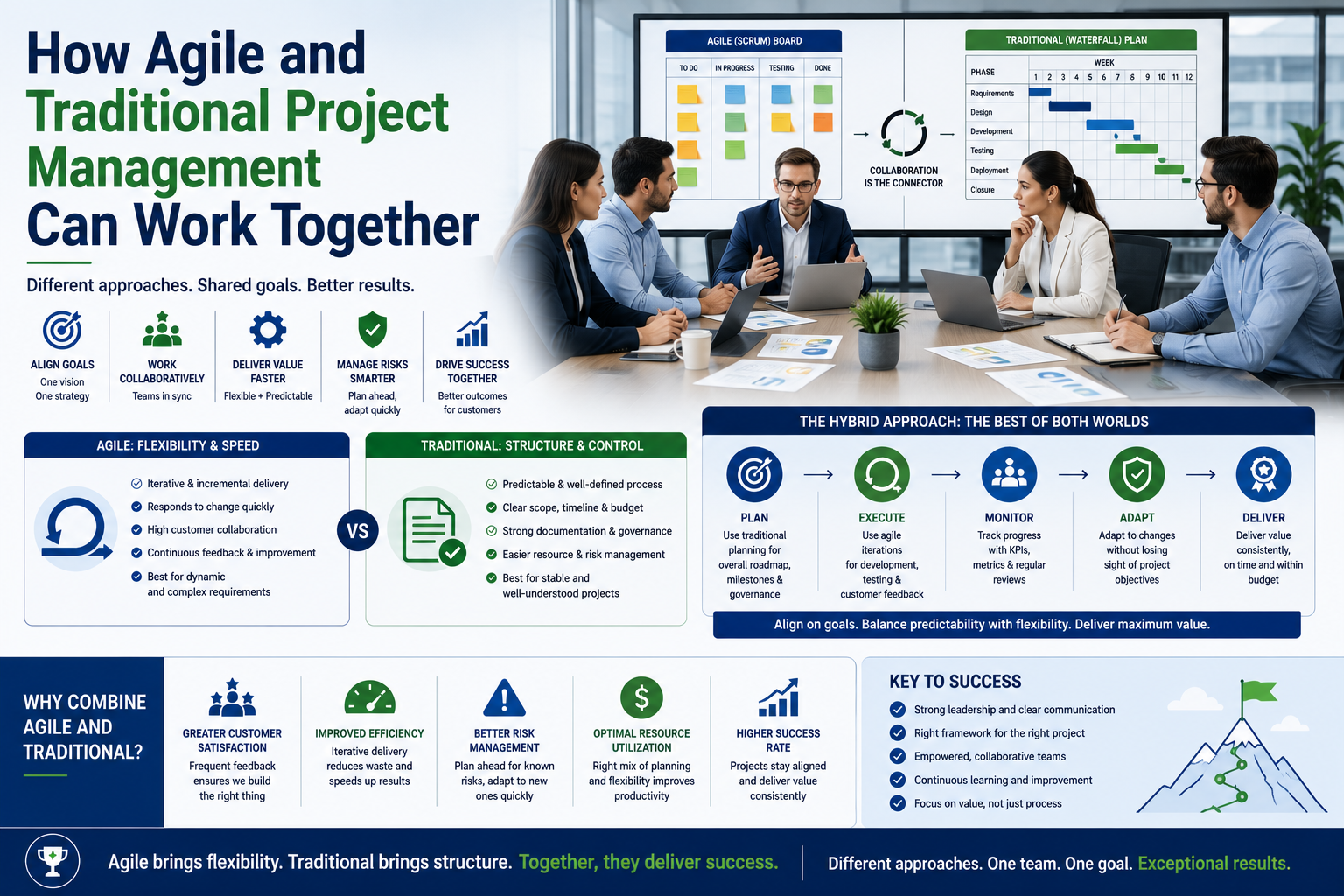
Traditional project management, often referred to as the waterfall model, is a linear and sequential approach. It emphasizes thorough planning, documentation, and a clear structure. This methodology is typically characterized by:
- Defined Phases: Projects are broken down into distinct phases, each with specific deliverables.
- Extensive Documentation: A significant amount of documentation is created at each phase to outline objectives, timelines, and responsibilities.
- Rigidity: Changes to the project scope can be challenging to implement once the planning phase is complete.
Agile Project Management
Agile project management, on the other hand, prioritizes flexibility and adaptability. This methodology is more iterative and incremental, allowing teams to respond quickly to changes. Key features of agile project management include:
- Iterative Development: Projects are divided into smaller segments or iterations, allowing for continuous improvement and feedback.
- Collaboration: Emphasis is placed on teamwork and communication, fostering a collaborative environment.
- Customer-Centric: Agile focuses on delivering value to the customer, allowing for adjustments based on customer feedback.
The Rise of Hybrid Project Management
With the strengths and weaknesses of both methodologies in mind, a growing number of organizations are turning to hybrid project management. This approach combines the best elements of agile and traditional methodologies, resulting in a tailored framework that meets diverse project requirements.
Benefits of Hybrid Project Management
- Flexibility: Hybrid project management allows for adaptability, enabling teams to switch between methodologies based on project needs.
- Enhanced Communication: By integrating the collaborative nature of agile with the structured approach of traditional methods, teams can communicate more effectively.
- Risk Management: The combination of both methodologies can lead to better risk assessment and management, addressing potential issues proactively.
Implementing Agile and Traditional Project Management Together
Successfully merging agile and traditional project management requires careful planning and execution. Here are some strategies to consider:
1. Define the Project Scope
Before starting, clearly define the project scope. Identify which elements can benefit from agile methodologies and which require a more traditional approach. This will help in determining the structure of the project.
2. Use Scrum and Waterfall Appropriately
In a hybrid model, consider using scrum and waterfall together. For instance, employ waterfall phases for initial project planning and requirements gathering, then switch to scrum methodology for development and testing phases. This allows for thorough planning while maintaining flexibility during execution.
3. Foster a Collaborative Culture
Encourage collaboration among team members by promoting open communication. This is crucial when balancing the structured nature of traditional project management with the iterative approach of agile. Regular meetings can help keep everyone aligned.
4. Continuous Feedback and Improvement
Incorporate feedback loops throughout the project lifecycle. Agile methodologies thrive on feedback, and by integrating this into traditional phases, teams can make necessary adjustments swiftly without derailing the entire project.
5. Invest in Training
To ensure a seamless transition to a hybrid model, invest in training for your team. Providing workshops and resources on both agile and traditional methodologies will empower team members to adapt to this new approach effectively.
Challenges of Combining Agile and Traditional Project Management
While the hybrid approach offers numerous advantages, it is not without its challenges. Here are some common obstacles teams may face:
- Cultural Resistance: Team members accustomed to traditional methods may resist adopting agile principles, leading to conflict.
- Communication Barriers: Different methodologies can create communication gaps, especially if team members are not familiar with both approaches.
- Complexity: Managing a hybrid model can be complex, requiring thorough understanding and coordination between methodologies.
FAQs
1. Can agile and traditional project management be used simultaneously?
Yes, organizations can adopt a hybrid approach, utilizing elements from both methodologies to leverage their strengths while mitigating weaknesses.
2. Which methodology is better for software development?
Agile methodologies are often preferred for software development due to their flexibility and emphasis on iterative progress. However, the traditional approach may also be useful for projects with well-defined requirements.
3. How can I transition my team to a hybrid project management model?
Start by providing training on both methodologies, clearly defining project scopes, and encouraging open communication. Implement feedback loops to ensure continuous improvement.
4. What are some real-world examples of hybrid project management?
Many organizations in India, especially in IT and software sectors, have successfully implemented hybrid project management. Companies like Tata Consultancy Services (TCS) and Infosys have adopted this approach to enhance project delivery.
Conclusion
The integration of agile vs traditional project management is not just a trend but a necessity for organizations that seek to thrive in a competitive environment. By understanding the unique strengths of both methodologies and implementing them in a hybrid model, teams can achieve greater efficiency, adaptability, and success in project delivery. So, whether you're a project manager or a team member, consider how you can leverage both agile and traditional practices to enhance your project outcomes.
If you're interested in learning more about how to implement hybrid project management in your organization, feel free to reach out. Let's explore the possibilities together!
Call to Action: Want to take your project management skills to the next level? Subscribe to our newsletter for expert insights, tips, and resources tailored for Indian professionals!



Leave a Comment