
 Quality Management



















 IT Service Management



 Project Management



 Agile Management



 Web Development



 Cloud Computing


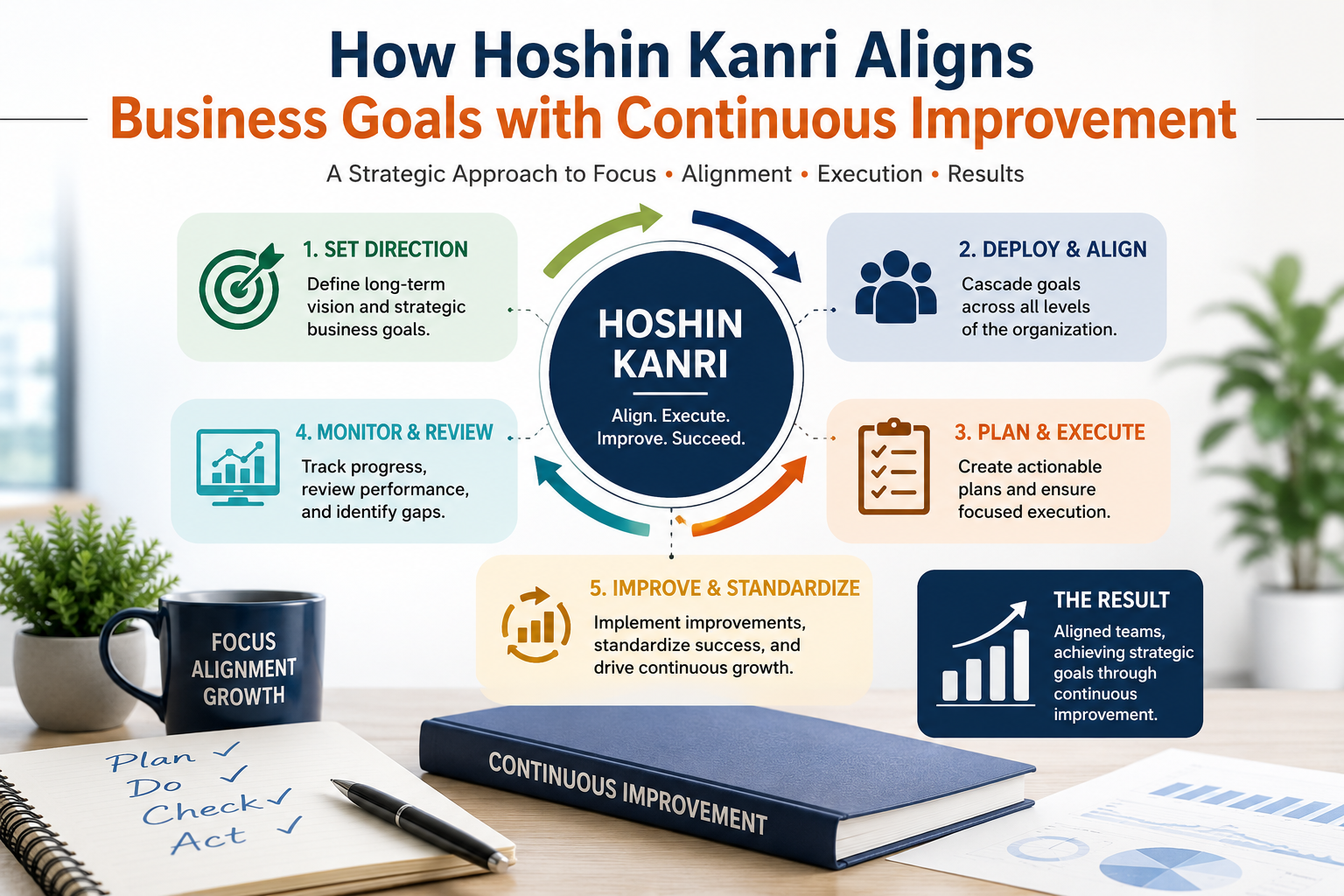
In today's competitive business environment, organizations are constantly seeking ways to improve efficiency and align their goals. One approach that has gained traction in India and globally is Hoshin Kanri, a strategic planning method that integrates business objectives with continuous improvement initiatives. In this blog, we will explore the principles of Hoshin Kanri, its significance in strategy deployment, and how it fosters operational excellence through business process alignment.
Understanding Hoshin Kanri
Hoshin Kanri, often referred to as “policy deployment” or “strategy deployment,” is a strategic planning process that originated in Japan. The term "Hoshin" translates to “direction” or “shining metal,” while "Kanri" means “management” or “control.” Essentially, Hoshin Kanri provides a framework for organizations to align their vision, mission, and goals with actionable plans.
The Hoshin Kanri Process
The Hoshin Kanri process revolves around a few key steps:
- Define Vision and Objectives: Organizations begin by establishing a long-term vision and strategic objectives that resonate with their mission.
- Set Annual Goals: Based on the long-term vision, specific measurable goals are set for the year, ensuring they are aligned with the overall strategy.
- Develop Action Plans: Teams create detailed action plans that outline the steps required to achieve the annual goals.
- Implement and Monitor: Organizations implement the action plans and regularly monitor progress to ensure alignment with the strategic objectives.
- Review and Adjust: At the end of the cycle, results are reviewed, and adjustments are made as necessary to improve future performance.
The Importance of Strategy Deployment
Strategy deployment is crucial for organizations aiming to achieve operational excellence. Hoshin Kanri facilitates this process by ensuring that all levels of the organization are working towards common goals. Here’s why it matters:
1. Clarity and Focus
Hoshin Kanri provides clarity by ensuring everyone in the organization understands the strategic direction. This clarity helps teams prioritize their efforts and focus on what truly matters, reducing wasted resources and time.
2. Enhanced Communication
Effective communication is vital for successful strategy deployment. Hoshin Kanri encourages open dialogues across departments, fostering collaboration and ensuring everyone is on the same page. This is especially important in the Indian context, where diverse teams often work together.
3. Continuous Improvement
At its core, Hoshin Kanri emphasizes continuous improvement. By setting measurable goals and regularly reviewing performance, organizations can identify areas for enhancement. This iterative process fosters a culture of innovation and agility, which is essential in today’s fast-paced business environment.
Business Process Alignment through Lean Strategies
Implementing Hoshin Kanri is closely linked to lean strategies, which aim to eliminate waste and enhance value. By aligning business processes with strategic goals, organizations can achieve greater efficiency and effectiveness.
1. Identifying Value Streams
One of the first steps in aligning business processes is to identify value streams. This involves mapping out all the steps involved in delivering a product or service, from conception to delivery. By understanding the value stream, organizations can pinpoint areas where improvements can be made.
2. Streamlining Processes
Once value streams are identified, the next step is to streamline processes. Hoshin Kanri helps in deploying strategies that focus on reducing bottlenecks and inefficiencies. This is crucial for Indian businesses striving to remain competitive in a rapidly evolving market.
3. Engaging Employees
Engaging employees in the improvement process is essential for success. Hoshin Kanri encourages a bottom-up approach, allowing employees to contribute ideas and solutions. This not only enhances morale but also taps into the collective knowledge of the workforce, driving innovation.
Achieving Operational Excellence with Hoshin Kanri
Operational excellence is a key goal for many Indian organizations, and Hoshin Kanri provides a roadmap to achieve it. By aligning business goals with continuous improvement, organizations can create a sustainable competitive advantage.
1. Establishing a Culture of Excellence
Implementing Hoshin Kanri fosters a culture of excellence within the organization. When employees see that their contributions are valued and aligned with the company’s strategic goals, it creates a sense of ownership and accountability.
2. Measurement and Accountability
Hoshin Kanri emphasizes the importance of measuring progress towards goals. By establishing key performance indicators (KPIs), organizations can hold teams accountable for their performance. This measurement-driven approach is critical for continuous improvement and operational excellence.
3. Adapting to Change
In today’s dynamic business landscape, adaptability is key. Hoshin Kanri allows organizations to pivot quickly in response to changing market conditions or customer needs. By having a clear strategic framework, businesses can make informed decisions that align with their long-term vision.
FAQs about Hoshin Kanri
Q1: Is Hoshin Kanri suitable for small businesses in India?
A1: Yes, Hoshin Kanri is applicable to businesses of all sizes. Small businesses can benefit from its structured approach to aligning goals and fostering continuous improvement.
Q2: How long does it take to implement Hoshin Kanri?
A2: The implementation timeline varies based on the organization's size and complexity. However, many organizations start seeing benefits within a few months of adopting Hoshin Kanri.
Q3: What industries can benefit from Hoshin Kanri?
A3: Hoshin Kanri can be beneficial across various industries, including manufacturing, healthcare, IT, and services. Any organization looking to improve alignment and operational efficiency can adopt this approach.
Q4: Can Hoshin Kanri be integrated with other management methodologies?
A4: Absolutely! Hoshin Kanri can complement other methodologies such as Six Sigma, Lean, and Agile, enhancing overall effectiveness and focus on continuous improvement.
Conclusion
Hoshin Kanri is more than just a strategic planning tool; it is a comprehensive approach to aligning business goals with continuous improvement. In the context of Indian businesses, where competition is fierce and innovation is necessary, embracing Hoshin Kanri can lead to significant advancements in operational excellence. By integrating strategy deployment with lean principles, organizations can streamline their processes, foster a culture of engagement, and ultimately achieve their strategic objectives.
If you're ready to transform your business and align your goals with continuous improvement, consider adopting Hoshin Kanri today. Embrace this powerful framework to enhance your operational excellence and drive sustainable growth!
Call to Action: Interested in implementing Hoshin Kanri in your organization? Contact us today for expert guidance and support in your journey toward operational excellence!



Leave a Comment