
 Quality Management



















 IT Service Management



 Project Management



 Agile Management



 Web Development



 Cloud Computing


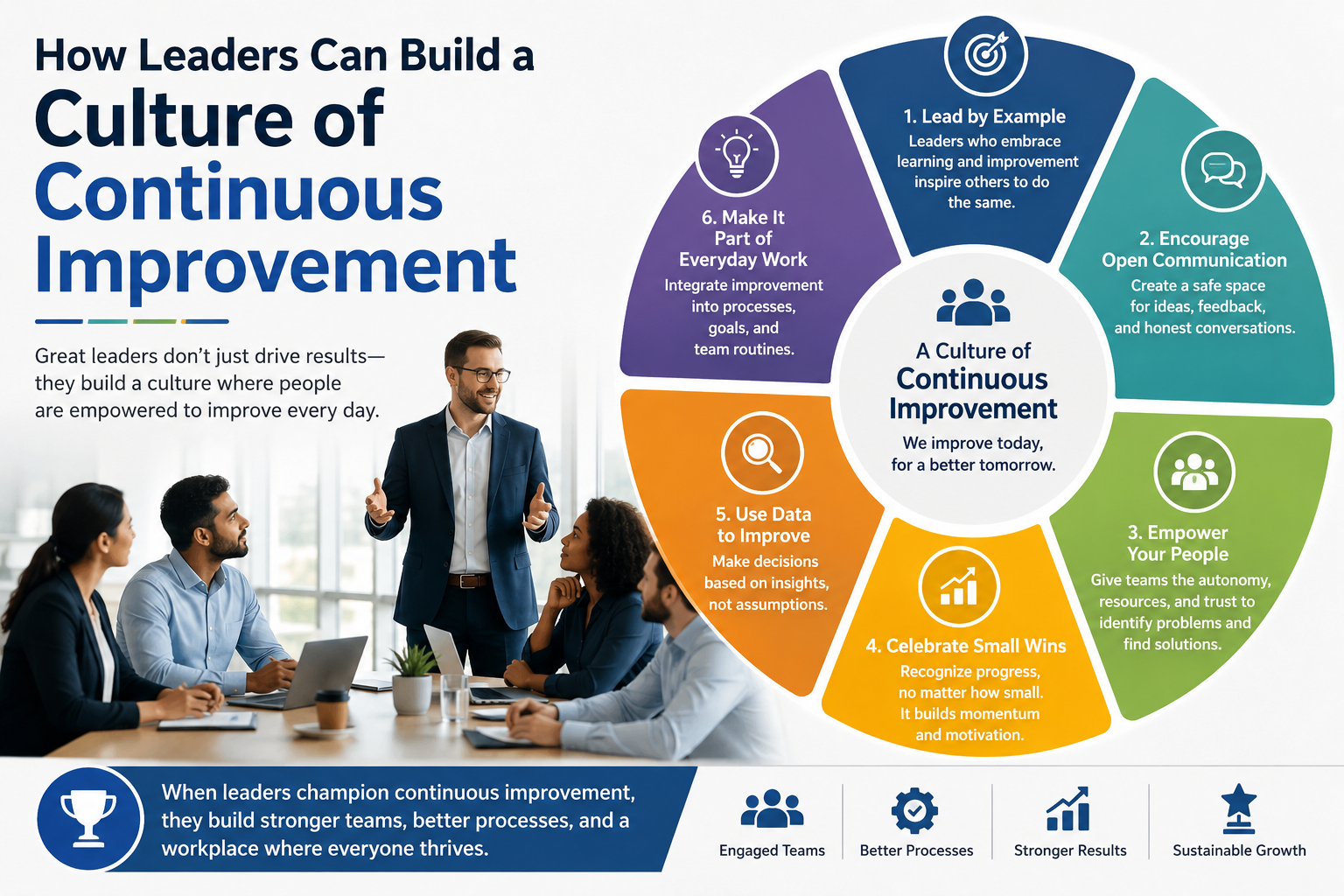
In today's fast-paced business landscape, organizations must adapt and evolve to stay competitive. One of the most effective ways to achieve this is by fostering a continuous improvement culture. This approach not only enhances operational efficiency but also boosts employee engagement, making it a key driver for business transformation. In this blog, we will explore how leaders can instill a culture of continuous improvement, leveraging lean leadership principles and focusing on organizational development.
Understanding Continuous Improvement Culture
A continuous improvement culture is an environment where employees at all levels are encouraged to identify and implement small, incremental changes that can lead to significant improvements over time. This culture focuses on ongoing learning and adaptation, fostering an atmosphere of innovation and collaboration.
The Importance of Continuous Improvement Culture in India
In India, where businesses are rapidly evolving, the need for a continuous improvement culture is paramount. Companies that embrace this culture can improve efficiencies, reduce waste, and enhance customer satisfaction, ultimately leading to sustainable growth. As Indian organizations strive to compete on a global scale, leaders must prioritize the development of a continuous improvement framework.
Key Principles of Lean Leadership
Lean leadership is an approach that emphasizes the elimination of waste and the optimization of processes. Here are some key principles that leaders can adopt to cultivate a continuous improvement culture:
1. Empower Employees
Empowering employees is central to a continuous improvement culture. Leaders should encourage team members to take ownership of their work and provide them with the tools and resources necessary to make improvements. This can be achieved through training programs and workshops focused on problem-solving and innovative thinking.
2. Foster Open Communication
Open communication is vital for continuous improvement. Leaders should create a safe space for employees to voice their ideas and concerns. Regular feedback sessions and team meetings can facilitate this communication, allowing for the exchange of ideas and collaborative problem-solving.
3. Set Clear Goals and Metrics
To drive continuous improvement, organizations must establish clear goals and measurable outcomes. Leaders should define what success looks like and communicate these objectives to the team. Utilizing key performance indicators (KPIs) can help track progress and motivate employees to strive for excellence.
Strategies for Building a Continuous Improvement Culture
Building a culture of continuous improvement requires a strategic approach. Here are some effective strategies for leaders to consider:
1. Lead by Example
Leaders must model the behaviors they wish to see in their teams. By demonstrating a commitment to continuous improvement, leaders can inspire others to follow suit. This might include sharing personal experiences of learning from failures or actively participating in improvement initiatives.
2. Recognize and Reward Improvement Efforts
Recognizing and rewarding employees for their contributions to continuous improvement can foster motivation and engagement. Implementing a rewards system that acknowledges innovative ideas and successful projects can create a sense of ownership and pride among team members.
3. Encourage Cross-Department Collaboration
Facilitating collaboration between different departments can lead to innovative solutions and shared learning. Leaders should promote interdisciplinary teams to tackle challenges and share best practices, reinforcing the idea that continuous improvement is a collective responsibility.
Employee Engagement: The Heart of Continuous Improvement
Employee engagement is critical to sustaining a continuous improvement culture. Engaged employees are more likely to contribute ideas and participate in initiatives that drive organizational development. Leaders can enhance employee engagement through:
1. Training and Development Opportunities
Investing in employee training and development is essential for building a culture of continuous improvement. Providing access to workshops, online courses, and mentorship programs can equip employees with the skills they need to thrive in a dynamic work environment.
2. Regular Feedback and Performance Reviews
Frequent feedback helps employees understand their strengths and areas for improvement. Conducting performance reviews that focus on growth and development rather than just assessment can foster a culture of learning and continuous improvement.
3. Involving Employees in Decision-Making
Involving employees in decision-making processes not only empowers them but also increases their commitment to the organization’s goals. Leaders should seek input from team members when implementing changes, ensuring that everyone feels valued and included.
Challenges to Implementing a Continuous Improvement Culture
While the benefits of a continuous improvement culture are clear, leaders may face challenges when implementing this approach. Some common obstacles include:
1. Resistance to Change
Change can be daunting for many employees. Leaders must communicate the benefits of continuous improvement clearly and involve employees in the transition process to reduce resistance.
2. Lack of Resources
Implementing a continuous improvement culture requires time and resources. Leaders must prioritize this initiative and allocate necessary resources to ensure its success.
3. Inadequate Leadership Support
Without strong leadership support, efforts to build a continuous improvement culture may falter. Leaders must champion this initiative and actively participate in improvement activities to demonstrate their commitment.
Conclusion: The Path Forward
Building a culture of continuous improvement is not a one-time effort but a sustained commitment to excellence. Indian leaders must embrace lean leadership principles and prioritize employee engagement to foster an environment where continuous improvement thrives. By empowering employees, promoting open communication, and recognizing improvement efforts, organizations can drive significant business transformation and achieve long-term success.
FAQs
1. What is continuous improvement culture?
A continuous improvement culture is an organizational environment where employees are encouraged to identify and implement incremental changes that enhance processes, products, and services over time.
2. How can leaders foster a culture of continuous improvement?
Leaders can foster this culture by empowering employees, promoting open communication, setting clear goals, and recognizing improvement efforts.
3. Why is employee engagement important for continuous improvement?
Employee engagement is crucial because engaged employees are more likely to contribute innovative ideas and actively participate in improvement initiatives, driving organizational success.
4. What are some challenges to implementing a continuous improvement culture?
Common challenges include resistance to change, lack of resources, and inadequate leadership support.
5. How can Indian organizations benefit from continuous improvement?
Indian organizations can enhance efficiencies, reduce waste, improve customer satisfaction, and achieve sustainable growth by adopting a continuous improvement culture.
If you are a leader looking to transform your organization through a culture of continuous improvement, start today! Engage with your employees, set clear goals, and be the beacon of change in your organization. For more insights on leadership and organizational development, subscribe to our newsletter or contact us for tailored consulting services.



Leave a Comment